Nature Notes: Protect Birds from Window Collisions
By Dan Schieman
During this past spring migration upwards of 3.5 billion birds were winging their way northwards (and even more will be flying in the fall when young-of-the-year are added). Migration is a hazardous time for birds, exposing them to all sorts of direct dangers such as predators, pollution, and bad weather. The greatest threat to actively migrating birds, however, is collisions with buildings. An estimated 1 billion birds die every year from flying into buildings, especially the windows.
There are two factors at work. One is the reflection in glass that makes birds believe it’s a corridor they can fly through. This is of course an issue during daylight hours and year-round. The other is lights at night. Many groups of birds, including songbirds, migrate at night. They navigate in part by the stars and moon, so bright city lights attract and disorient them like moths to a flame. Once close to buildings they are at risk of collision or other threats like cat predation.
While a convention center in Chicago and a stadium in Minneapolis made headlines for mass mortality events, big city buildings are not the only culprits. A study by the Smithsonian Migratory Bird Center estimated that 44% of birds killed at buildings occurred at residential structures. This means YOU have an opportunity to help birds. Even if only a few birds hit your windows each year, multiply that by all the residential windows out there and you can see how it adds up. It’s a big problem but with simple solutions.
Reduce light pollution. Turn off non-essential lights at night, especially during migration. Use motion sensors and timers. Point outdoor lights downward and install shielded fixtures. Choose bulbs with lower lumens, i.e. less brightness. Close window shades at night.
Create a visual barrier that birds won’t try to fly through. For new construction, the best solution is bird-safe glass, which has an etched pattern or UV-reflecting film built into it. Many bird species see ultraviolet light, so UV-reflecting film shines for them but is practically invisible to us. For existing windows, decals, strings, films, and more can be applied to the outside.
There are many products to choose from. At The Ridges we have applied translucent tape strips to our exhibit space windows, and we sell UV-reflecting decals and liquid at our nature store. Whatever you choose, the spacing between elements should be no bigger than 2×2 inches apart. Research by the American Bird Conservancy has shown that birds will fly through larger gaps.
Even if you can retrofit only a portion of your lights and glass, doing something is better than doing nothing so that one more songbird will live to see another sunrise.
Nature Notes: A Forest Days Hike in the Woods
By Sheryl Honig, PhD., Ridges Sanctuary Director of Education
Ridges Educators work relentlessly to bring quality Forest Days programming to Gibraltar students in grades K-6. Forest Days are designed to bring students outside and into their local forest for place-based environmental education. Forest Day lesson topics include the carbon cycle, patterns in nature, the role of decomposers in the forest, food webs, and other interconnecting themes. With the change in seasons, each month brings new opportunities for students to learn and explore. In addition to the collaboration with Gibraltar Schools, the Ridges is fortunate to collaborate with Rotary Club of Door County North to maintain these programs and provide each K-6 grade student with adventure packs to use at home to explore even further.
We recently featured educator Libby Humphries’ passion for creating environmental stewardship with Forest Days students. This month, we encourage you to read Sheryl Honig’s narrative on the vivid experiences of her students as they engage with nature on a spring day.
Join the children on a hike through the forest….
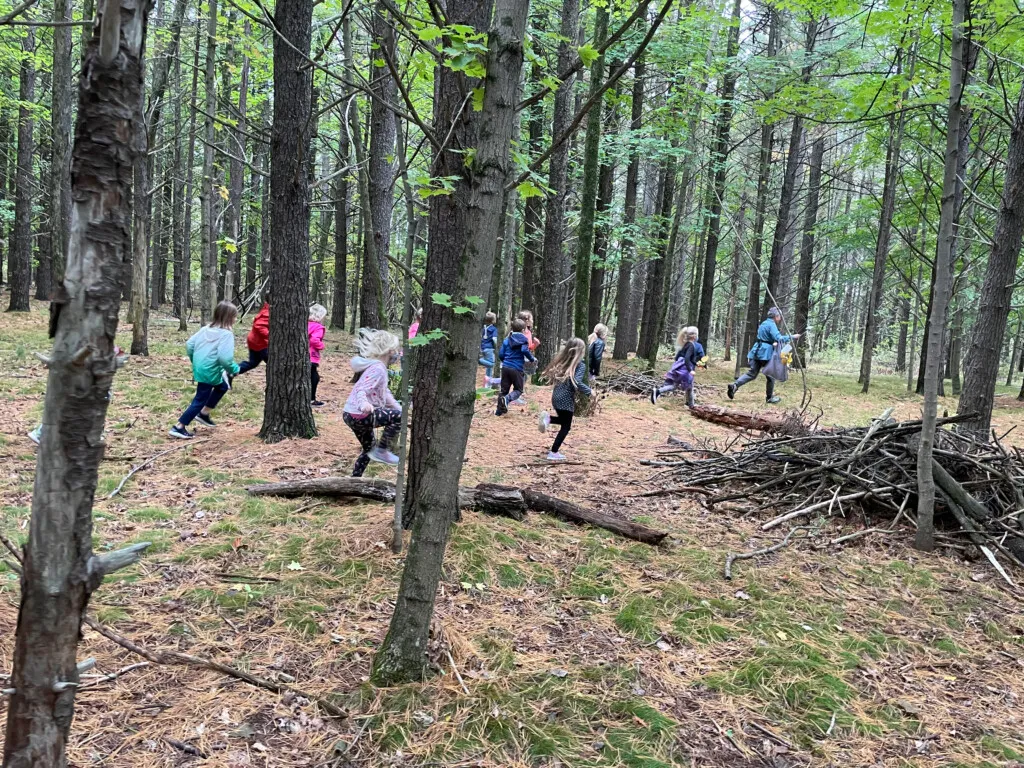
We leave the hard, angled universe of the school and its garage, asphalt, and buses. Just like that we are in a soft, gentle place. A canopy of luxurious pine needles mixed with dainty emerging maple leaves floats above us. The quaking and big toothed aspens drip with catkins. The ground is a treasure trove of pale brown leaf shapes that we recognize as old friends as well as brand new find: catkins! The spent pollen catkins and the perky tight green catkins that encase the precious seeds. Even as this group of energetic humans (I found one!) passes through, the chickadee and black-throated green warbler persist in their mission of tweeting out their territory.
We notice the ubiquitous (but usually invisible to humans) blanket of Canada Mayflower. We are recognizing their pointed spoon shape, and we scan the sides of the trail for a “double” – if we find a mayflower plant with more than one leaf and we peek between the leaves, we find a lovely spear of white flower developing inside.
This part of the forest is an 80-year-old pine plantation in which maples and big-toothed aspen have grown up. We can recognize the white pines here because their trunks are thickest, and after a rain they stand out as black pillars among the others. We find fresh wood chips at the base of a pine where a pileated woodpecker has carved out a rectangular hole for harvesting insects. There is one lone red pine with its pink and tan bark along this part of the trail, giving us a foretaste of the red pine grove ahead.
As we pass a few maple and hornbeam saplings, we bend them down so there is an abundance of emerging leaves at eye level to study. Children gather around the leaves, with magnifiers, noticing everything: this is striped! This is softer than the other one! The veins are different on this one! It requires grit and persistence, this study of nature up close. No moving on to chase another one. It is not so much the finding more; it is the close looking. What do you notice?
We approach the trail intersection, and someone alerts us: we have to look at the baby beech! All winter we have been watching a beech sapling, about a foot tall, with 4 budded branches. Through the winter, we noticed individual buds nipped off. Would it survive? Today, we see that the few remaining buds are just beginning to open! Will this be enough food-making machinery to keep it going? Farther down the trail we come upon a much taller beech sapling and out of each of its buds multiple leaves unfurl!
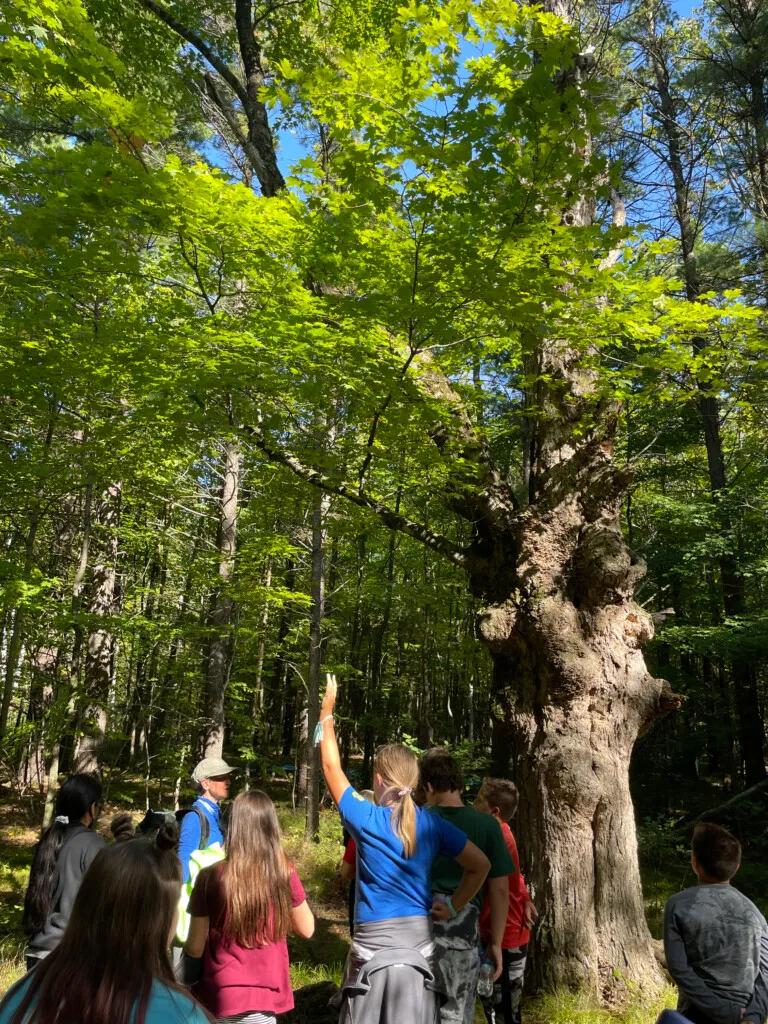
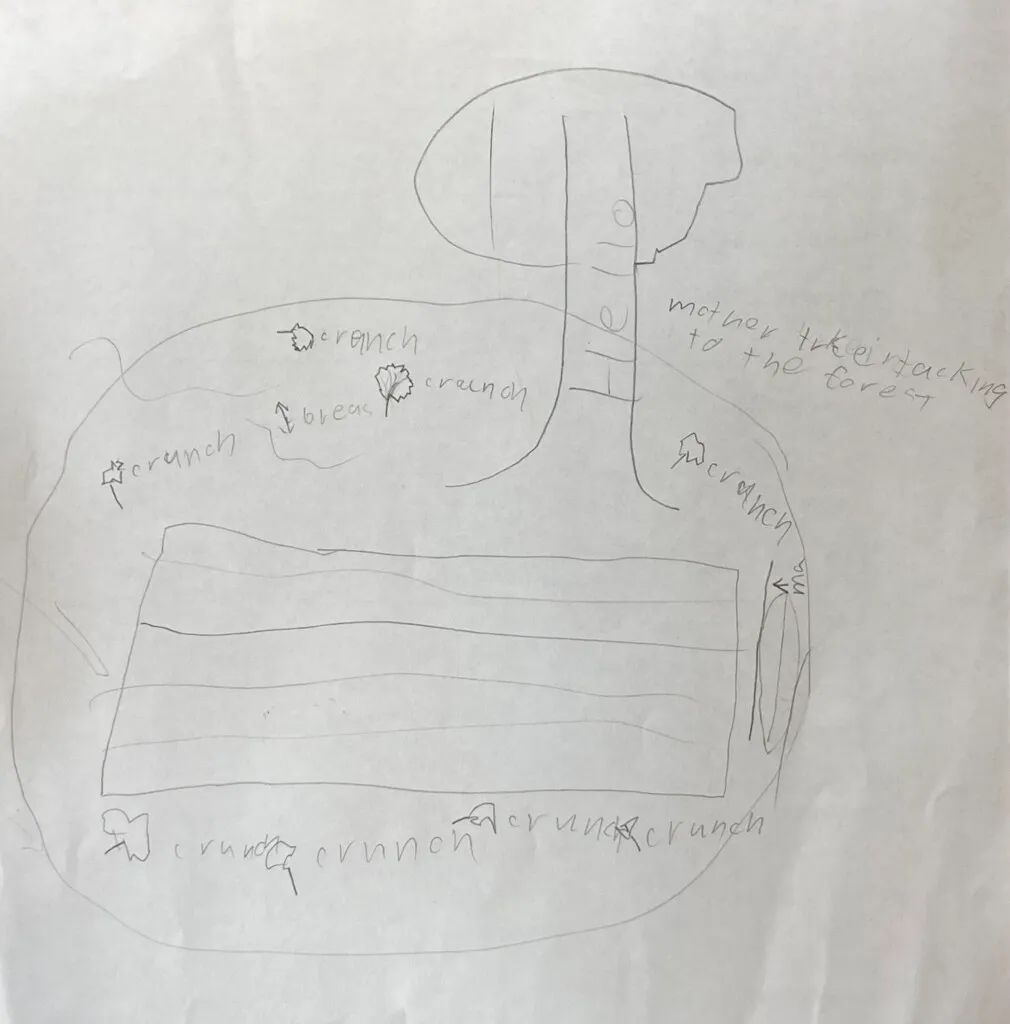
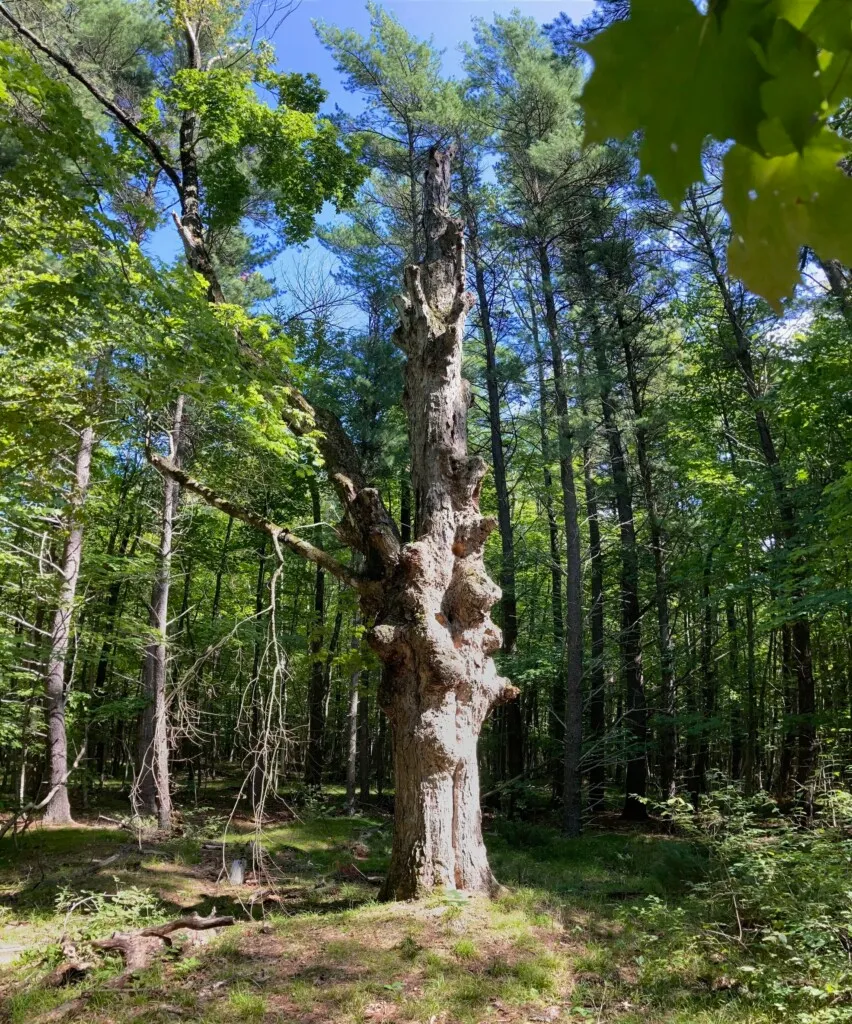
We have reached the “sign.” Which way to the mother tree? That way! We walk. Do you see her yet? Yes! We run to the “mother tree” and, of course, throw our arms around her. She has been here since before the pine plantation, when this part of the park was a homestead. Tips of metal tubes, leftover from maple syrup days, protrude from her bark. More than half of the maple’s crown is a snag, but on one side a strong arm lives on and branches into several other stems, all bursting with new leaves.
“She’s alive!”
We leave the exuberance of finding the mother tree and have to walk carefully, in single file, as we approach something we have seen on the map all year: the patch of (threatened) dwarf lake iris. The patch is abundant enough that all 18 children can line the edge, bend down, and study the gorgeous little purple flowers, their petals equipped with bright yellow “runways” to guide pollinators straight into the pollen. This is so beautiful! Now that we are still, some of us become aware of flying insects around us. Screams bubble up; it’s a bee! It’s not a bee! After a long winter of empty air, the invading flying insects make the forest seem different; there is an element of unease about this development.
We tiptoe around the pink and white hepatica and make our way to the large “tick tarps” that have been laid out in a big U shape around my teaching tarp. We rest our bodies on the tarps, start noticing the leaf litter at the edges. And, since the snow is gone, and the forest is in motion again, cries of “a spider!!” begin to take our conversation in unexpected turns. In May, focusing on any other topic is hard to maintain. Fortunately, I have collected 40 large, laminated photos of common spiders so we are ready to ID any finds. By now, we don’t even need photos of millipedes, centipedes, rollie pollies, worms, ants, larvae, or beetles. We are forest floor experts!
Our forest day has only begun. Our forest is rich. Complex. More than any human could invent. It might take more than a lifetime to truly understand it.
By Libby Humphries, WisCorps Environmental Educator
When I was a child growing up in the metro-Atlanta area, my public education was greatly limited to the confines of a brick-and-mortar building. Tales of plate tectonics and photosynthesis were recited like oral tradition, with only illustrations in textbooks to supplement my teachers’ words. Learning about these real-life concepts solely within a traditional classroom caused a huge disconnect between myself and the natural world—one that lasted through my early undergraduate years.
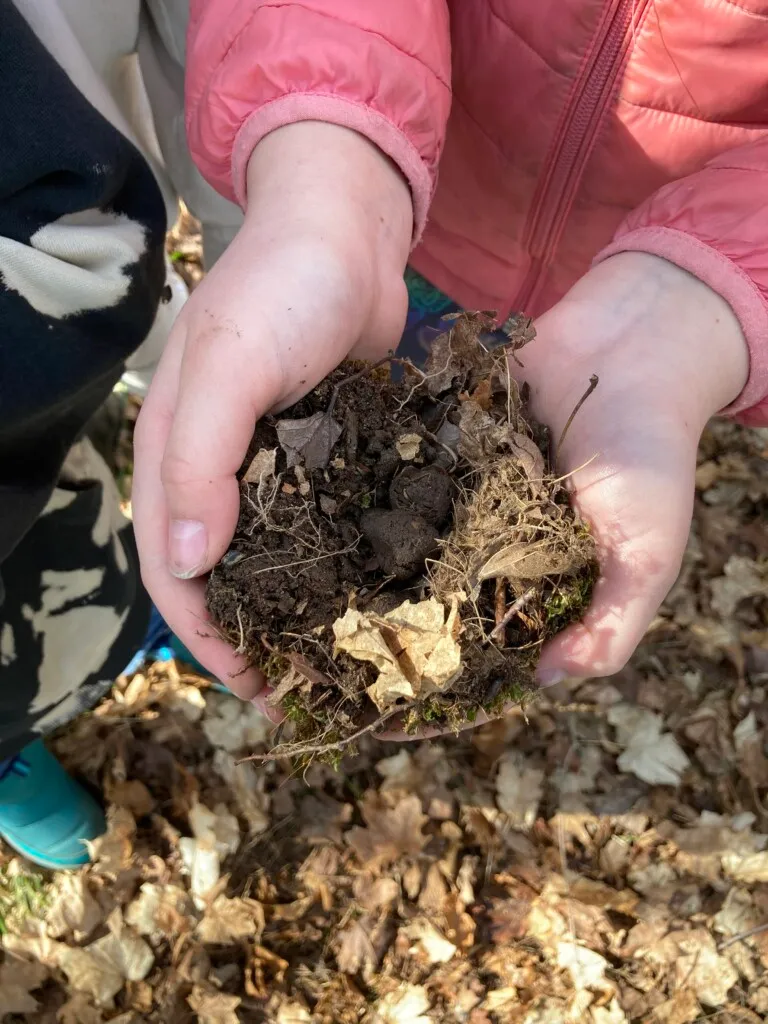
Needless to say, when I first learned of the Forest Days programs that The Ridges Sanctuary facilitates at local schools Gibraltar and Sevastopol, I felt taken aback. Once a month during the school year, students in 4K through grade 6 (4K through grade 2 at Sevastopol) spend up to 90 minutes in a designated school forest learning about topics from spring migration to ancient rivers. Each school forest functions as both an outdoor classroom and the learning material for each lesson; all Forest Day topics can be explored through the physical space of the forest. Students certainly take advantage of this opportunity for exploration, as most of each Forest Day session is spent rummaging through leaf litter, feeling the bark of a white pine flake at their fingertips, and scanning the canopy for woodpecker holes.
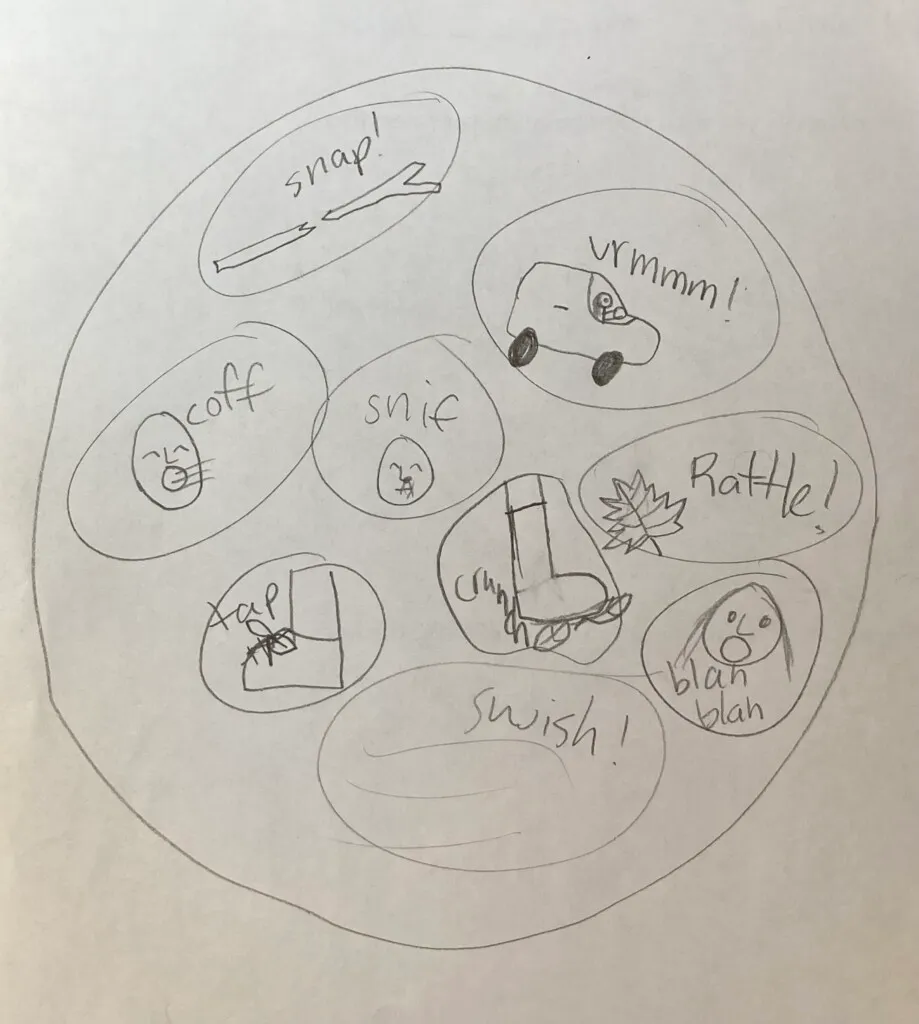
Sound maps created by students during sit spot, a silent time at the end of each Forest Day. Photos shared by Libby Humphries
This independent investigation is key to a successful session. While some investigative activities are routine—such as making observations about an organism of choice along the trail—much depends on both the specific Forest Day topic and the age group receiving the lesson. Younger groups learning about moss, for example, may explore the forest with moss field guides and observation sheets. Older groups may conduct habitat assessments of different mosses by measuring soil characteristics and land angle.
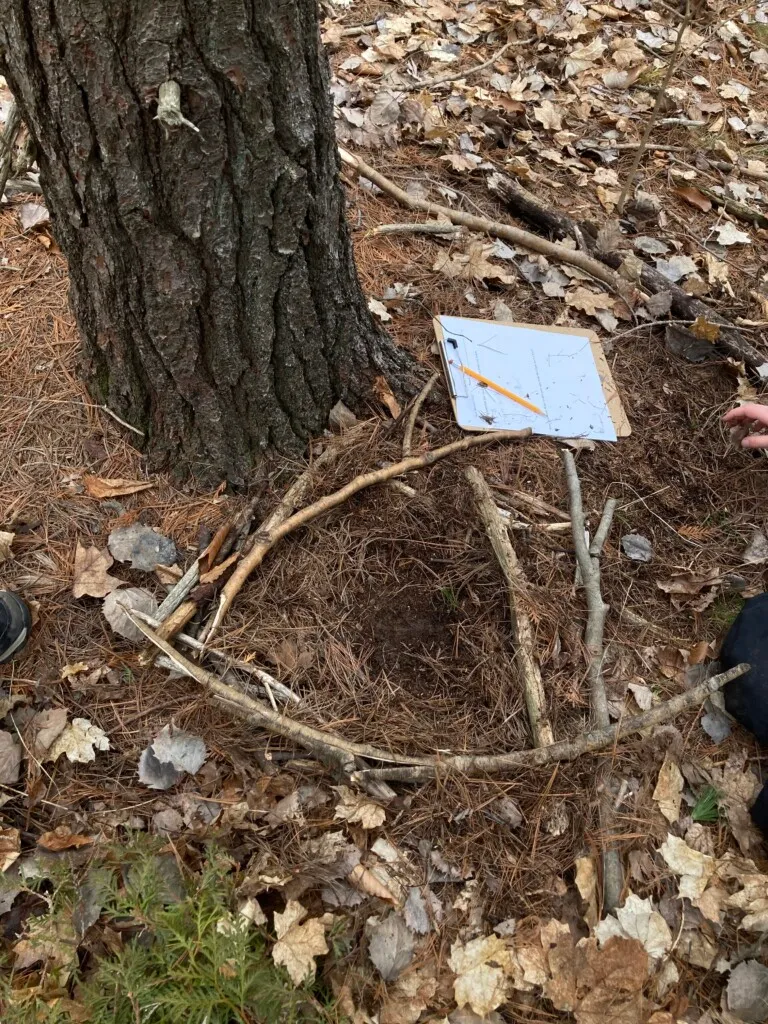
Nests that 3rd graders constructed during a lesson about bird eggs and nest types. Photos by Libby Humphries
The value of these activities lies in empowerment. When students can identify characteristics of an area—whether bird species, soil type, or tree growth stages–they feel like experts who want to share their knowledge with others. Knowing about the forest makes them feel confident. In addition, not every child experiences the forest in the same way. The unique positive experiences and memories they make with the forest build a sense of connection with the natural world while also creating opportunities for them to connect with each other. This shows in the smallest things, from sharing anecdotes while comparing worksheets to giving group hugs to the “Mother Tree.”
The “Mother Tree.” Photo by Libby Humphries
As their teacher, it’s difficult to imagine that someday I will no longer be leading them into the forest to find bugs and snakes, sharing stifled laughs during sit spot when someone makes a weird noise. They may eventually forget the things they learned with me, but my greatest hope is that they retain their sense of wonder as our next generation of environmental stewards. As we approach Earth Week, The Ridges reflects on its history as a place for inspiring a deep connection with nature. At The Ridges, we like to celebrate Earth Day every day by protecting and preserving land, teaching the public about this biologically diverse area, and inspiring people to protect their own communities. This year, The Ridges is committed to conducting scientific research as part of our mission to promote positive environmental behaviors. We recognize the importance of both conducting scientific research and empowering our community to engage in scientific discussions.
This Earth Week, April 22nd—26th, The Ridges will celebrate the scientific community in and outside of the sanctuary! See our list of events below, and be sure to save them to your calendar! Want to learn more about Earth Day and initiatives that you can take in your community? Check out the resources on our Earth Week page.
2024 Earth Week Events:
Friday, April 19th
Community Tree Planting at Appel’s Bluff with The Big Plant, 10:00 am – 2:00 pm | 2:00 pm – 4:00 pm
Calling all volunteers – Join us for a Community Planting at Appel’s Bluff, hosted by The Ridges Sanctuary!
We invite you to join us in the Climate Change Coalition of Door County‘s next phase of the Big Plant: free and public Community Plantings! At five sites over two weeks, they’ll be planting together over 4,000 new native trees. At these sites, native Oaks, Birches, Cedars, American Plums, Tamaracks, Firs, Pines, and Spruces will be planted. All tree-planters will be able to take away free, additional 2-year-old conifers to plant at home or at your business. Volunteers of all ages are invited to help with our land restoration efforts.
Please bring your own gloves and dress to be outside for two hours! You can register for the 10:00am planting or the 2:00pm planting. Walk-ins are also welcome for these two plant opportunities, with arrivals at 10:00am and 2:00pm. There is no fee to register (it just helps us know who will be joining).
Sign up HERE for the 10:00 am – 12:00 pm slot or HERE for the 2:00 pm – 4:00 pm slot.
If you have any questions regarding the plantings, call Anna at (920)-839-2802 ext. 115 or email anna@ridgessanctuary.org.
Saturday, April 20th
Every Day is Earth Day, 10:00 am – 4:00 pm
Join us, along with other organizations, at this years’ Every Day is Earth Day event at the Kress Pavilion in Egg Harbor! Visit our table to learn about Citizen Science opportunities at The Ridges, other ways to get involved, and how to take steps toward living sustainably! Be sure to check out other great organizations’ tables and activities! The festival features tree plantings, an Energy Forum, a two-location Earth Day Festival, and wraps with an Earth Day Celebration Open Mic. For the full schedule, visit everydayisearthdayfest.org
Fee: Free
Location: Kress Pavilion, 7845 Church Street, Egg Harbor.
Ridges Forest School Artist Reception and Celebration, 11:00 am – 12:30 pm
Kick off the start of Earth Week at The Ridges with this fun family-friendly event. Join us for an artist show and reception of Ridges Forest School student masterpieces. Come experience impactful works based on their perspective of Earth’s systems and cycles that they’ve studied through all seasons at The Ridges.
Fee: Free
Location: Kress Pavilion, 7845 Church Street, Egg Harbor.
Monday, April 22nd
Range Light Corridor Restoration Project Presentation with Director of Research Tony Kiszonas, 6:00 pm – 7:30 pm
Join us for an update on the Range Light Corridor Restoration Project with Director of Research Tony Kiszonas. The presentation will include what to expect when walking through the corridor this year and insights into important ongoing research on federally threatened Dwarf Lake Iris in partnership with the USFW Coastal Program.
Fee: Free
Location: Cook-Fuller Nature Center, 8166 State Hwy 57, Baileys Harbor.
Pre-registration is required due to limited space; Click here to register!
Wednesday, April 24th
Tree Transplant @ 10:00 am
Want to get your hands dirty this Earth Week? We’ve got a job for you! Join us at The Ridges to help us move tree seedlings between the Range Lights and find them a new home in the sanctuary. Tree transplanting is a more environmentally friendly way to landscape or remove trees from a habitat. It can also help seedlings survive in a more suitable environment. At The Ridges, tree transplanting allows us to keep the Range Light corridor clear to abide by Coastguard regulations and maintain a critical open space for maritime travel while saving tree species and restoring other habitats within the sanctuary!
We’ll provide instructions for how to transplant the trees as well as all the necessary equipment for transplanting. We’ll start by removing trees from the corridor, then we’ll move them to another location to transplant. This will be a hands-on activity. Bring your own gloves, shovels, and buckets if you can and clothes that can get muddy! This event meets at the Workshop on our North Campus off County Q. If you’re interested in attending, contact anna@ridgessanctuary.org.
Friday, April 26th
Arbor Day Tree Give-Away, 9:00 am – 3:30 pm
Get your free trees! Stop by The Ridges Cook-Albert Fuller Nature Center on Friday, April 26th during our hours of operation where we’ll be giving trees away! Plant them at home or at your business: inspire as many people as possible to plant and grow as many trees as possible! The give-away begins at 9:00 am and will run until supplies last. First come first serve.
Location: Cook-Fuller Nature Center, 8166 State Hwy 57, Baileys Harbor.
Nature Notes: Documenting the Natural World
By Jackie Rath, Program Coordinator
On most weekdays around noon, Ridges staff make their way to the center table in the back offices to eat lunch. While this routine might feel repetitive, the conversations from these gatherings are anything but. Around this table, I have learned so much from my coworkers through their fascinations and questions about the natural world. I think about how special it is to share knowledge with others, but even more so to share what we don’t know or want to learn more about. Many topics I grew up intimidated by or thought too silly to have questions about are open books for discussion at The Ridges. I learn something new almost every day just by others conveying what they have observed.
It is what I do after I learn these captivating bits of knowledge that is key. Through exploration of topics in written and visual mediums, I go outdoors and observe for myself. Many of my own fascinations within nature are a woven patchwork of passions shared by others over the years. Nature journaling has helped me to keep a record of my learning experiences and interpret them in my own way. It slows down that feeling of not knowing enough while allowing curiosity and thoughtfulness out in nature. It allows me to pay attention to the details, colors, and texture while also noting the odd, unusual, and unique. I can ask my silly questions and explore them further. Because they really aren’t silly, and they can be just for me.
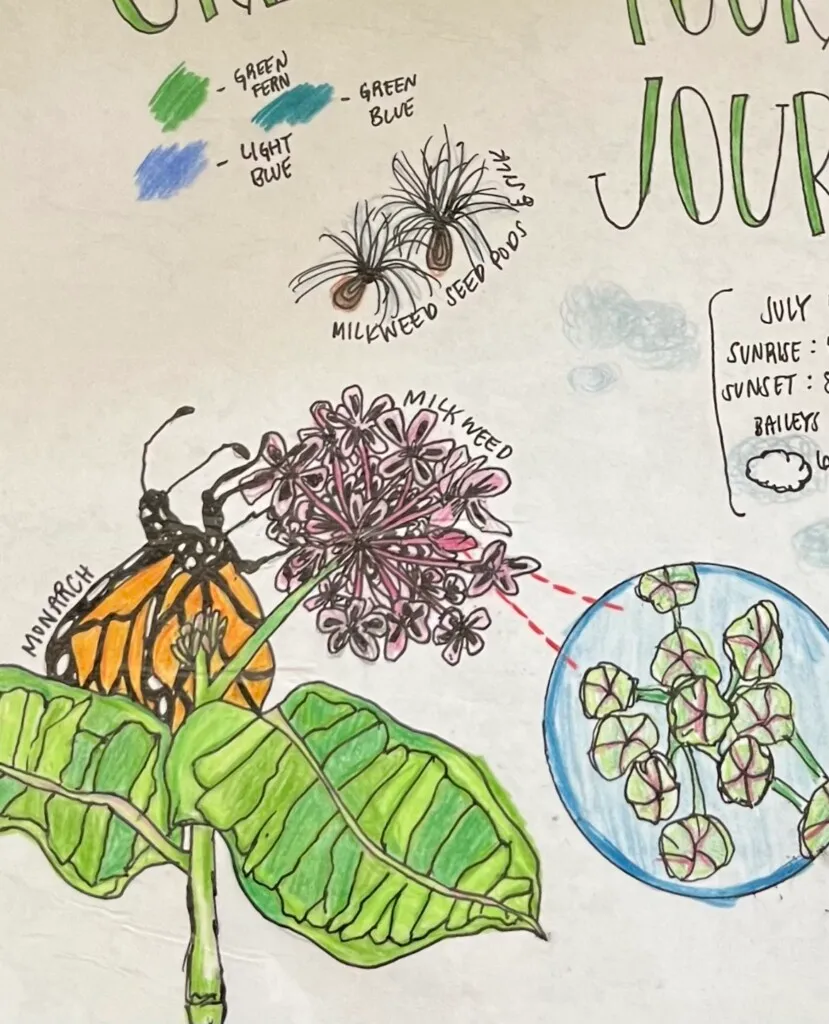
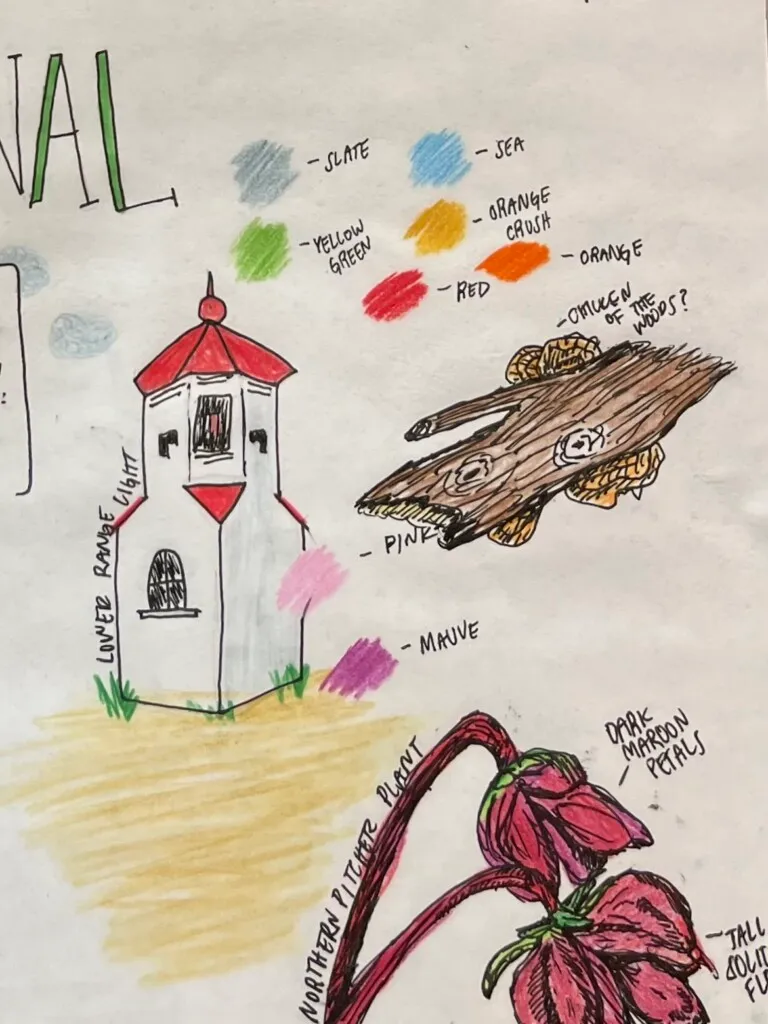
Nature Journal prompt of a summer outing in the Sanctuary.
Nature journaling can be daunting. For me, it ebbs and flows. When I don’t know where to start, I try the following to see where it takes me or where it doesn’t—it is a record of my learning experiences, and that includes my off days:
Just get outside. Make mental notes for future entries or note places you want to return to. You don’t have to go far to see nature, it is everywhere. Your own backyard can be the center of your interest.
“I Notice, I Wonder, It Reminds Me Of”
Date, temperature, sky coverage (record data over time)
Patterns and texture
One-minute quick sketches. Don’t worry about the result
Take photos and note things to look up later
Return to the same spot multiple times to observe and notice differences.
Color palette, shadows, highlights
Look at examples and styles that other illustrators and sketchbook artists’ use. Pull inspiration.
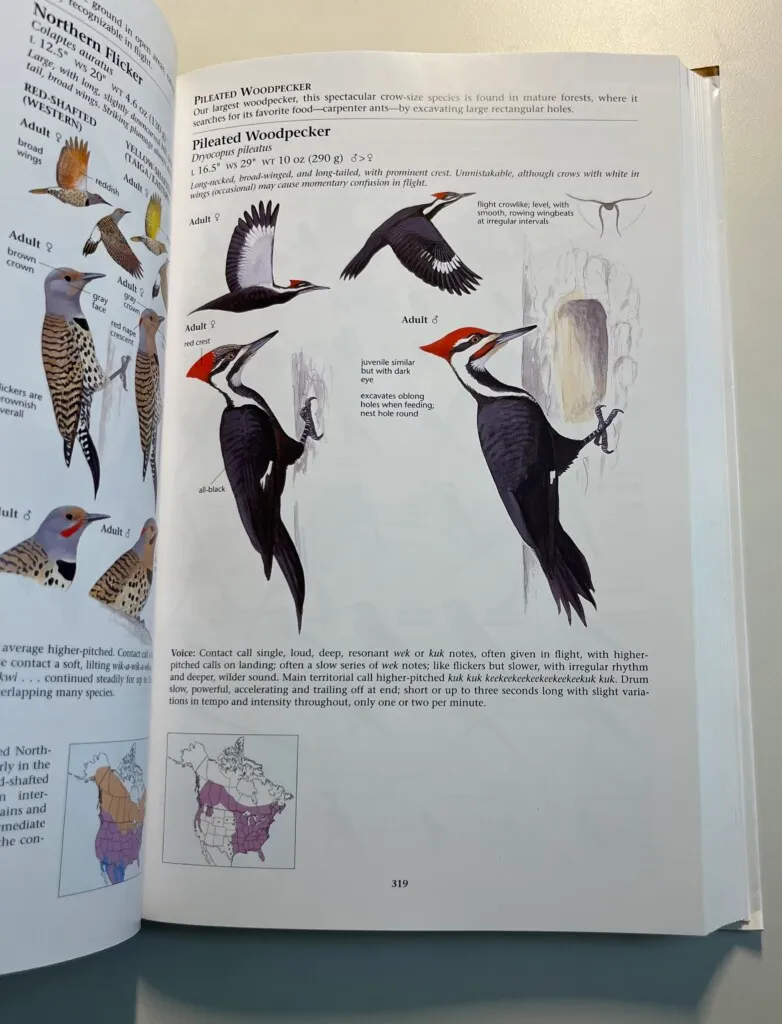
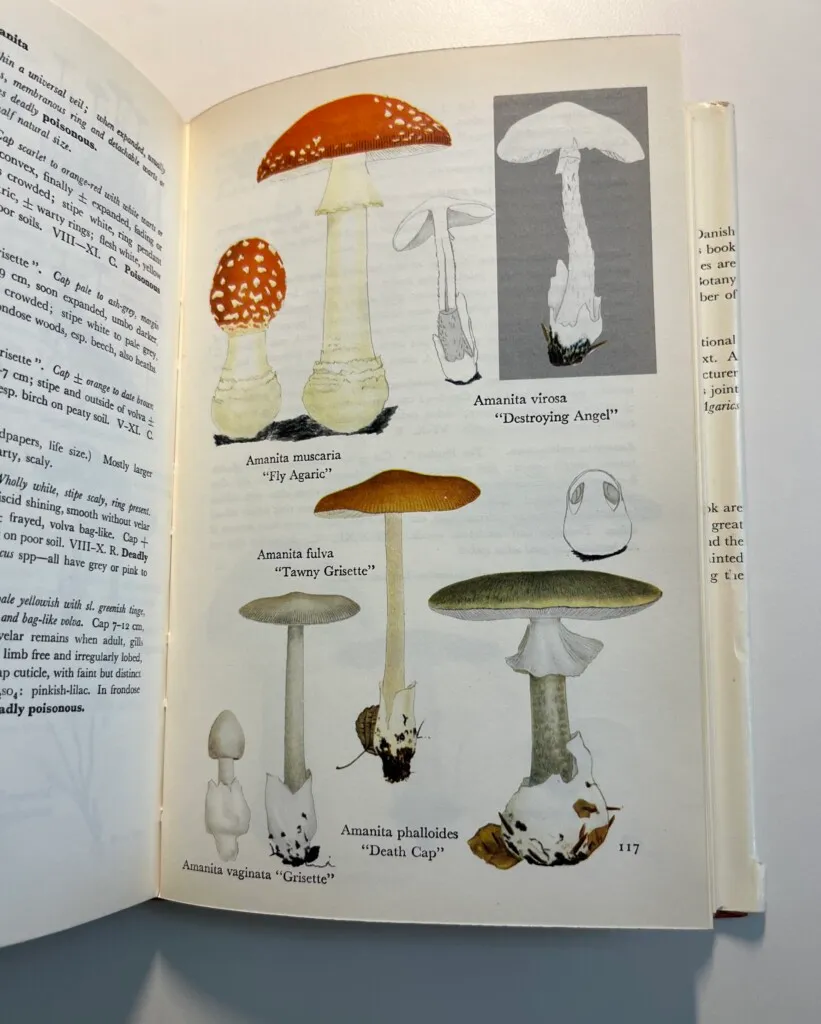
My recent pulls of inspiration have come from field guides that I refer back to such as The Sibley Guide to Birds by David Sibley and A Guide to Mushrooms & Toadstools by Morten Lange.
The joy and fulfillment that come from the practice lies in the process itself and the unique experiences and discoveries you make along the way. It is what you make it, and it is just for you!
As we approach the 22nd Annual Festival of Nature, I can’t help but think of it as a large-scale version of our Ridges lunch gatherings. It is people sharing passions. It is making complex communication of science more approachable and fun. It is a community. It is a cycle of sharing, excitement, and coming back with more and more questions. It provides a way to share ideas in an engaging and educational way and encourages continuous learning about the natural world.
We are excited to share the wide array of ways to experience the natural beauty of the peninsula. This year, let us celebrate the individuals, organizations, and ecosystems that make Door County the incredible community it is by connecting people and the planet. Through field trips, lectures, events, and communications, we want you to be inspired to act and help us ensure that these wild places are protected for future generations.
Below you will see a few highlighted festival programs to engage in nature through different artistic and digital mediums. All festival participants will receive their own notebook to use as a nature journal and jot down notes on their experiences. With 77 field trips scheduled throughout Memorial Day Weekend, there is something for everyone:
27 / Nature at the Tip of Your Pencil, Part 1: Making a Nature Journal – NEW!
Friday, May 24, 1:30 pm – 4:00 pm | Saturday, May 25, 1:30 pm – 4:00 pm
Join scientific illustrator Kathleen Garness for a two-part dive into the world of nature drawing. In the Friday morning workshop, you will learn how to construct your own nature journal. Basic supplies and archival materials and tools needed will be provided, with the handouts and journal itself that are yours to take home. On Saturday (See #59), we will explore the Sanctuary trails and observe, learn, share, and illustrate. No experience is necessary – we want you to see plants with a fresh point of view! You are also welcome to bring your supplies. Participants are encouraged to participate in both workshops; however, you are welcome to participate in individual sessions. Suitable for ages 14 and up.
23 / Using Seek App to Engage in Nature – NEW!
Friday, May 24, 1:30 PM – 3:30 pm
Have you ever found a mushroom, flower, or bug, and not been sure what it is? The Seek app is for you! This smartphone app uses the power of image recognition technology to identify the plants and animals all around you. Drawing from millions of wildlife observations on iNaturalist, Seek shows you lists of commonly recorded insects, birds, plants, amphibians, and more in your area. Join us to learn how to use this app and what it has to offer while exploring the DCLT Oak Road Nature Preserve. We will be slowly walking on an easy, level-to-rolling terrain for approximately one mile of trail. Make sure to wear sturdy walking shoes. Families are encouraged and welcome! Registrants will receive more information about how to download the app ahead of time. Suitable for all ages.
74 / Phenology in a Handmade Book – NEW!
Sunday, May 26, 9:00 am – 12:00 pm
Phenology is the study of a natural phenomenon in relation to its surroundings and as it evolves over time. You will find that even an informal phenology project encourages a deep awareness and connection with your subject. Join us at the Cabins to create your own book, embellish it as much as you like, and put it to use recording data associated with your chosen natural subject. That data may include words, diagrams, photos, drawings, prints, rubbings, and so on, artfully entered into your book. Suitable for ages 18 and up.
Festival of Nature Art Exhibit & Artist Reception
Drawing on Science
A deep dive into the world of scientific illustration and the important role it plays in science. This exhibition features the works of three talented artists, Daniel Meinhardt, Jackie Rath, and Maggie Warren.
The exhibit will be on display from Thursday, May 23rd, 2024 – August 23rd, 2024. Artist Reception, Thursday, May 23rd, 4:00 PM-6:00 PM. Special artist presentations will begin at 5:00 PM.
For more Festival of Nature information, including field trip information, registration, resources, and sponsors, visit our Festival of Nature website: doorcountyfestivalofnature.org
Nature Notes: Birding at a Time of Transition
By Dan Scheiman, Visitor Engagement Specialist
During this mild El Niño winter, it feels like spring is just around the corner here in Door County, and it certainly is according to the calendar, if not according to phenologies such as bud burst and frost-free days. Birds’ annual cycles are better defined as breeding, non-breeding, and migration rather than by calendar seasons. Each species has its own timetable, based primarily on day length, with some influence from temperature, weather, and food supply. We’re in a period of transition now, which should make the next several weeks an interesting time for bird-watching.
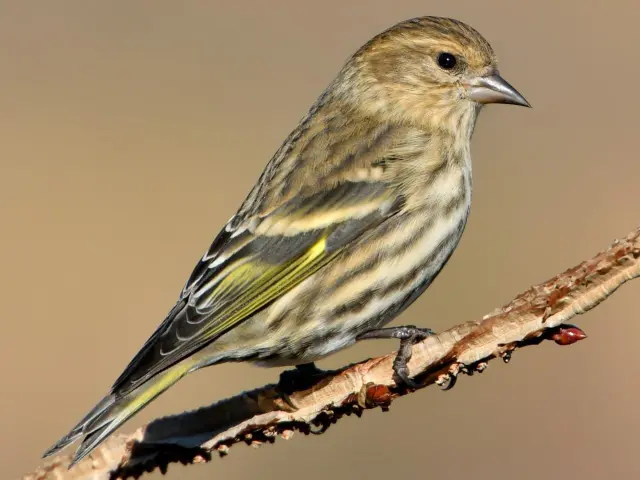
The non-breeding visitors are still around, of course. These are mainly waterbirds like Tundra Swan, Greater Scaup, Common Goldeneye, and Common and Red-breasted Mergansers, which are abundant in bays and the canal. These “winter” birds will be here through May before they head north. Among the winter finches, Pine Siskin is by far the most widespread and abundant. I encounter them daily at The Ridges in small flocks; many are headed down the street to the yard next to Baileys Harbor Marina, where well over a hundred congregate, attracted by the combination of seed feeders, fruiting trees, water, and cover. Otherwise, I’m aware of only a smattering of sightings of Common Redpolls and White-winged Crossbills in the county. Red Crossbills are being seen across the state now but seem to avoid the peninsula in winter for some reason.
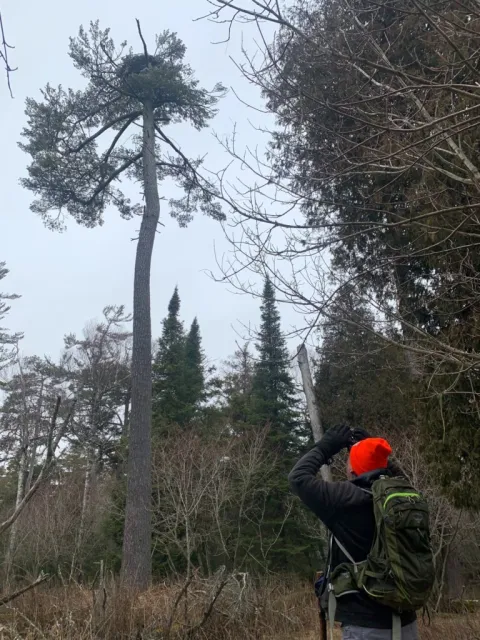
Permanent residents won’t start nesting until April or May, but I’ve already heard some of them tuning up for the breeding season. Perhaps in response to the warm temperatures, Black-capped Chickadees are starting to sing their “hey sweetie” songs, Northern Cardinals are giving half-hearted “what-cheer-cheer-cheers,” while American Robins are caroling “cheery-up, cheerily, cheerio” (I can’t help hearing this in a British accent). Bald Eagles are about to start nesting, which is why the Southern Wisconsin Bird Alliance has started up its annual Bald Eagle Nest Watch program. I look forward to accompanying my Ridges coworkers on visits to monitor the two nests in the neighboring Toft Point State Natural Area.
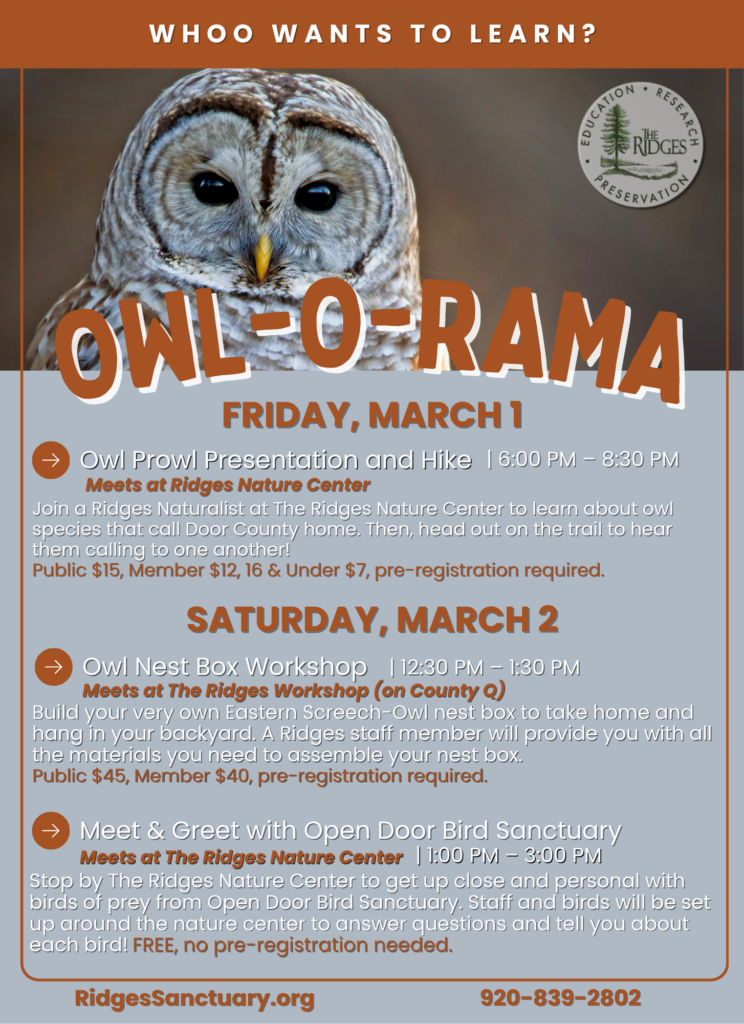
Owls will also be breeding soon. Our Owl-O-Ramais set for March 1-2, to coincide with when owls are becoming vocal and thus more likely to respond to playback during the guided owl prowl that I will co-lead with volunteers Jane Whitney and Julie Knox. My wife and I had the pleasant surprise of hearing a Northern Saw-whet Owl tooting during a candlelight hike in Newport State Park on the early date of February 10, though March is typically the time for them to vocalize in earnest. If you carefully check within the dense branches of pines and cedars, you might get lucky and spot this tiny owl sleeping during the day. Look for whitewash, which is its thick, chalky waste splattered on branches and the ground. Also, listen for songbirds sounding the alarm and making a fuss around a particular spot.
Some of our earliest migrants should be back any day now. These are also short-distance migrants that overwinter in the US, if not southern Wisconsin. Species such as Sandhill Crane, Eastern Bluebird, Red-winged Blackbird, and Common Grackle are already being seen in nearby counties; perhaps a few of these birds never actually left for the winter. They are the vanguard of the extravaganza that is to come in May when the long-distance migrants return (not to mention when all the beautiful wildflowers bloom).
I’m sure that winter weather is not done with us, so take advantage of these sunny, dry, mild days while you can and go birding! You never know what you might see or hear.
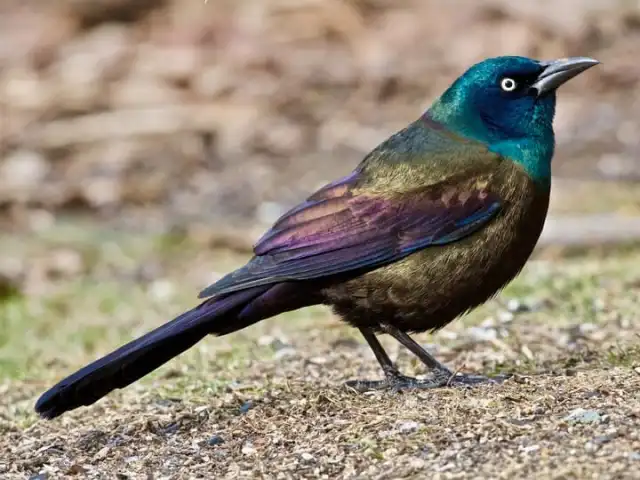
Common Grackle. Photo by Cornell Lab of Ornithology.
Our annual Owl-O-Rama returns this year to The Ridges! Here’s your chance to learn all about these mysterious nighttime predators, including what species are found in Door County, their adaptations for hunting, and how we can protect them. Check out the full slate of events below!
Nature Notes: Lake Level Changes: The Impact of Unpredictability in a Warmer Winter
By Anna Foster, published February 4th, 2024
As we delight in above-average temperatures this January, it’s easy to forget how the warmer days occurring now could impact what Lake Michigan looks like next summer. While we’re complaining about the lack of ice fishing and snowmobiling (or, in my case, snowshoeing), we don’t often consider how this winter’s warmth will affect our summer swimming, fishing, and boating.
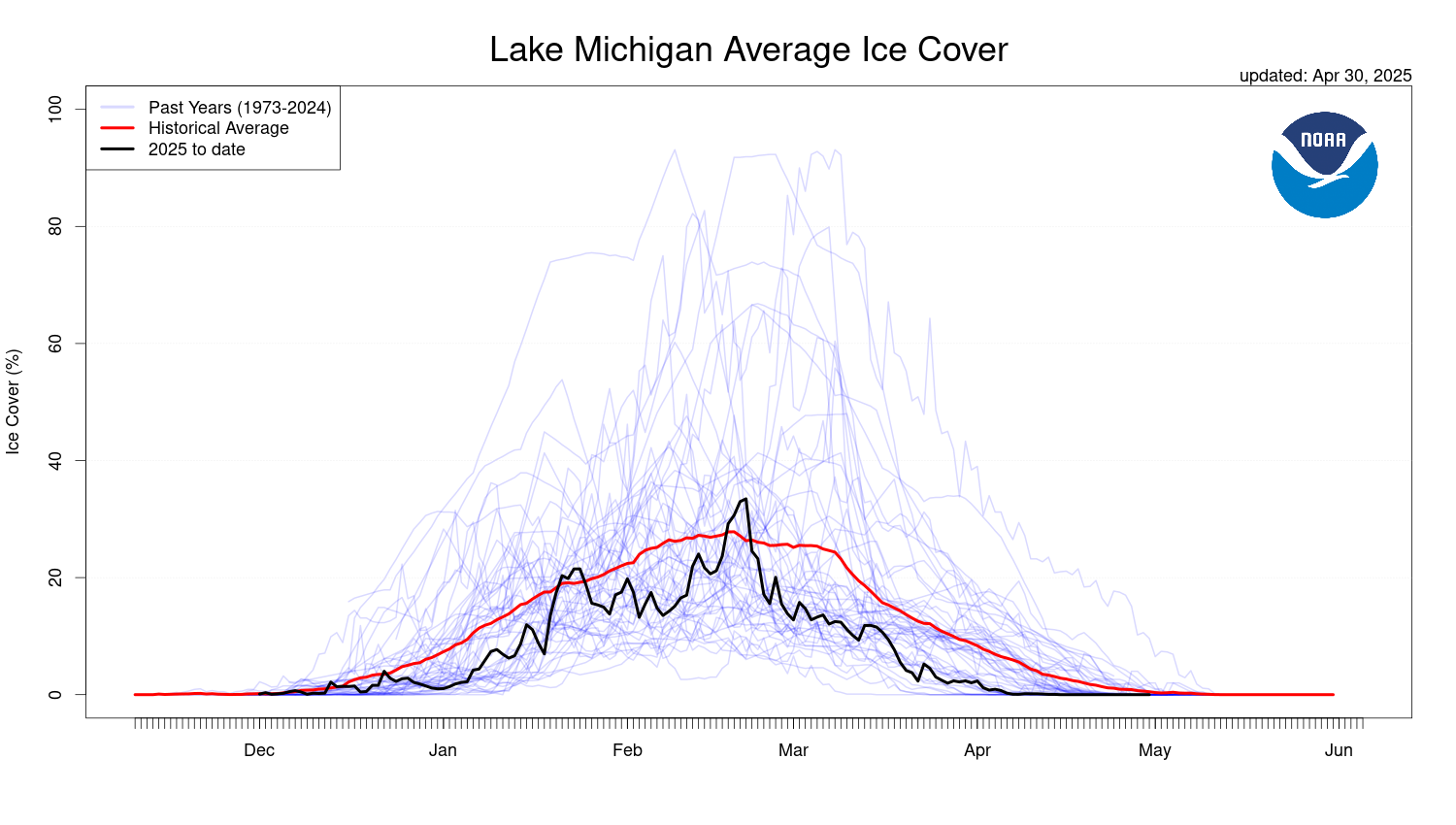
Three factors contribute to lake-level changes: precipitation, runoff, and evaporation. When we have periods with below-average temperatures, such as a polar vortex event, parts of Lake Michigan freeze over. Since the surface water is covered, less evaporation occurs. When we have warm winters, like we’ve had so far this year, more of Lake Michigan’s surface water is exposed and evaporates, decreasing lake levels.
However, ice cover alone doesn’t determine lake levels. For example, lake levels could increase with high precipitation, like winter snow or spring rain events.
Why do lake levels matter?
If you were in Door County in 2019 and 2020, you might remember the damage that high water levels caused to roadways, houses, and other shorefront structures along the county. Shoreline erosion also changed the waterfront landscape in many parts of the county. At The Ridges, a newly formed ridge right along the shore of Baileys Harbor washed away. During a summer storm event, water from Lake Michigan rose so far onto Ridges beach that it flooded the parking lot. Both high and low water levels impact diverse and, in some cases, fragile ecosystems like ridges and swales. Winter conditions impact lake levels for the following year.
The Great Lakes follow a cyclical pattern of high and low water levels. However, in recent years, the pattern has become more extreme. After a period of low water levels ending in 2013, lake levels jumped, and we experienced record high water levels in 2019. When reporting on recent trends, GLISA states, “As recently as 2013, water levels for most of the lakes were very low: in January 2013, Lake Michigan-Huron set an all-time record low monthly mean water level of 576.02 feet, the lowest value on record, which dates back to 1918… In the summer of 2019, record high monthly water levels were observed on Lakes Superior, Erie, and Ontario.” (GLISA).
What will happen in the future?
The short answer is that we don’t know. Long-term lake level models over many years vary. Scientists say we can expect more significant variability in lake levels in the long term.
The US Army Corps of Engineers projects short-term lake level model changes based on historical data on lake levels and forecasts for the next six months. These projections rely on predictions of future weather and the current conditions of the Great Lakes. The latest projections state, “The latest Great Lakes water levels 6-month forecast projects Lakes Superior and Michigan-Huron to continue their seasonal decline in January, while Lakes St. Clair, Erie, and Ontario are predicted to rise slightly.” (Army Corps of Engineers).
Another factor when predicting lake levels is the ongoing El Niño that the United States is experiencing this year. El Niño occurs when ocean temperatures are above 0.5 degrees Celsius for at least five months, causing a change in weather patterns throughout the winter months. This phenomenon typically causes warmer weather and less precipitation around the Great Lakes (Army Corps of Engineers).
These predictions can be incredibly helpful and accurate. However, as we know, Door County weather is anything but predictable. Only time will tell what lake levels will look like down the line.
Organizations such as the Army Corps of Engineers and NOAA’s Great Lakes Environmental Research Laboratory conduct critical research on the Great Lakes to learn more about the effects of ice cover and changing lake levels. They have incredible interactive online tools you can use to explore climate research, learn more about historical data on the Great Lakes, and view the current predictions.
On Saturday, December 16, I participated in the Ephraim Christmas Bird Count. As a new Wisconsin resident and Ridges employee, it was my first time on this count, which has been going on for 60 years as part of an annual community science program, now in its 124th year.
For Audubon’s Christmas Bird Count (CBC), volunteers count all the birds they see and hear within an established 15-mile diameter circle. When done year after year, in circles across the Western Hemisphere, it adds up to a big picture of how bird populations are doing in winter. It is a wonderful way to contribute to bird science and conservation.
My wife Samantha and I had the pleasure of accompanying long-time birder and Ridges volunteer George Cobb in the morning. He’s been doing this CBC for many years and knows the hotspots to hit. We started at Baileys Harbor Ridges Park, where, despite the wind and waves, we managed to identify two White-winged Scoters. It’s the 6th record for this circle of a sea duck that normally winters far offshore. Off Anclam Rd. we found another nice surprise, three Trumpeter Swans, which have largely headed south for the winter; the 2nd record for this circle.
Along the trail at Toft Point, a Bald Eagle perched on the nest closest to the parking lot. I pished (mimicked an alarm call by saying pssh-pssh-pssh) at some chickadees and kinglets, causing a Winter Wren to pop up. Despite its name, this species does not normally spend the winter here (3rd record). Further north on North Bay we counted over 200 Tundra Swans. Seven Sandhill Cranes were still lingering (4th record) along with a very late female Northern Pintail, a first for this circle! Later there were two more cranes in a farm field on Q.
Besides scanning the lake, another way to find concentrations of birds is to look for feeders and fruiting trees. A yard east of Mud Lake was bustling with Pine Siskins, Purple Finches, Cedar Waxwings, and American Robins. For the last couple of hours Samantha and I cruised county roads to tally open country birds like American Kestrel, Wild Turkey, and Mourning Dove.
After dinner we walked the road by our apartment and called up an Eastern Screech-Owl; another first for the count! We ended the day with 37 species for our section of the circle. But it’s not just about how many species we tallied, or even the exciting, rare birds. It’s important to count all birds, even the common ones like Canada Geese and Black-capped Chickadees, so we can track how their populations are doing too. I may be new to the area, but I’m already aware of how climate change is making it easier for more species to linger longer and in larger numbers through the season. Some will benefit, but as climate and ranges change, more species are at risk of extinction.
That’s why we at The Ridges are researching ways to protect the plants and animals on the property now and into the future. If you want to help with monitoring efforts, including by participating in the Ephraim CBC next year, contact Director of Research Tony Kiszonas at tony@ridgessanctuary.org.
Dan Scheiman comes to the Ridges from the National Audubon Society, where he served as Bird Conservation Director in Arkansas for 18 years. Dan and his wife Samantha recently relocated to Door County, and spend their time enjoying the outdoors and exploring the peninsula landscape.
At the Ridges, Dan serves as a point of contact for visitors, sharing his knowledge about birds and nature and their connection to conservation. Dan can be reached at Dan@ridgessanctuary.org.
The Volunteer Magic Behind Natural Christmas
By Anna Foster, Director of Programming
This November, while the rest of the peninsula is winding down, The Ridges is preparing for one of our biggest – and certainly the most festive – events of the year. Staff and volunteers spend countless hours getting ready for the event of the season. Two volunteers in particular have spent the last seven months gathering, drying, and organizing natural materials for the big day.
Jane Whitney and Julie Knox are the elves that bring you Natural Christmas. Throughout the year, you might find them leading owl programs, wildflower hikes at Logan Creek, Festival of Nature programs on clubmosses and conifers, or hikes at one of our many properties. With all the time they dedicate to volunteering during the busy season, you’d think that they would take a break come autumn… but that’s when the preparations for Natural Christmas ramp up. For 16 years, Jane and Julie have gone above and beyond to make Natural Christmas the magical event that it is, so much so that it has become a holiday tradition for many families all across the state.
If you’ve never been to Natural Christmas, you might be thinking, “What makes this event so special?” There’s something a little magical about the event that I can never quite put my finger on. Perhaps it’s the nostalgic, old-time feel of the cabins and bonfires that harken back to the days before Black Friday commercials and social media influencers. Perhaps it’s simply the time spent outside enjoying the beautifully decorated cabins and the Sanctuary with family and friends. What I can say for certain is Natural Christmas wouldn’t be the amazing community event that it has become without Jane, Julie, and our other amazing volunteers who dedicate their time and energy.
I wanted to ask Jane and Julie about their preparations for Natural Christmas. Of course, they’re so busy getting ready this month that finding time to sit down is impossible. Instead, I sent them questions via email, which they answered during their breaks from decorating. I assume they answered as they ate some cream puffs (a Christmas elf’s fuel of choice for decorating magical winter spaces). Here are their responses:
About how much time goes into the planning, gathering of materials, and decorating each year for Natural Christmas (for you two, specifically)?
Jane: I typically record about 150+ hours starting in late summer drying flowers.
Julie: I start in April, starting seeds for flowers, and put in a few hours nurturing them and another couple hours planting them out. June through early October I spend at least a couple hours each week weeding, picking, stripping leaves and hanging them to dry. Probably another 10 hours collecting and cleaning wild stuff like goldenrod, fern fertile fronds and winterberry. So, figure at least 50 hours before we even start the heavy-duty greens collecting and decorating at the beginning of November.
What is the most challenging aspect of decorating for Natural Christmas?
Jane:Besides getting everything done on time, the weather has to cooperate (not rain) so we can gather enough greenery for wreath making and decorating and get the outside decorated too. Or it could be collecting enough sumac seed heads (candles) since the Ridges doesn’t have any sumac anywhere. Or it could be coming up with a new theme every year. Or it could be not gaining weight from our delicious smorgasbord lunches.
Julie: I’ll second Jane on all of the above!
I know you have a network of places from which you collect materials for Natural Christmas in a sustainable manner. Can you explain that process?
Jane: Julie coined the term “tree-age”
Julie: (“triage”- get it? 😂)
Jane: …for how we go about cutting. For example, balsam firs frequently grow in densely packed clusters which means that many of them will fail to thrive, become spindly and sparsely needled. We’ve seen groves of 10-15 balsam firs that may be 25-30′ tall but only the top 10′ will have any needles. So, we cut down as many as half of the balsams in that cluster giving the remaining trees a greater chance to flourish. Or sometimes we make a judgement call…. If two different species of trees such as white pine and cedar are crowding each other out, we’ll cut the least healthy one or cut the species which is less common in that area. We also let people know that if they’re planning on cutting evergreens back that we’d be glad to help so we can use those greens instead of having them go to a brush pile. We also cut non-native Scots Pine which is great for decorating and removes it from the property.
What has been your favorite Natural Christmas theme so far?
Jane: Wildlife? Cabin Life? Music on a Starry Winter Night? Scandinavian Christmas?
Julie: It’s kind of like picking a favorite child – I love all of them. Toys was so much fun we did it twice. The second time in 2021 was extra special since Covid prevented us from decorating for an inside party in 2020.
How many cream puffs do you consume in the month before Natural Christmas?
Jane: Not enough!
Julie: My best estimate is about 150 between the two of us. Maybe a bit more since we sometimes pack some for fellow volunteers and if they don’t eat them, we need to do it so they don’t go to waste!
Is there anything else you’d like folks to know?
Jane: There are many people who work and volunteer to make Natural Christmas so special. We all want people to come and enjoy the event whether they participate in everything or simply sit in the cabin enjoying the music and a cookie or two and looking at the decorations. It’s a fun, low-key start to the winter holidays.
Julie: We love doing all the preparations but are REALLY thankful for the help and support from the Ridges staff and the many volunteers and especially for our “volun-tolds” – our husbands who don’t see much of us for the six weeks before the party and who are good natured about our calls for help to deliver things we forgot, to paint things, chainsaw a tree that is too big for us to hand saw, and, and, and….
Whether this year is your first year coming to Natural Christmas or it’s a holiday tradition, we hope you are able to experience the magic of it all… and if you see Jane, Julie, or any of our Natural Christmas volunteers, be sure to thank them for making this year’s event extraordinary!
We hope you can join us in celebrating the holiday season at The Ridges Natural Christmason Saturday, December 9th from 3:00pm – 6:00pm. Stroll down the softly lit Hidden Brook Boardwalk and join us in our beautifully decorated Kaye Cabin while sipping on warm cider, eating delicious cookies and listening to holiday music. This program offers a wreath-making workshop, holiday crafts, and even marshmallows and chestnuts around the open fire. Guided hikes and tours of the Range Light are available throughout the event. Natural Christmas is a free event apart from wreath making, which is $30 and includes materials for 1 wreath per household. Additional wreaths and swags are $15 each. We hope to see you there!
The Humble Leopold Bench: A History of Conservation and Giving Back
By Jeanne Farrell, published on November 13, 2023
“At 3:30 a.m., with such dignity as I can muster of a July morning, I step from my cabin door, bearing in either hand my emblems of sovereignty, a coffee pot and notebook.
I seat myself on a bench, facing the white wake of the morning star. I set the pot beside me. I extract a cup from my shirt front, hoping none will notice its informal mode of transport. I get out my watch, pour coffee, and lay notebook on knee,” —-Aldo Leopold, A Sand County Almanac.
It was here, on his bench, that famous conservationist Aldo Leopold often observed the birds, forest and wildlife around him. The iconic Leopold bench, originally created from materials scrounged along the banks of the Wisconsin River, underscores how even a piece of furniture can have a connection to the environment. Its design is indistinguishable from most other benches. However, the Leopold bench model holds functional usefulness not readily apparent. By sitting backward, with legs through the opening, the backrest now provides sturdy support for the elbows while using binoculars or cameras to observe nature. The benches are meant to be outdoor furniture that would weather and blend in with the surroundings, eventually returning to earth.
Building the bench requires modest skills, materials and about two hours of time. If left untreated, this stable bench weathers a characteristic gray patina and blends in with its surroundings.
Leopold bench building at the Ridges goes back many years. The known record includes the work of Jim Jauquet, a long-time Ridges volunteer who made benches in the early 2000s. In 2012, Larry Crock took over the reins from Jim. Using his woodworking skills, he started with leg assemblies, eventually taking on the entire process and using his home workshop for production. Larry used his woodworking skills to make the first fixtures that held leg assembly pieces properly for drilling the carriage bolt holes. The fixtures are still in use today.
The building process was eventually transferred from Larry’s home garage to The Ridges workshop/garage, as was the raw wood storage structure that Larry built outside his garage. The Ridges garage accommodates a radial-arm saw and a workbench on either side of the saw, allowing a saw table almost 20′ long, greatly facilitating the processing of boards purchased from Henschel’s. Fixtures mark the lengths needed for seats, backs, and leg assembly pieces, obviating the need to measure for each cut.
Larry “retired” from 10+ years of bench building in August 2023, and production was handed over to Ridges Thursday crew volunteers Jim Kinney, Bill Wolff and Todd Rockway. Jim has fond memories of working alongside Larry. “Larry was a faithful volunteer who always showed up for the Thursday morning work shifts, even in winter weather. He was an excellent carpenter and worked on making an excellent product for sale at the Ridges store.”
The Ridges Sanctuary is deeply saddened by the passing of Larry Crock on October 4th, 2023. Larry and Cynthia Crock became residents of Baileys Harbor in 2008 and quickly established themselves as active volunteers and supporters of the Ridges. Larry was also a member of the Rotary Club of Door County North in Baileys Harbor and Immanuel Lutheran Church LCMC, and volunteered with Feed and Clothe My People. He will be dearly missed.
Looking for a great holiday gift? Leopold benches are for sale at The Nature Store for $140, assembled and $120 for an unassembled kit. Nature Store hours are Monday, 9:00 a.m.-3:30 p.m., Thursday-Saturday, 9:00 a.m.-3:30 p.m. and Sunday, 10:00 a.m.-3:00 p.m.
Land Management Volunteers: Making an Impact
By Sam Hoffman, Land Manager
As the heart of fall approaches and our field season winds down, it’s the perfect time to highlight Ridges Sanctuary land management volunteers and their invaluable contributions to our organization.
When I first joined The Ridges as Land Manager in November of 2021, one of the first projects I was assigned was to help plan and facilitate the replacement of our Range Light Boardwalk. This walkway is one of the most traversed parts of the Sanctuary but was showing its age and lacking the accessibility features of our Hidden Brook Boardwalk. I quickly realized how dedicated and talented our volunteers are. When tasked with the project, our Wednesday Crew gathered every week and worked tirelessly to complete the project over a five-month span in 2022, all while keeping the 800-foot-long boardwalk open to visitors. In the end, over 80 volunteers donated roughly 600 hours to rebuild the structure while saving The Ridges over $30,000 in construction costs.
We have since leveraged that effort to continue to replace and improve aged-out boardwalks on our original rustic trails system that traverses the iconic ridge and swale complex. And their work doesn’t stop there. The Wednesday Crew regularly assists staff in all kinds of land management efforts, including but not limited to land and trail maintenance, groundskeeping, facilities repair, and a variety of special projects such as building seasonal decor for the Nature Store and assembling bat, owl, and bluebird house kits for our workshops.
Other important volunteer groups contributing to land preservation and management at The Ridges include the Garden Crew and the Barberry Pirates. The Garden Crew has done a great job of increasing the diversity of the pollinator gardens that provide habitat for many bee and butterfly species while maintaining an aesthetically stunning space around the Cook-Albert Fuller Nature Center for visitors to interact with. The establishment of a Native Plant Demonstration Garden was a highlight, with other exciting projects planned in the coming years. The Barberry Pirates are a revived group of volunteers assisting staff with managing invasive species. In 2023, they helped with the removal of Dame’s Rocket, European Marsh Thistle, and Glossy Buckthorn at multiple sites.
Volunteers are an essential part of operations for any nonprofit. Still, I often hear from folks in our community that The Ridges Sanctuary has some of the most committed volunteers in the county. I couldn’t agree more. It is a privilege and an honor to work alongside people who work so hard to continue to accomplish the Ridges’ mission. The Wednesday Crew, along with the rest of our volunteers, are an integral part of The Ridges family and are truly a pleasure to work with. They have shown me by example that we can achieve much more as a collective when passionate individuals work towards a common goal.
Not only do volunteers give to their community, but there are personal benefits to volunteering itself, from forming new friendships to learning new skills. If you have thought about volunteering with The Ridges Sanctuary before but haven’t yet done so, I urge you to contact me for more information on opportunities to contribute.
I can be reached via email at sam@ridgessanctuary.org, or by phone at (920) 839-2802 ext. 108.
Ten Reasons to Volunteer
1. Socialize and connect with other passionate members of the community.
2. Give a boost to your cognitive, emotional, and physical health.
3. Develop a strong connection with nature and the land.
4. Make valuable contributions to conservation that benefits the entire community.
5. Protect a precious natural resource for future generations to experience.
6. Help to provide continued and further access to the outdoors for people of all ages and abilities.
7. Put your talents to use.
8. Learn new skills that can be applied to many different areas of life.
9. Create new friendships with people you share values with.
10. Make a positive impact on other people’s lives.
Let’s Connect
Stay up to date on our four-season stories, sightings, events, and experiences.