Summer Project Spotlight: Butterflies of The Ridges Sanctuary
By Heidi Williamson
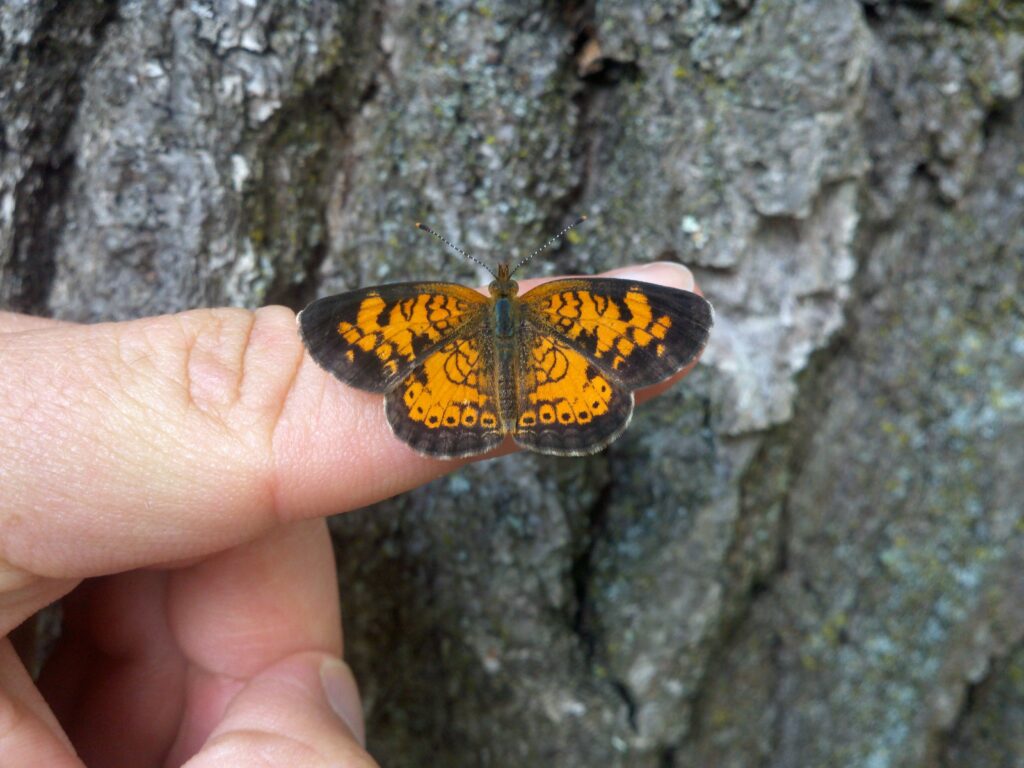
Northern Crescent at The Ridges Sanctuary
The following is a Summer Project completed by Heidi Williamson, 2024 Summer Naturalist at The Ridges Sanctuary. Heidi is a college student from Tulsa, Oklahoma attending Texas A&M University. She is working toward a degree in Ecology & Conservation Biology. She is passionate about wildlife conservation and helping people discover and experience the natural world around us.
There are many summers on a warm sunny day, when the light flutter of butterfly wings can be seen. The Ridges Sanctuary provides a great habitat for these colorful insects. Between the open meadows, wooded trails, and soggy swales, butterflies can be seen all over the property. It can be challenging to sneak up close enough to snap a picture, and how would you know where to begin when deciding what kind of butterfly you saw?
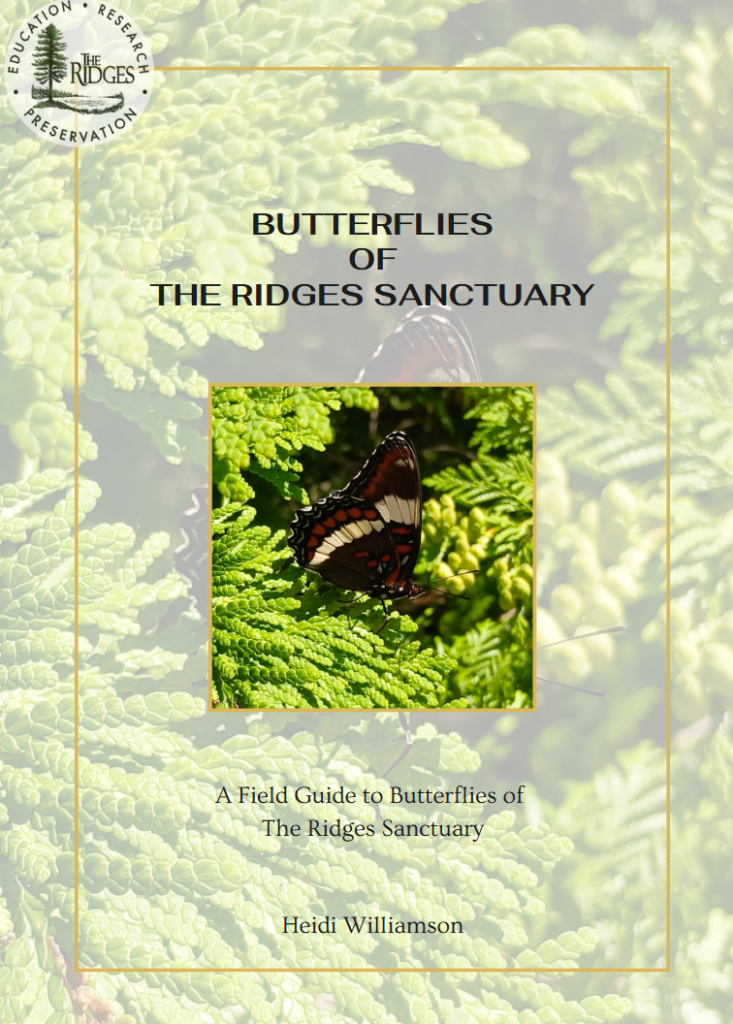
“Butterflies of The Ridges Sanctuary” was created by Heidi Williamson during her time as a Summer Naturalist at The Ridges Sanctuary. The field guide is a product of her summer project as she documented butterfly species through walking surveys and fruit traps. She hopes that it can be a useful guide to identify butterflies found in the Ridges. There are 29 species featured in the guide, all photographed by Ridges staff members. It is not a comprehensive guide, but rather a starting place for butterfly species identification and documentation.
How the guide works
Butterfly species are grouped based on their phylogenetic relationships, that is, how they are categorized by scientists based on how species are related to each other evolutionarily. At the top of each page is the common name for the group the butterflies on that page belong to. Some groups need multiple pages, in these cases, the group name is listed on all pages for that group. Conversely, some species groups are small enough to share a page. In this case, there are multiple group names per page. On each page typically four species are pictured along with their common name and species name underneath.
Read the Butterflies of The Ridges Sanctuary guide by Heidi Williamson below:
Summer Project Spotlight: Indigenous Plant Use in The Ridges Sanctuary and the Door Peninsula
By Leah Hamblin
The following is a Summer Project completed by Leah Hamblin, a 2024 Summer Naturalist studying Anthropology at Southern Utah University. The goal of this project is to introduce the public to indigenous plant use here at The Ridges Sanctuary and the Door Peninsula as a whole. As a non-native undergrad student, it is important to note that this project is generalized and meant to provide a jumping-off point for learning more about traditional plant use. It should not replace learning from Indigenous people here in Door County. More resources for learning about First Nations history in Wisconsin will be available at the end of this report and on the Ridges Sanctuary webpage.
The plants listed in this report are for educational purposes. To preserve The Ridges Sanctuary, foraging is not permitted. In addition, each plant listed here has incredibly specific preparations, and this report is not intended to provide those instructions. We do not condone consumption of any wild or foraged plants without the guidance of an expert in the field.
Plants and People
Look around you. How many things that you see come from plants? We use plants everywhere! We put the leaves in salads and use wood from trees to build homes and furniture. We use them to weave and dye our clothes. We even put them in pots to brighten our homes! What would we do without plants?
In fact, trees are one of the reasons why Bailey’s Harbor came to be in the first place. In 1848, Capitan Justice Bailey happened upon Bailey’s Harbor and noticed the abundance of high-quality wood for logging, bringing settlers and business into the harbor and expanding the lumber industry in the area.
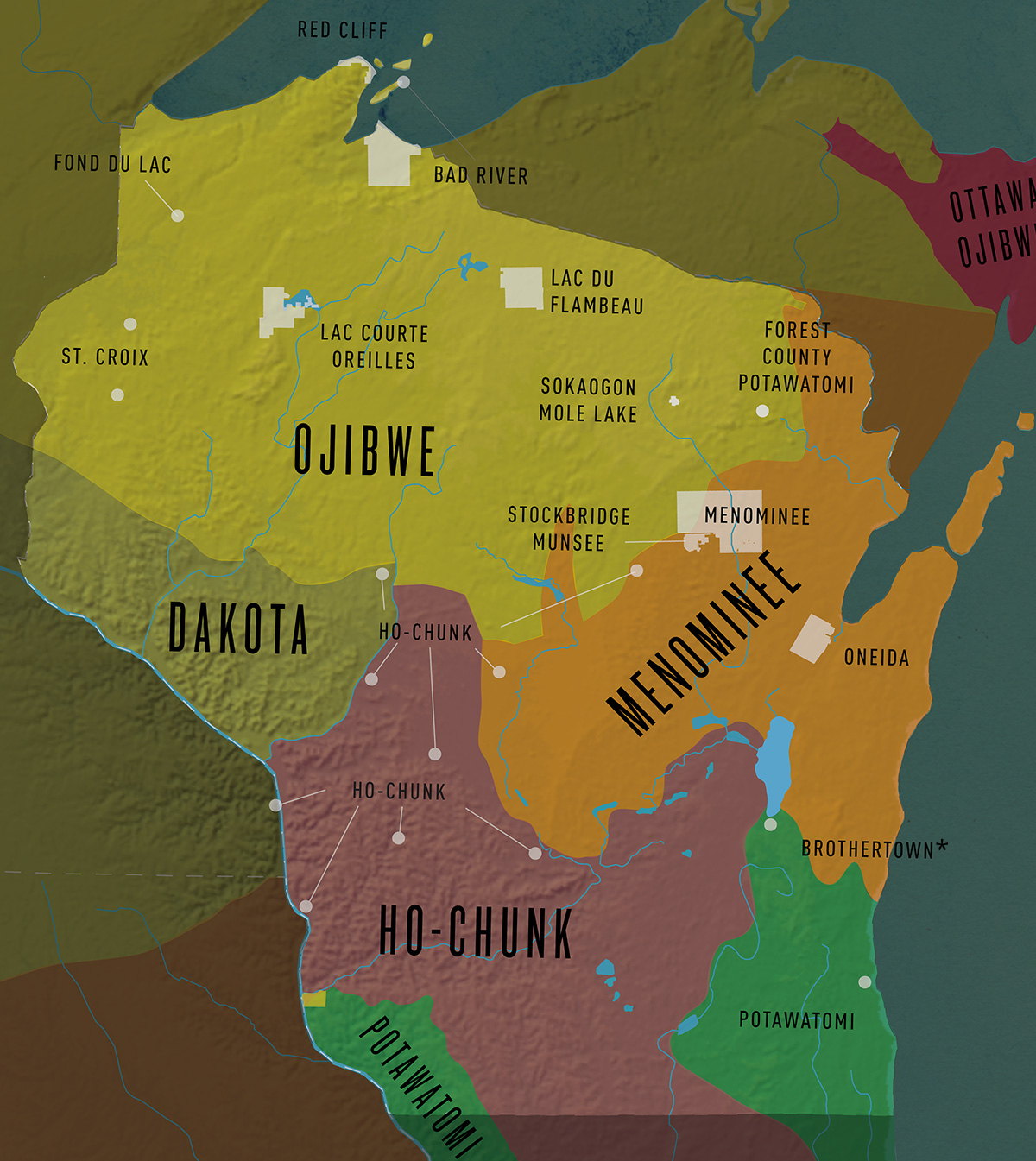
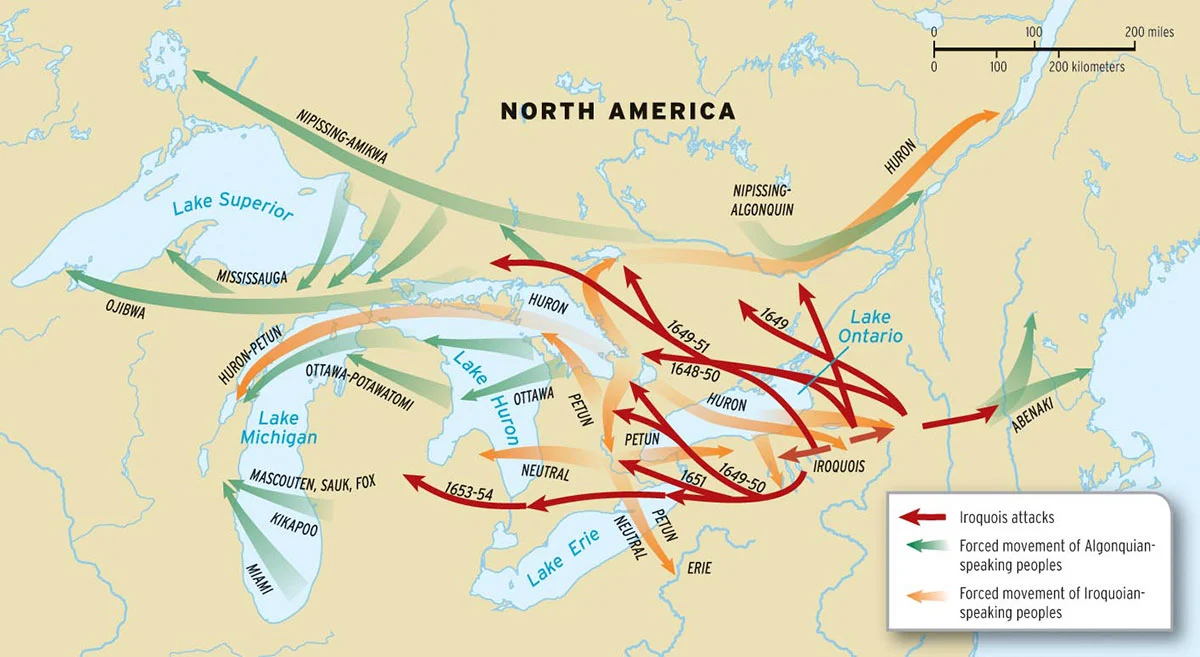
Before Europeans even set foot in the Door Peninsula, it belonged to First Nations groups who cultivated and cared for the woods that surround us. In the last couple of centuries, around seven different Indigenous Groups lived in or passed through the peninsula, including the Menominee, Potawatomi, Odawa (Ottawa), Sauk, Ojibwe, Petun, and Huron peoples. They knew the land well and used hundreds of plants in many ways.
Tribal Lands Map, photo from wisconsinfirstnations.org/map/
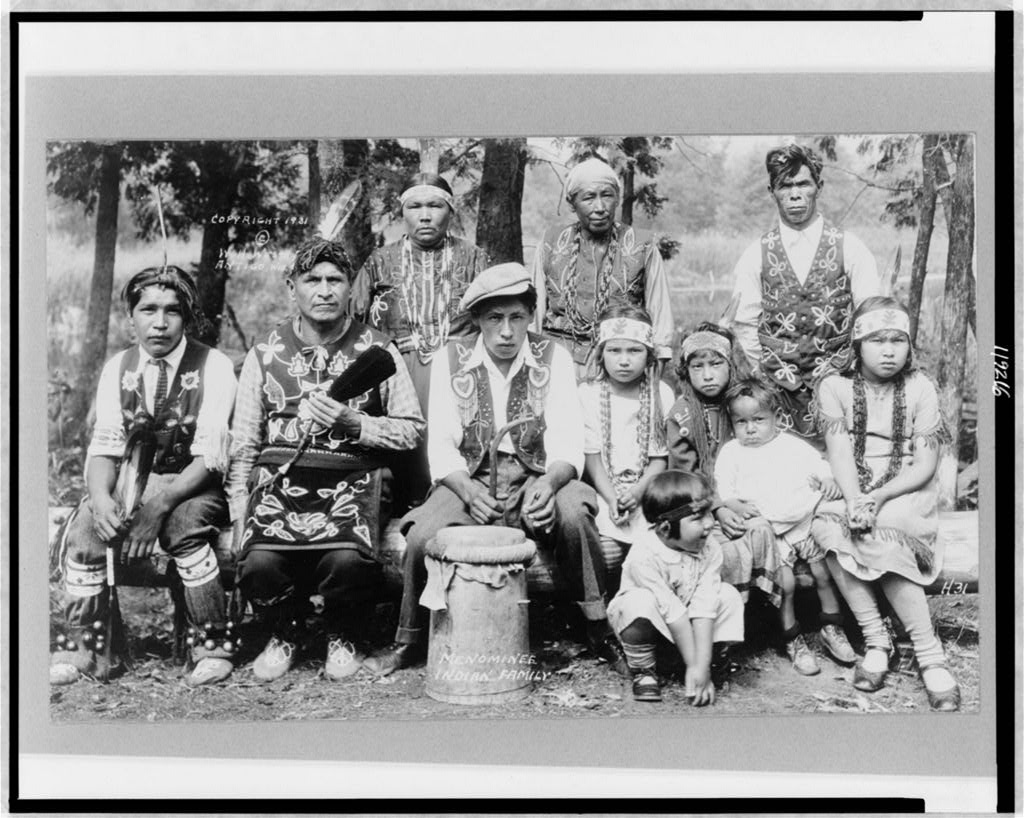
Menominee Family, Photo from Library of Congress
Plants are critical to culture and survival:
Plants are an extremely important part of Indigenous culture in Wisconsin. Plants were both foraged and cultivated all over the Great Lakes region and incorporated into virtually every aspect of daily life. Many groups would travel seasonally to find certain plants and hunting sites, sometimes bringing seeds back to permanent sites to plant them.
What is Ethnobotany? Ethnobotany combines social and biological sciences to understand how people interact with plants. It often refers specifically to studying traditional plant use, which includes using plants as medicine, food, soap, fiber, and for ceremonial purposes. Ethnobotany is valuable because it promotes the need for both biodiversity and different cultural perspectives. Not only can we learn about the plants around us through how they were used, but we can also learn about people and cultures based on how they use plants. Understanding the ethnobotany of First Nations in Wisconsin can help us understand more about the places we live in, as well as those who lived here before and live here still.
Many of the plants used by First Nations were used in multiple ways. The Ojibwe believe that every plant has a use and a purpose. Children would practice this principle by gathering every flower they see to make a drink, learning about the many applications of the nature surrounding them. Not only is knowledge of these plants important, but every plant has specific preparations and a proper time to be harvested. Often, all parts of the plant are used, including the leaves, stems, roots, bark, and flowers.
Gratitude is centered in the gathering of these plants. Many tribes, such as the Menominee and Potawatomi, see plants as the hair from Grandmother Earth and would thank her for her gifts by placing tobacco in place of the plants they harvested. Showing this gratitude in the right ways give the plants their potency.
How many plants do you use every day? How can you be intentional about appreciating them?
Plants tell stories of history
The Great Lakes Region has a complicated history of intentional seasonal movement and forced migration. Logging in the 1800’s and early 1900’s significantly impacted native plant growth, and the introduction of invasive species changed the landscape. In the 1600’s, fur traders moved into the peninsula. Later, in the early to mid 1800’s, the logging industry boomed, bringing even more people. This colonization displaced those who lived there before, such as the Menominee, and forced others, such as the Potawatomi, to move to the peninsula. Plants and people are intertwined, and the effects of these changes can be traced through a few plants.
Potawatomi relocation map, photo from Indian Villages, Reservations, and Removal by P. Sewick
One example of these changing environments is the Ox-eye Daisy. It was brought over from Europe in the 1800’s and quickly spread. Because the daisy is invasive, most Indigenous nations in the 1920’s did not have a word for the plant in their own language, and any medicinal uses were unknown. Language tells the story of this plant’s history and use in the peninsula.
Language, Plants, and Culture: This report includes several translations for each plant mentioned. If known, the direct translation of the Native word is included. Often, the direct translations hint at how those plants may have been used, where they were found, or why they were important. Preserving these words is important to save cultural knowledge that is lost with language extinction. Think about how you name things. Do those names tell stories?
European immigration to the Great Lakes region had countless other negative effects on Native food sources. Indigenous people used controlled fire to manage plant growth for centuries. Once Wisconsin became inhabited by Europeans, burning underbrush was restricted and important food sources, such as blueberries, which were encouraged by burning became less accessible. Cranberry bogs became popular in Northern Wisconsin, reducing Indigenous peoples’ access to those native crops.
Forced relocation such as the Indian Removal Act mandated that nations and/or tribes such as the Sauk needed to relocate to places with plants unfamiliar to them. This caused valuable knowledge about their generational homelands to be lost. While medicine men were traditionally trained to treat only a few diseases, illness brought over from Europe demanded the holders of this information to come up with a wealth of new treatments, overall weakening effectiveness.
Despite the loss of generations of wisdom, efforts are being made to restore this knowledge. Several universities in Wisconsin conduct research and offer educational lectures on ethnobotany, and the University of Wisconsin in Green Bay offers lectures on the subject from resident elders. Interest in Indigenous plant use is growing, and more knowledge is recovered every day.
Resources for First Nations/Ethnobotany in Wisconsin
Additional Resources provided on the Indigenous Heritage Page of the Ridges website and at the end of this report.
Ethnobotany at The Ridges Sanctuary
The Ridges Sanctuary is the southernmost boreal forest in the United States, providing a unique habitat for over 475 vascular plants, including many rare and unique species. It differs from the Northern Hardwood forests which many Indigenous groups in Wisconsin were the most familiar with. Forced relocation also led to more unfamiliarity with plant species commonly found at The Ridges Sanctuary. Despite this, many plants located at the Ridges were used traditionally in medicine, food, fiber, and more. Each plant highlighted throughout this report can be found on Ridges Property.
What is a boreal forest? Boreal forests are found all over North America, Europe, and Asia. They consist of mainly coniferous trees such as spruce, pine, fir, and cedar trees. The ground cover consists of greenery such as mosses, shrubs, and lichens.
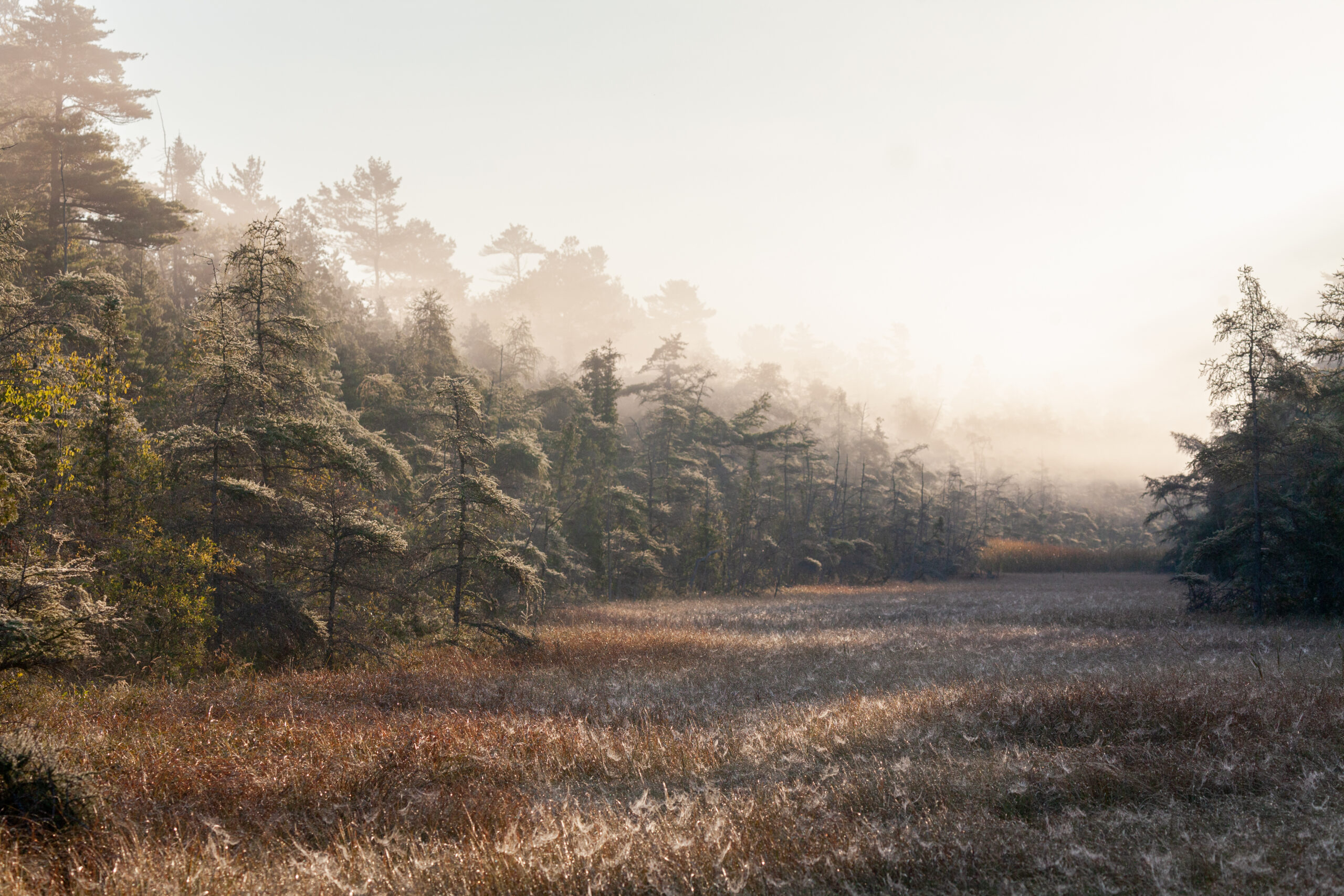
Swale, photo by Andrew Pirrung
Though plants were most often used in many ways, this report divides uses into three categories with a few examples for each: Plants as Medicine, Plants as Food, and Plants as Fiber.
Plants as Medicine
Medicinal uses account for a massive amount of diversity in plants used by First Nations groups in Wisconsin. The Ojibwe alone recognize and use around 400 different species of plants, most of which are used for medicinal purposes.
Knowledge of these medicinal plants and their uses was often held by only a few members of the community and passed down from generation to generation. The application of medicine could be very individualized and changed from person to person.
The Medicine Wheel: The medicine wheel is a sacred symbol used by many tribes in North America. Frequently colored black, white, yellow, and red, these four sections can represent many things, including the four directions, the seasons, stages of life, or sacred plants (tobacco, sage, sweetgrass, and cedar). It also can represent all the knowledge in the universe. It is used in ceremonies and as decoration.
The Medicine Wheel, Photo by Gabby Drapeau
This section highlights a few medicinal plants located on Ridges property.
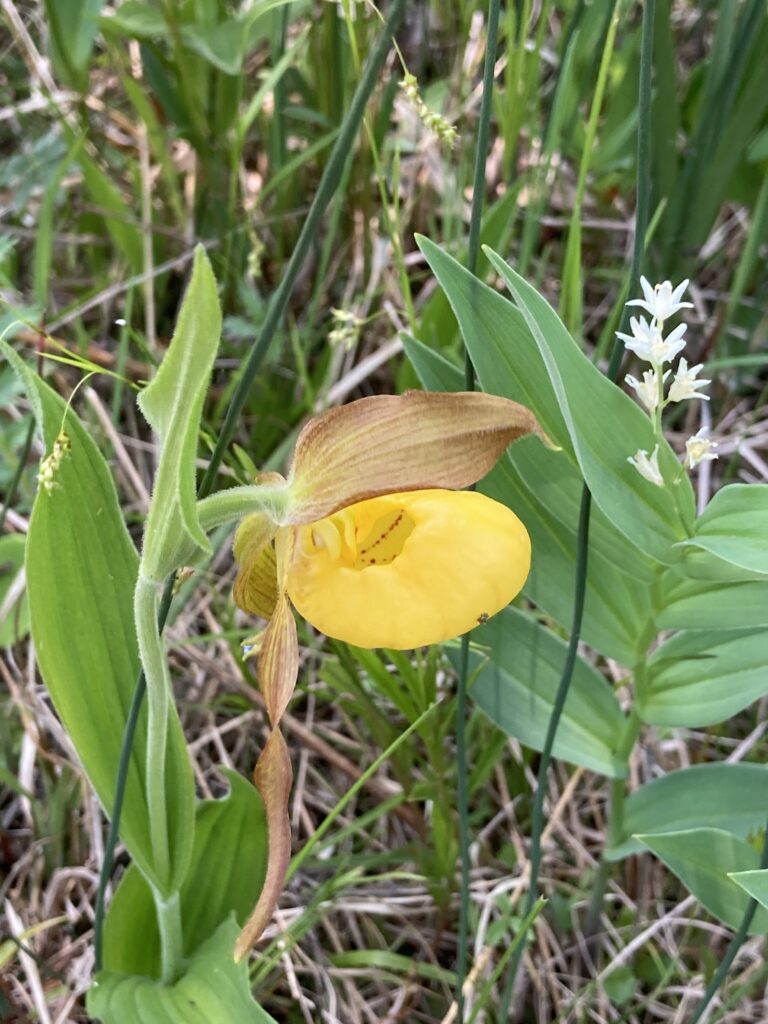
Yellow lady slipper orchids can be found across most of the United States. The Ojibwe, Odawa, and Menominee would use the roots of this plant as medicine for relief from menstrual cramps. In addition, the Ojibwe would use it in bundles to induce dreaming.
Canada Mayflower is a plant commonly found in boreal forests such as the Ridges. The Potawatomi would use the roots of this plant as a cure for sore throats, while the Ojibwe would use it for keeping kidneys open during pregnancy, curing headaches and sore throats, and as a smoke for inhaling.
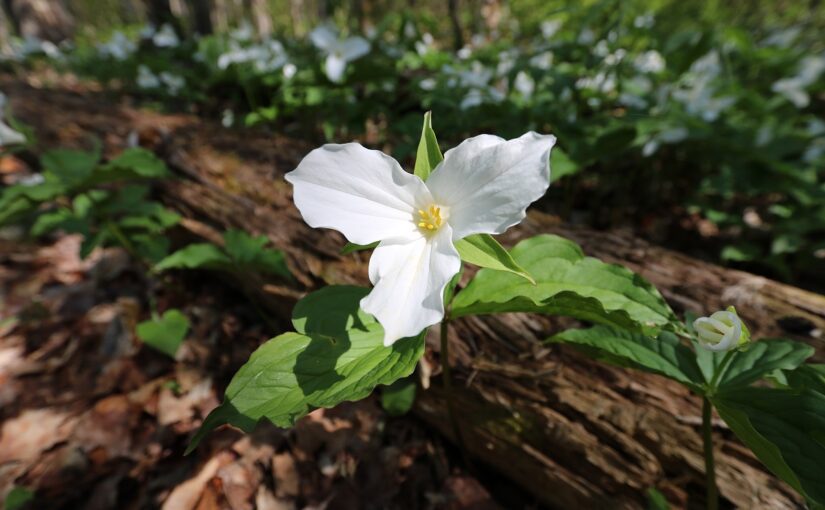
Common Trillium
“waiä’pîski wasakwona’wät” [little white flower in the spring] (Menominee)
The Menominee would grate and apply Trillium root to the eyes to reduce swelling. In addition, the grated root would be steeped and drank as tea for cramps and irregular menses.
White Trillium, May 2018, photo by Andrea Coulter
Native Plants as Food
Plants were a critical food source to First Nations groups here in Door County, along with hunting and fishing. Plants were harvested both through cultivation and through foraging. Often, plants used medicinally or as fiber were cultivated as well. Three Sisters Gardens provide squash, corn, and beans as a foundation to a balanced diet.
Berries are an important food source and were eaten both fresh and dried. Some berries found on Ridges property include Bunchberries, Wild Strawberries, Chokecherries, Bearberries, Raspberries, and Blueberries.
In addition, parts of other plants were eaten. Frigid Door County winters made storage important, so nuts were harvested and various parts of plants were dried for winter consumption. This section focuses primarily on foraged plants.
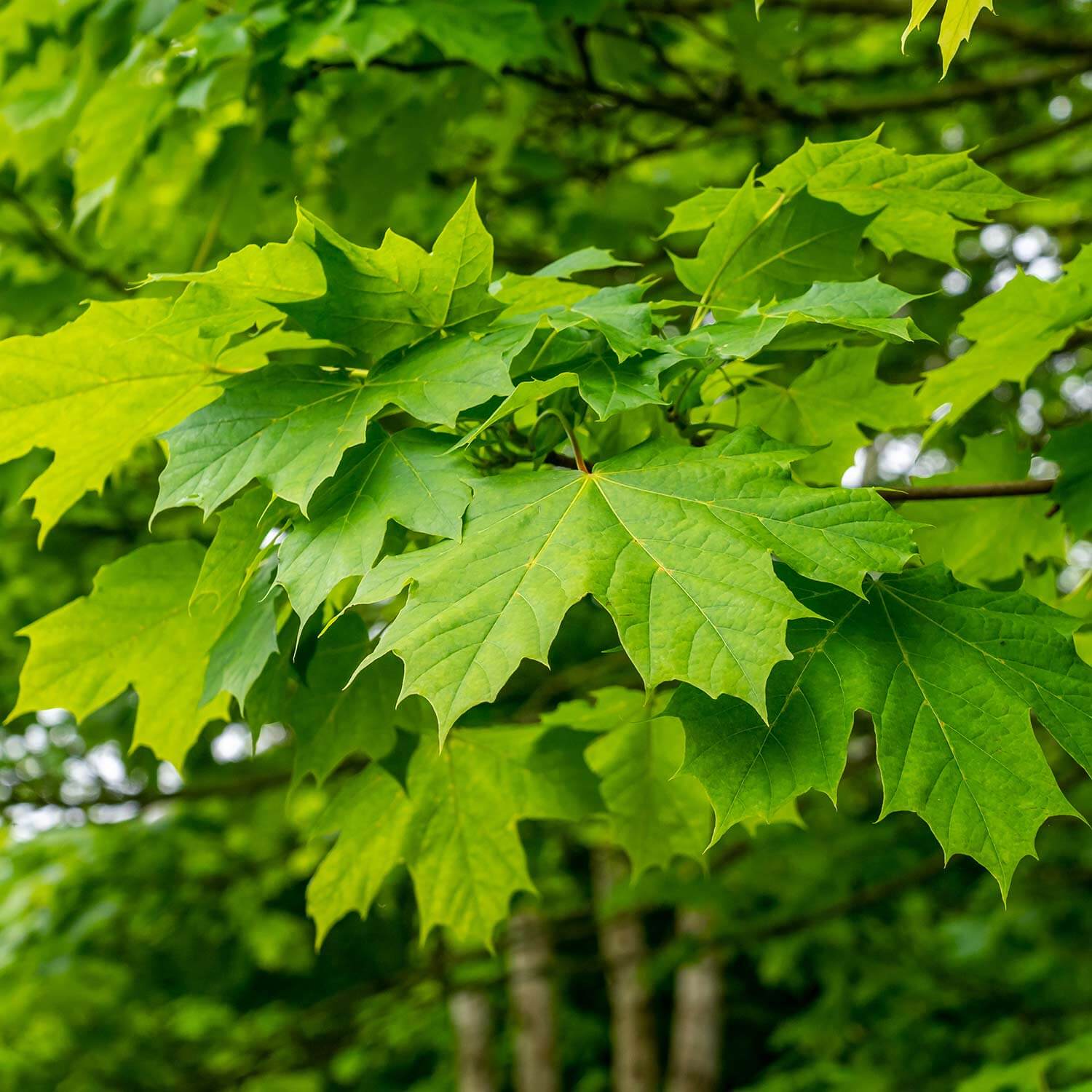
Sugar Maple
“I’nina’tig” or “Ninaatig” (Odawa), “kisinamic” (Potawatomi), “adjagobi’ mîn” or “înena’ tîg” [indian tree] (Ojibwe)
The Sugar Maple’s ability to provide maple syrup makes it one of the most valuable plants in many First Nations groups. Maple sugar was the primary seasoning and used traditionally in place of salt. The sap would be soured and used as vinegar to season meat. Many cultural gatherings centered around harvesting Sugar Maple sap and making maple syrup. In fact, the Odawa knew the month of march as the “Maple Syrup Gathering Moon”, or “Ziisiibaakade Giizis”.
Sugar Maple, Photo by westernstarnurseries.com
Menominee Legend of the Origin of Maple Sugar:Many years ago, Mä’näbus was traveling about over the earth when his attention was attracted to the maple tree. It had not been one of his own creations; indeed, it was made by some other hero. Mä’näbus was displeased with it, for in those days its sap was pure syrup, and it ran very slowly. “That is a poor way”, said he, “for the sap to run; it is too slow and tedious for my aunts [the women] and my uncles [the men] to wait for it, and it is too hard to get out of the bark dishes. I’ll make it better and more profitable for them.” So, suiting his actions to his words, he went over and urinated into the tree, and his urine united with the sap and made it thinner so that it flowed more freely. “Now,” said he, ‘my uncles and my aunts will hereafter realize that this is a far better way for them to get their sugar. Heretofore they got the syrup too cheaply, but now they will have to work for it by their sweat. There will be more sap, but they must prepare it.” -Material Culture of the Menomini, Alanson Skinner
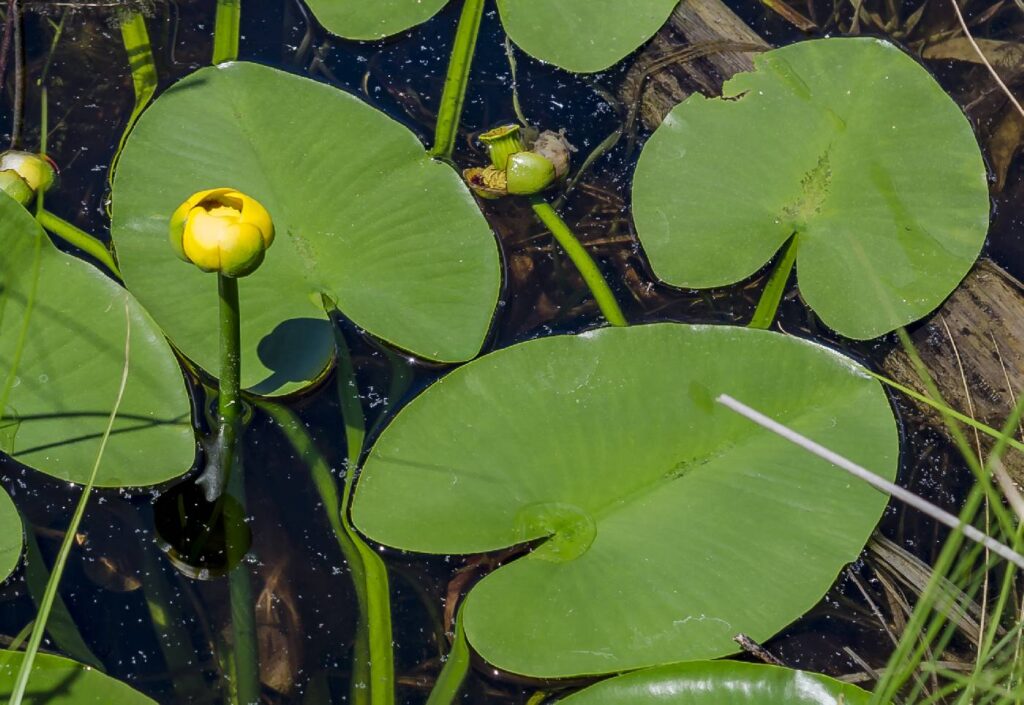
Yellow Waterlily
“Wakepin/Yakepin” (Sauk), “woka’tamo” [having legs to stand] (Menominee)
Yellow waterlily roots were boiled and eaten by the Sauk and used as an important medicine by the Menominee. The powder was used as a poultice for cuts and swelling and was said to create the fog that hangs over lakes.
Yellow Water lily, photo by Aaron Carlson from Flora of Wisconsin
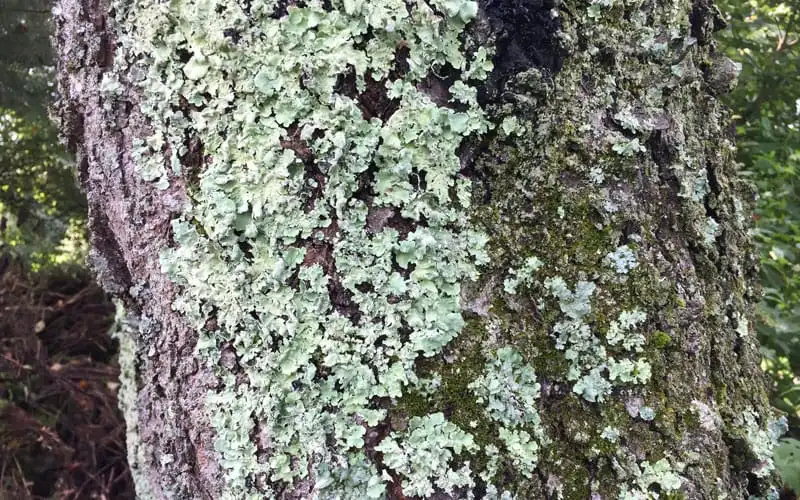
Tree Lichen
“wakwûnûk” [egg bush] (Potawatomi), “wakûnû’k.” [eggs dangling from the tree] (Menominee), “jîngwakons wakun” [little white pine and row of eggs] or “jîngwa’kwak” [pine egg] (Ojibwe)
There are thousands of species of lichen located in the United States, and hundreds located in The Ridges Sanctuary alone. Not all lichen is edible, so being able to identify which lichen to harvest is critical. Lichen would only be collected from specific trees depending on the tribe. The Potawatomi would collect lichen from spruce trees and boil it to cure constipation. The Menominee, on the other hand, would collect lichen from hemlock and maple and add it to soups, both for flavor and medicinal purposes. The Ojibwe would collect lichen from white pine and would boil them until they came together like scrambled eggs. It is said to be a favorite dish of the Ojibwe.
One Menominee story surrounding lichen claims that lichen is the scabs from the body of Mä’näbus, a cultural hero, left for everyone to eat and to sustain life.
Common Milkweed has many uses. The young flower buds would be eaten as greens or to thicken soup and would be dried for later use. The outer bark would be peeled and used as a strong cord, and smaller strips of wood were used as sewing thread. In addition, common milkweed was used by the Odawa for stuffing pillows and life preservers. It was also used by the Potawatomi as medicine.
Often, milkweed could be found close to each wigwam in a community, suggesting that it was cultivated for easier access.
Common Milkweed, photo from Prairie Nursery
Plants as Fiber
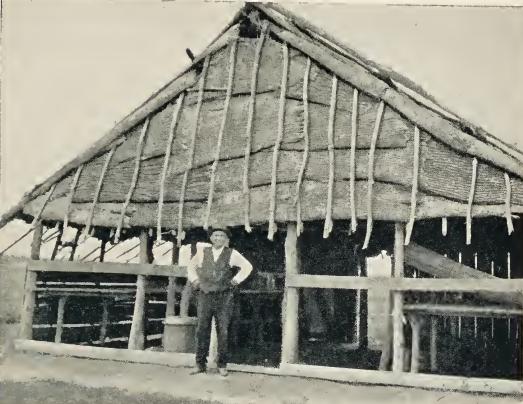
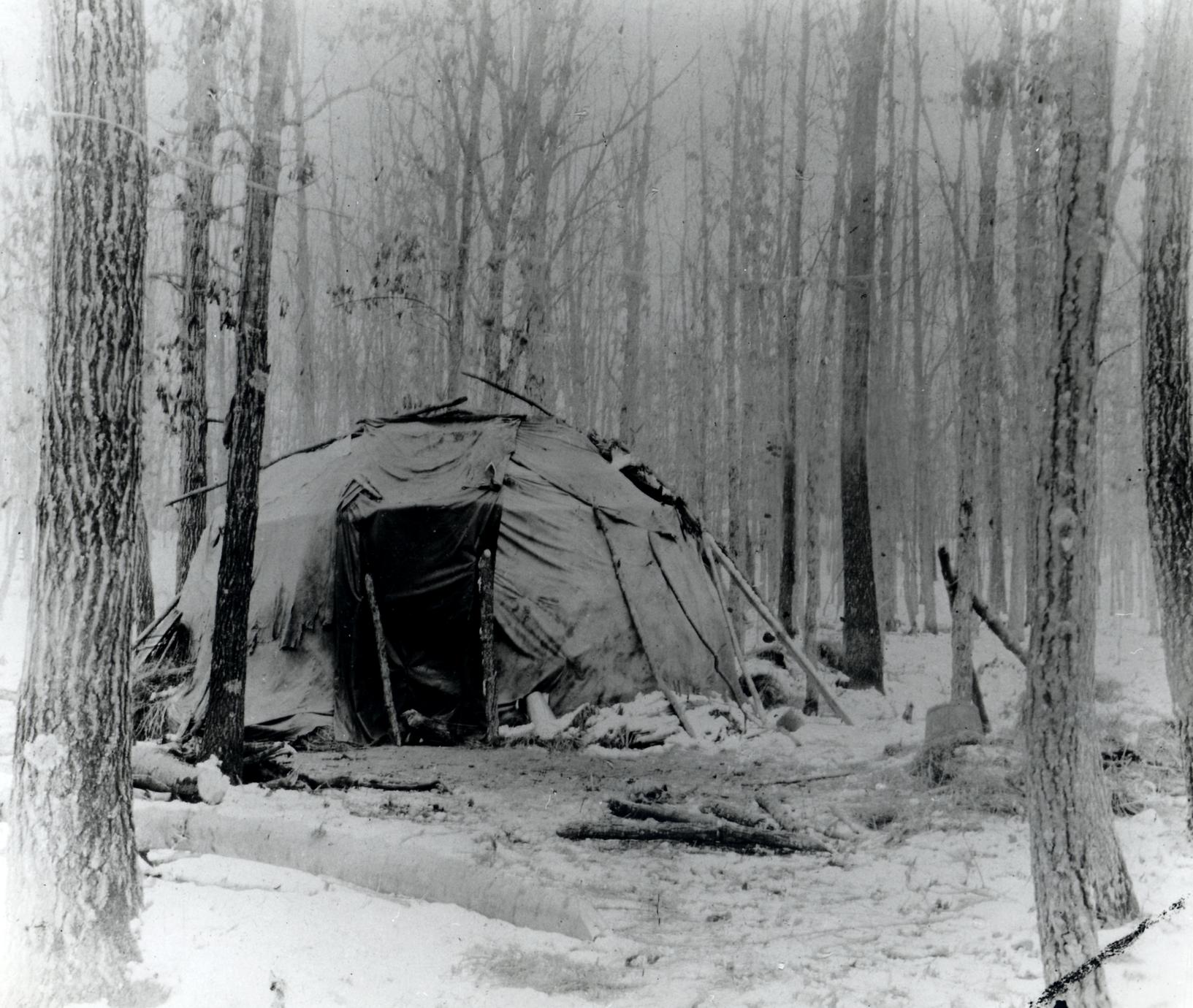
Plants are significant in many areas of indigenous life, including as fiber or building materials. Most of Wisconsin First Nations’ people lived in wigwams, which are dome-shaped houses used from the late fall to the spring. In the summer, many Indigenous groups in Wisconsin would move to summer houses, which were taller and more rectangular. Wood such as Cedar and Birch were crucial in the construction of both houses.
Sauk Bark House, photo from Observations on the ethnology of the Sauk Indians by Alanson Skinner Ho-Chunk Wigwam, photo University of Wisconsin–Madison. Archives
Wigwam Construction: “Saplings of an inch or more in diameter were cut and sharpened at the large end. Beginning at the doorway, these were set into the ground vertically and spaced about two feet apart. One pole and its opposite were bent toward the center to form an arch, and the ends were tied together with basswood-bark strips or other cordage. When all the vertical poles were tied, other saplings were tied on horizontally, to brace the frame and provide attachments for the bark or mat covering. More saplings were added to the top portion to form a sturdy framework. Then, beginning at the doorway, a mat was unrolled along the base, and its upper edge tied to the first horizontal pole. Other mats were added to cover the circumference of the framework. Inner layers of mats and grass were added inside for warmth and insulation. Raised platforms built inside the wigwam created beds and storage spaces and were covered with mats and furs.” -Milwaukee Public Museum, Housing and Architecture
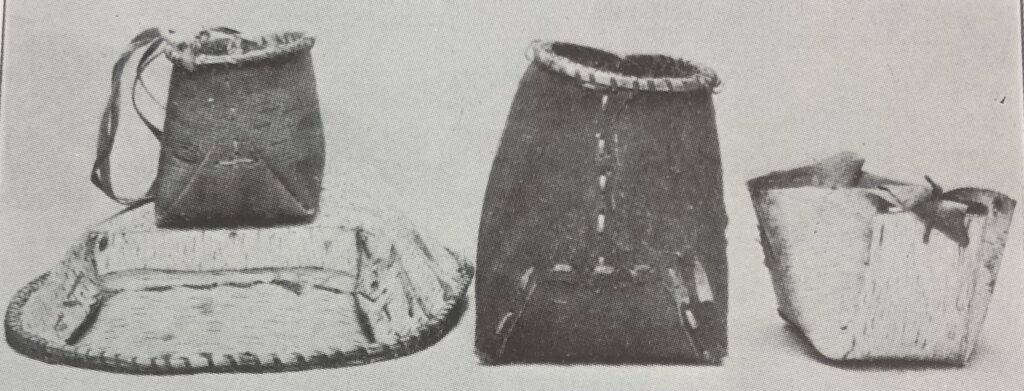
Many Indigenous groups in Door County moved from place to place seasonally. This lifestyle meant that it was important for things like cooking utensils or houses to be either easy to construct or easy to transport. Tools like birchbark containers and bulrush mats were an important part of daily life, because the materials needed to make them were easily accessible and the product was light and efficient.
Birch Bark Containers, photo from How Indians Use Wild Plants for Food, Medicine, and Crafts, Frances Densmore
A few of the most common or notable uses of plants for constructing tools are highlighted in this section.
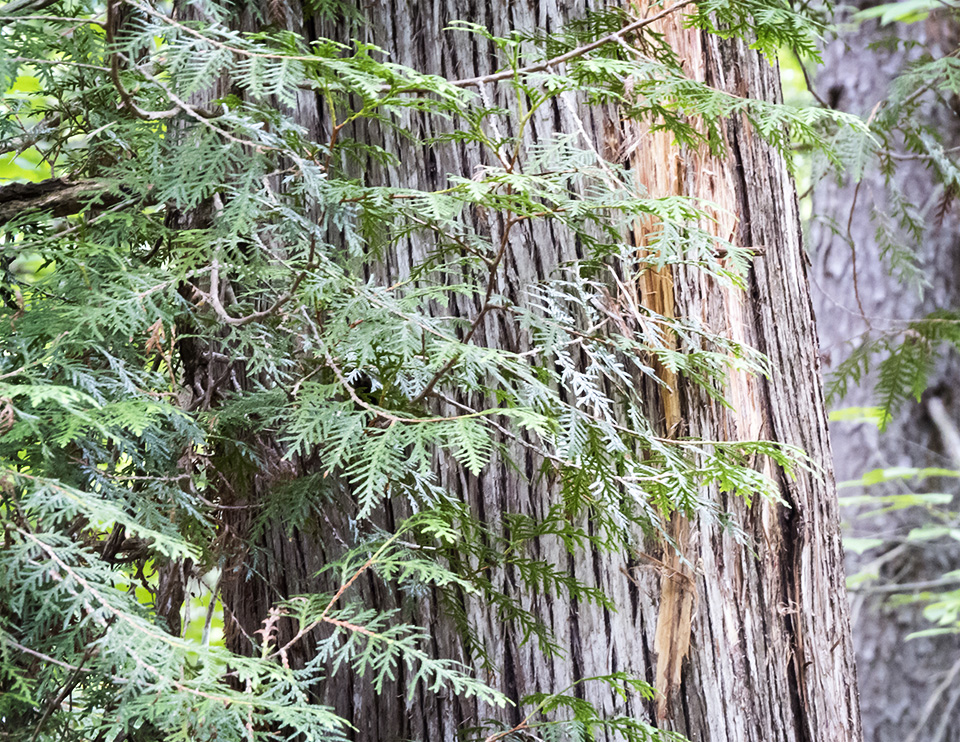
White Cedar
“meskwa” (Sauk), “Giizhik” (Odawa), “gicigan” (Potawatomi), “kesa’sata’uk” or “kesa’-wuna’ukai” (Menominee), “aba’busun” or “gi’jik” (Ojibwe)
Cedar is an important tree with many uses. Many groups used the inner bark as twine for bags or to weave baskets. It was even used to make cloth. The wood was used as firewood or to build canoes and frames for houses. Leaves were used as perfume, as mothballs, or in tea for treating headaches or colds.
Cedar is one of the Ojibwe’s four sacred plants (Tobacco, cedar, sage, and sweetgrass), and was used in almost every religious or healing ceremony. It would also be used to purify people or sacred objects before ceremonies.
Northern White Cedar, photo from Adirondack Nature
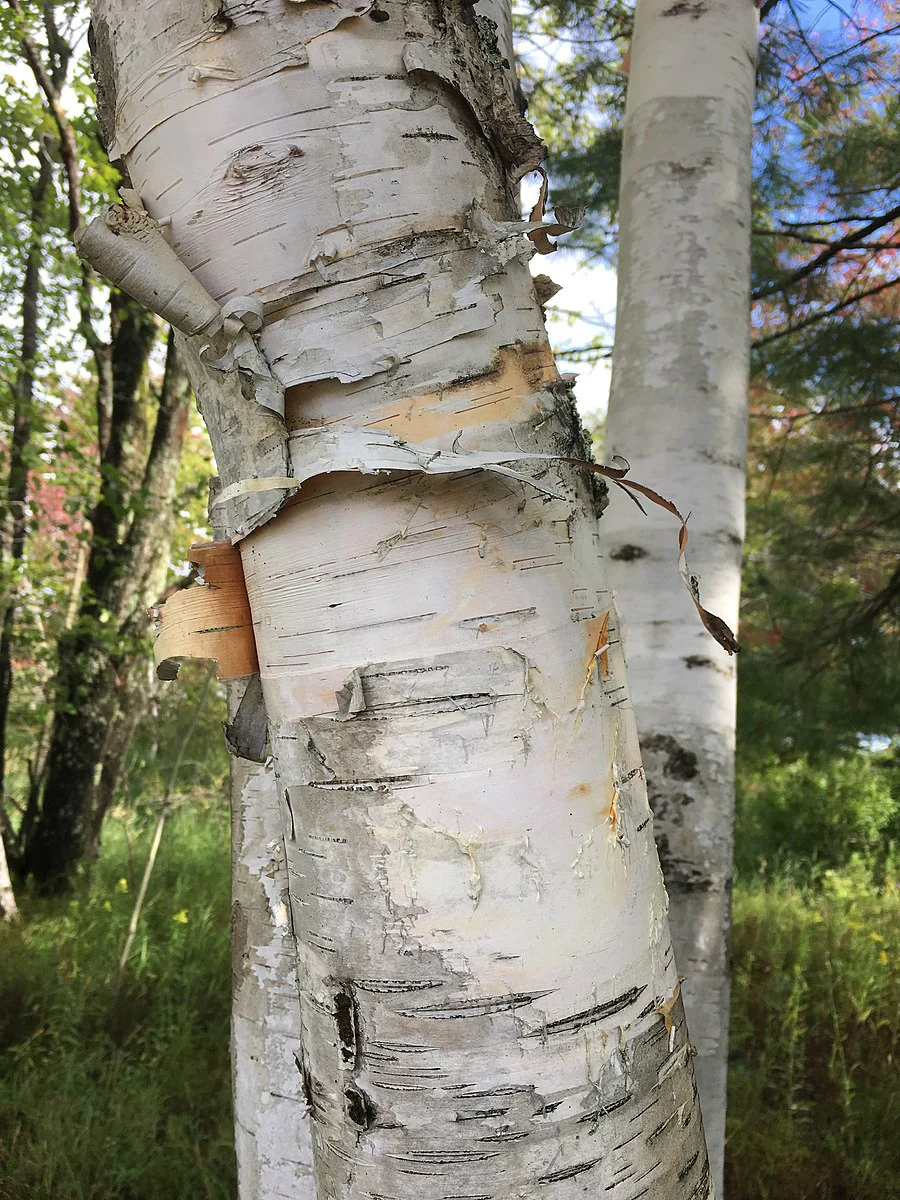
Historians have identified over 21 traditional uses for birch trees. The thin bark is an effective paper used for crafts and transferring designs –frequently prints from leaves– to textiles for beadwork. The bark was also used to waterproof wigwam roofs or canoes. It is important in the kitchen and used for utensils and storage baskets of all shapes and sizes. It would keep any edibles from decaying. Hot stones were placed in some of these baskets and used for cooking. Twigs would be soaked, and the oil extracted was used to season medicine.
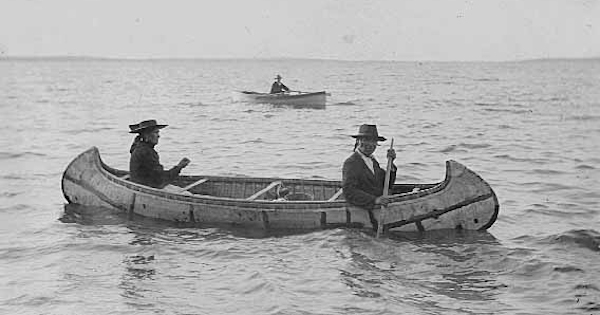
Birch Bark Canoes were particularly important, as they were incredibly lightweight and well suited for the Great Lakes Region’s frequent lakes and rivers. They revolutionized transportation in the region and were eventually used by French traders and other settlers.
Paper Birch, Photo from ujamaa seeds
Ojibwe Birch Bark Canoe, photo from Minnesota Historical Society Collections.png
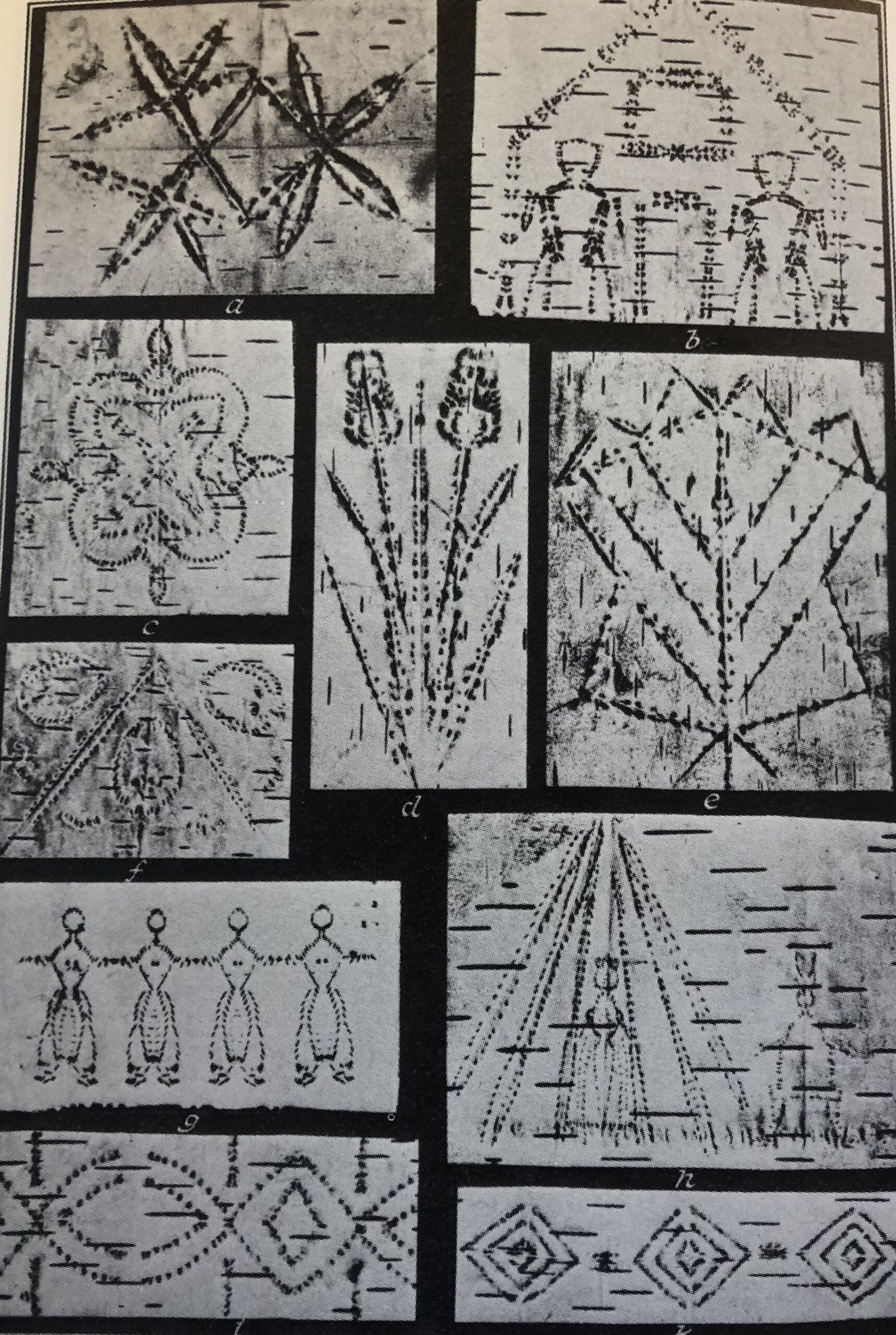
Dental Pictographs: “Dental pictographs were originally an art form unique to the Ojibwe. A thin sheet of birchbark was folded two or more times and designs were pressed or bitten into it with the canine teeth. The technique is similar to the way paper snowflakes are folded and cut. When the bark is unfolded, it shows a mirror pattern. Traditionally, making dental pictographs (also called “bitten bark”) was a source of amusement for children, but today, some Indian women create these patterns as an art expression and a commercial craft.”- Milwaukee Public Museum, Material Culture and the Arts
Birch Bark Transparencies, photo from How Indians Use Wild Plants for Food, Medicine, and Crafts, Frances Densmore
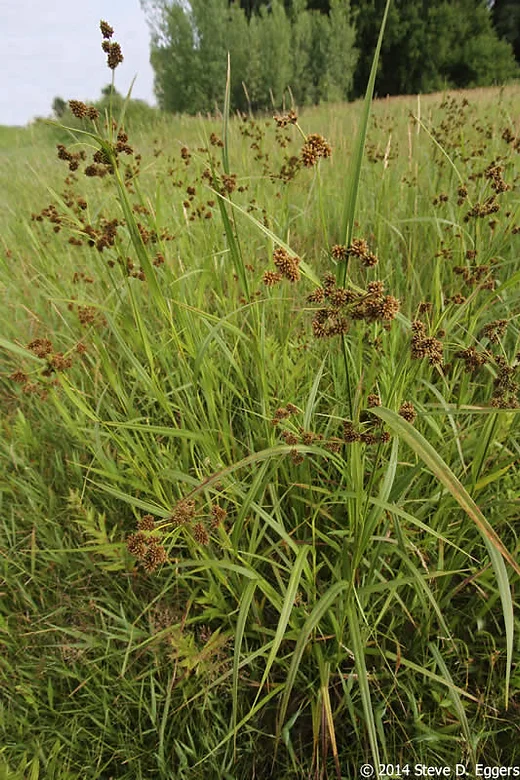
Dark Green Bulrush
“ana’gûnûsk” [mat weed] (Potawatomi), “nipia’skûn” [weed that grows in the water] (Menominee), “jîka’miûskûn” (Ojibwe)
The Potawatomi, Ojibwe, and Menominee bleached bulrush stems in the sun and dyed them for use in mats and baskets. Many of these mats were sewn together and used to cover the sides of wigwams and medicine lodges or for sleeping on or drying food.
Dark Green Bulrush, Photo from Upper Peninsula Native Plants
Dyed bulrush mat, photo from Minnesota Historical Society Collections.png
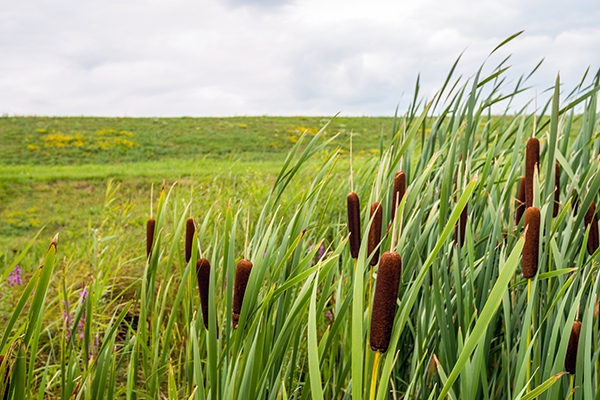
Cattails were important in wigwam construction and used to weave wind and rainproof mats on the sides of the wigwam. They would be sewn together with a bone needle and basswood thread and could be rolled and transported. Cattail fluff, called “bebamasû’n” [it flies around] by the Ojibwe, was used to make mattresses, sleeping bags, and other padding. The cattail bedding was warm and soft in cold winters.
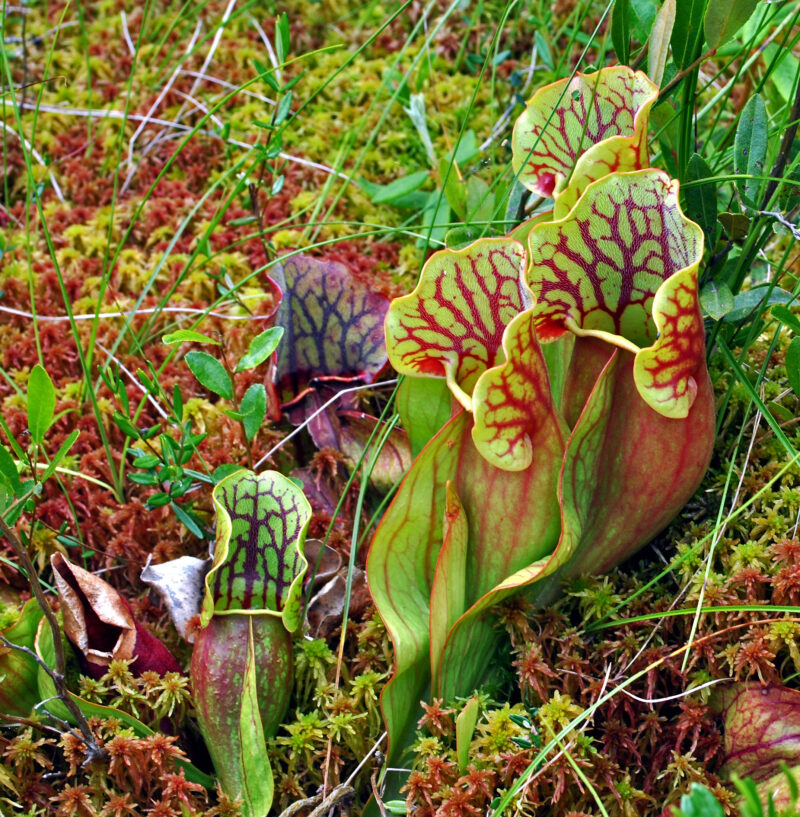
Pitcher plant roots were used by the Ho-Chunk and Potawatomi to treat nausea during pregnancy. In addition, the cupped leaves were used as a drinking cup in the woods or to hold berries or sand to use as children’s toys.
Pitcher Plant, Photo from Special Vegetation
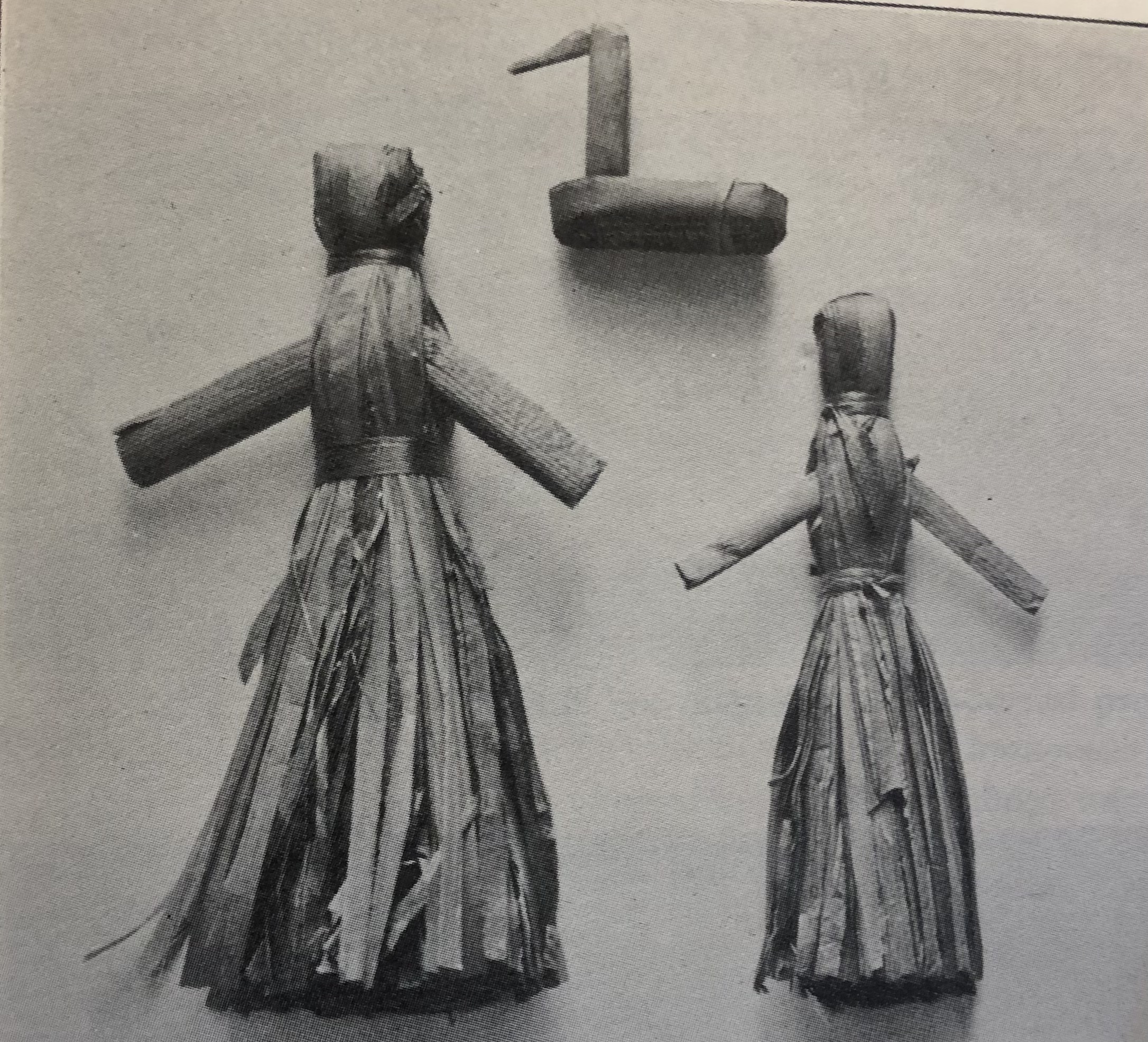
Ojibwe cattail Toys, photo from How Indians Use Wild Plants for Food, Medicine, and Crafts, Frances Densmore
Children’s Toys: Not only were pitcher plants used as toys, but many other materials were used to make dolls and other toys, such as leaves, pine needles, or cattails. Masks of birch bark were also made for many purposes, including amusement.
Red and White Pine
“Rugihasarasarake” [tree that has no branches] (Ho-Chunk), “Jingwak” (Odawa), “skako’sa wenakä’x” (Menominee)
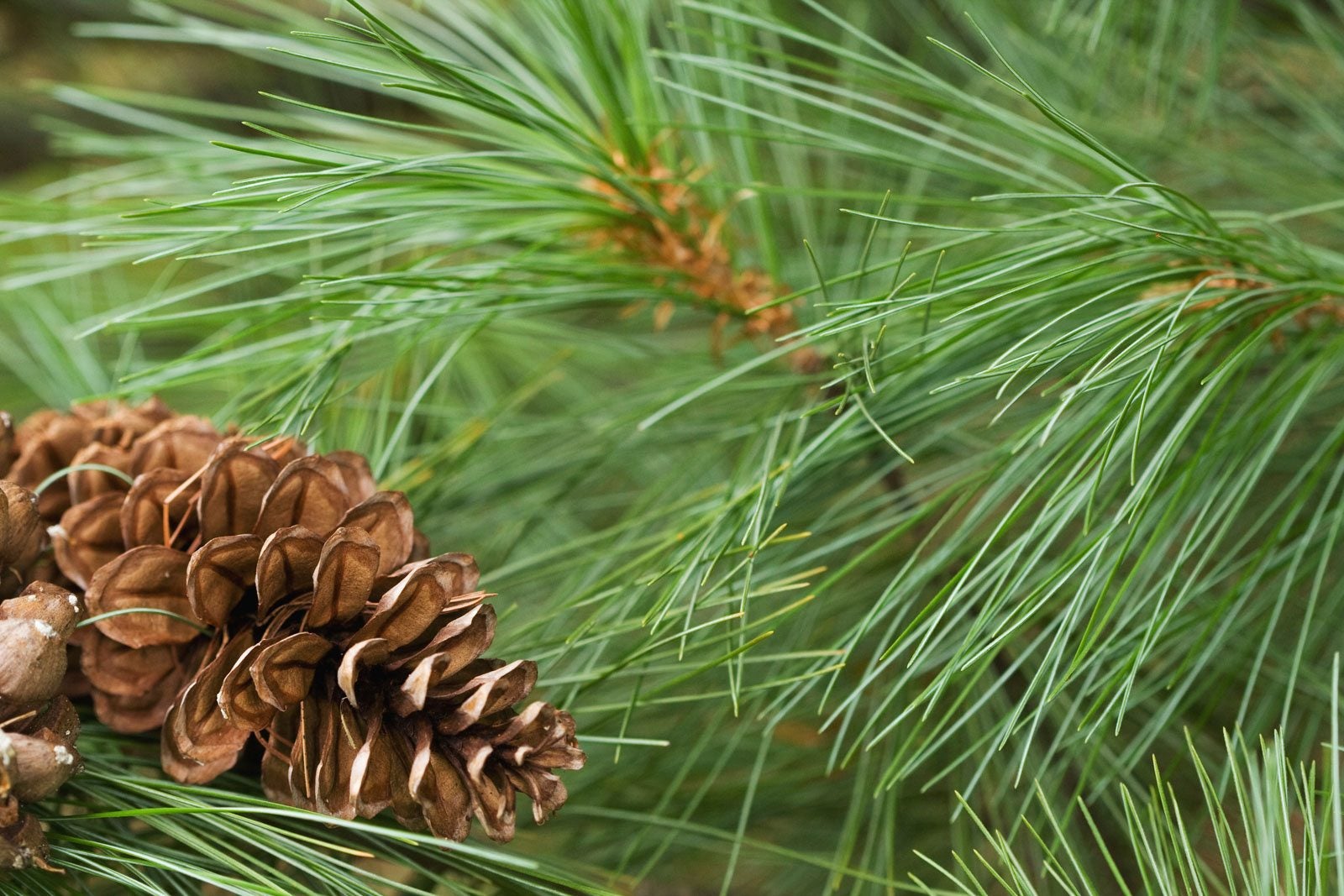
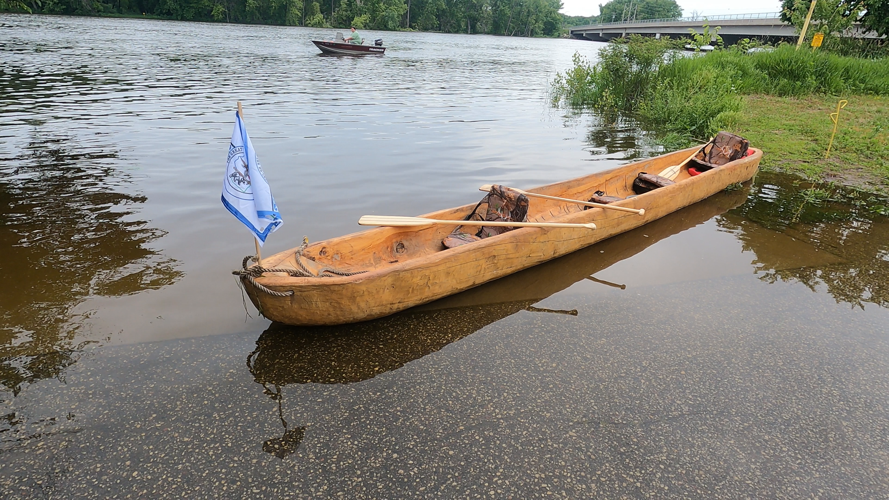
Both red and white pine were used by several Wisconsin groups, including the Odawa who regard it as a “great tree of peace and prayer”. The Ho-Chunk would mix the pitch (sap) with fat and use it as a salve to heal sores. Wood was used by groups like the Odawa and Ho-Chunk to make dugout canoes. In addition, the Odawa and Menominee would steep the bark in water to cure chest pain or use it as a poultice for wounds. White pine is one of the most important Menominee medicines.
In addition, pine sap, or pitch, was used to waterproof and caulk canoes, wigwams, and other items.
White Pine, Photo from Gardening Know How
Ho-Chunk Dugout Canoe, photo from https://www.wxow.com/news/ho-chunk-nation-dugout-canoe-journey-passes-through-coulee-region/article_982633d6-290e-11ef-984a-63b4e2f7b4e7.html
Native Plant Dyes used for Textiles
Natural dyes were used in a host of different ways by First Nations groups in Wisconsin. The Bulrush and Cattail mats were occasionally dyed in decorative patterns, and porcupine quills were dyed to decorate sheaths for weapons, clothing, or birch bark boxes.
Huron Indian Moccasin Decorated with Quillwork, photo from Penn Museum
Western influence brought more synthetic dyes into traditional quillwork and weaving, but a few traditional plant dyes were still common.
Staghorn Sumac is another plant with many uses. Boiling the roots yields a strong yellow dye, called “wasa’ukik” by the Menominee, used by many. Sumac berries were used to make a sweet beverage like lemonade or as a medicinal tea, and the Ho-Chunk used the wood to make love song flutes.
Staghorn Sumac, photo from fs.usda.gov
Plants and Us
Long before the Ridges Sanctuary was established as Wisconsin’s first land trust in 1937, it and the land that surrounds it was cared for under the stewardship of the First Nations groups that lived here. Now, the Sanctuary plays an active role in this stewardship, protecting the area and preserving the biodiversity that thrives in this environment.
Protecting the woods around us is critical in preserving the stories that the plants hold, both those that happened hundreds of years ago and those that will be told hundreds of years from today. Plants and people are inextricably linked through how we affect each other. We care for them and in return, they support us in so many ways.
The next time that you walk through the woods, think about why these plants are important to you. Do they hold onto memories, easily recalled by their scent or by the sound of the leaves in the wind? Do they provide food, like berries warmed by summer sun? Are they carved into your favorite chairs or the table you sit around every morning? Are they a backdrop to a place that brings you peace?
Though the things we use every day are often several steps removed from the outdoors, we can still be aware of the massive role a variety of plants have in our lives. Like First Nations people who have lived here for hundreds of years, we can learn the stories of the specific plants around us. We can learn of the roles they play in their ecosystems and the roles they play in our own lives. Through understanding plants in this way, we deepen our connection to the expansive web of ecology which we all have the pleasure to be a part of.
Resources
To learn more about indigenous plant use in the state of Wisconsin and specific plant uses, check out the following resources used in the making of this project:
Some of my favorite memories growing up are getting everyone loaded up into the car and driving to the Christmas tree farm. We would have all the old blankets in the trunk, the bungee cords, twine and rope all in the tub labeled “Bungees,” and all the extra winter gear piled on the seats. My sister and I would wander around and look for the best tree. A full tree, no big gaps, and I always wanted them to be as tall as possible, even though our house had 10’ ceilings. My dad would mark the trees we thought were our top choices with his hat or a glove so then we could go back and forth to decide which we thought was the best. We’d eventually decide and go collect all the gear from the other trees. Then, we would cut down our tree and take it back to get it loaded up onto the car to take home.
So many people have their own special family traditions and memories. The holidays are a time to share joy and love and celebrate family and traditions. It is also a time when a lot of consumer waste is created. This blog post shares little changes that you can make to reduce waste and be more green around the holidays!
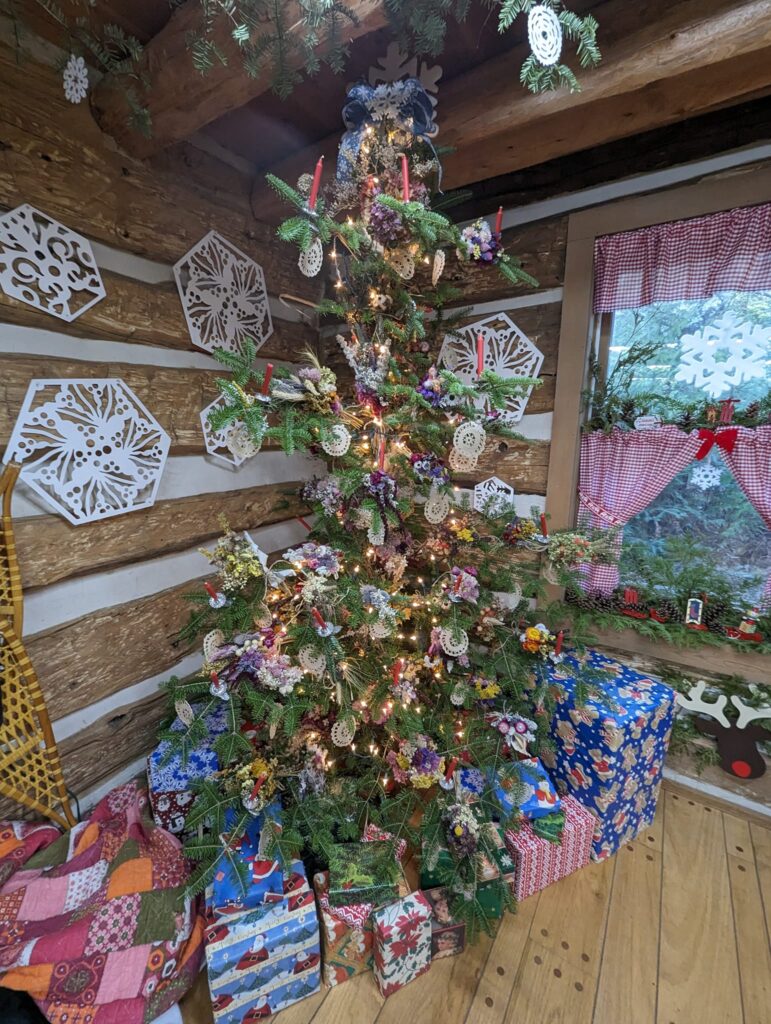
A freshly cut, real Christmas tree in the Kaye Cabin at The Ridges
Have a real tree during the holidays. It might seem a bit counterintuitive but having a real tree can be an easy switch to prevent plastic trees from ending up in the landfill. Plastic or fake trees typically end up in the landfill after a few years of use. Many municipalities offer free curbside pickup for Christmas trees after the holidays, so all you have to do is remove the decorations and get it out to the curb. Some tree farms give you the opportunity to buy a tree that still has the roots, so you can return the tree for them to replant, or you can plant the tree in your own yard after the holidays!
Shop local! This is an easy option here in Door County. There are many wonderful businesses found here and many are open throughout the year, giving a perfect opportunity to shop locally. When you shop local, the items don’t have to be shipped to you and then shipped elsewhere, and you are supporting a business that is part of your community. Many communities participate in Small Business Saturday, which is Saturday, November 30th this year. Door County has many amazing small businesses. You can find more information about shopping small and Small Business Saturday here: https://www.sba.gov/about-sba/organization/sba-initiatives/small-business-saturday and find local shops that participate here: https://www.americanexpress.com/en-us/maps?cat=Shop-Small&linknav=us-loy-shoppers-shopsmallmap&intlink=us-GABM-ShopSmallLP
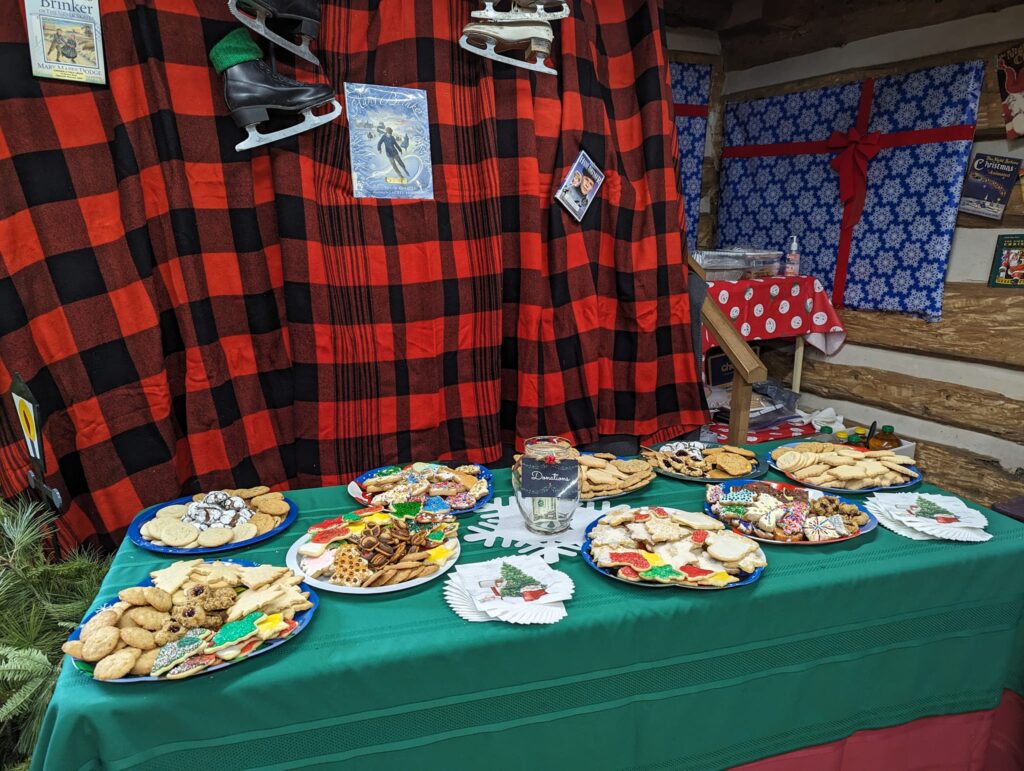
Homemade cookies made by Ridges volunteers
Give homemade gifts. I love giving homemade cookies as a gift. My family loves baking, and we go all out for Christmas. There were always hundreds of cookies around the house during the holiday season. My sister and I always gave cookies to our teachers, coaches, and friends, and it was something they looked forward to every year. Giving something homemade is special and always sure to get a smile. A homemade gift also reduces packaging and plastic consumption. The Ridges Sanctuary can help with some of these homemade gifts! We offer several wreath-making workshops using locally and sustainably harvested greenery. Check out the link here to register if you are interested!
Ditch the wrapping paper. Wrapping paper is shiny and glittery and frequently can’t be recycled! A fun switch is to use a type of packing paper, or something similar that can be recycled and decorated with stamps or drawings. You can make the packages as exciting as you want and then recycle them after. Plain packing paper can also be shredded into your home compost!
The Kaye Cabin decorated for Natural Christmas
Gift an experience! The Ridges Sanctuary is excited to celebrate the winter season and share the beauty and peace of nature with everyone, and we think you should share experiences with your loved ones as well. Experiences are a great gift to give, especially if the person you are looking for a gift for doesn’t want more stuff! We offer several different memberships just right for someone you love. We also have different programs that you can do here together.
December 13th is Natural Christmas at The Ridges! It’s an opportunity to enjoy nature and a bit of holiday cheer. Spoiler alert: this year’s theme is cardinals! Many people make this event part of their annual holiday traditions.
December 26th-30th is our Luminariesevent where you can take a relaxing post-holiday rush stroll along our candlelit boardwalk and enjoy the serenity of nature on a winter’s evening.
However you spend your holidays, spend them with joy and happiness. There is always something so hopeful to me about the holiday season and the happiness people share from strangers in the grocery store smiling, to giving your family a hug. It’s truly one of my favorite times of the year, and I can’t wait to see how Door County celebrates.
Nature Notes: Share the Shore – Protecting Shorebirds During Fall Migration
By Dan Scheiman, Visitor Engagement Specialist
Fall migration is in full swing. In addition to songbirds, shorebirds are also winging their way south from breeding grounds in the arctic to wintering grounds as far flung as the southern tip of South America. Along the way, shorebirds need beaches and mudflats to forage for food and refuel during their long journey, making it essential to share and protect these areas responsibly during fall migration.
The coastlines of Door County and the rest of the Great Lakes that are so popular with people for sunbathing, dog walking, fishing, beachcombing, kayaking, and boating are also important sites for shorebirds. Over thirty species of sandpipers and plovers use our shores, as do other waterbirds like ducks, gulls, terns, pelicans, egrets, herons, and eagles, and even songbirds like American Pipits and Snow Buntings. Some shorebirds are in steep decline due to coastal development, pollution, predation, climate change, and direct human disturbance. The Piping Plover is a federally endangered species whose Great Lakes population is gradually increasing thanks to intensive protection efforts; I highly recommend the documentaries about Monty and Rose at Montrose Beach in Chicago. Piping Plovers have recently begun nesting on Cat Island in Green Bay, suggesting this sensitive species could nest in Door County in the future.
Plover Piping, Owen Deutsch
There are a number of small actions during fall migration that we can be doing to share beaches responsibly:
Dogs on beaches. Leashing your dog makes a big difference. Even well-behaved dogs can frighten birds or accidentally hurt them. Staying away from nesting areas helps reduce stress on birds and protects nests, chicks, and adult birds. Where you do walk your dog, please keep at least 100 feet of distance from nesting and roosting birds.
Keep beaches clean. Maintaining a clean beach is a simple yet powerful way to protect wildlife. Wildlife mistake litter for food. Food waste attracts predators, like raccoons, that prey on chicks and eggs. If there are no trash bins, take your garbage to dispose of at home or in the nearest town. A clean beach benefits everyone, including birds.
Clean up fishing line and hooks. Hooks and lines caught on branches and debris can become entangled on legs, wings, and beaks of birds. Geese, ducks and gulls are particularly vulnerable to these dangers. By properly disposing of fishing gear, you help prevent these injuries and contribute to a safer environment for both birds and people.
As much as possible give resting and nesting birds at least 100 feet of space. Many shorebirds need space to feed, nest, or rest, especially during migration. Whenever possible, give birds at least 100 feet of distance to allow them to go about their natural behaviors. This is particularly important during breeding season when disturbing nesting birds can lead to abandoned eggs or chicks.
Model good behavior. Kindly ask others to follow the rules. A polite, friendly approach can encourage a sense of shared responsibility, ensuring that everyone can enjoy the beach while protecting its wildlife.
Whether it’s giving them space, cleaning up after ourselves, or being mindful of our pets, every small step helps to ensure we are protecting shorebirds.
Special Note: The Impact of Dogs on Beach-Nesting Birds
Dogs, especially when off leash, can disturb birds that live on beaches. Birds perceive dogs, and people, as predators, and will flee for survival. For nesting birds, this leaves eggs and young vulnerable to the elements and predators, including dogs. For migrating birds, this depletes their vital energy stores. According to the National Audubon Society, research from around the world shows that the presence of dogs reduces nest success and even leads to fewer birds in natural areas compared to places where dogs are not allowed. There are many dog-friendly public spaces to choose from in Door County, however, and it’s always a good idea to know before you go if dogs are allowed.
Upcoming Workshop! See Bird? eBird! Workshop with Dr. Dan “The Birdman” Scheiman Friday, September 12, 2025 | 9:00 am – noon Do you enjoy bird watching and now want to contribute your sightings to conservation and science? eBird is a global community science project plus a powerful list keeping and bird-finding tool. eBirding builds better birding skills too. Join Dr. Dan Scheiman to learn eBird basics through classroom and field time. Dan will cover protocols, best practices, and data exploration. Start sharing your sightings with the world through eBird! Meets at the Cabins at The Ridges Sanctuary. Suitable for ages 18 & up.
Imagine walking down a boardwalk by the light of the moon, feeling the cool breeze from Lake Michigan through the boreal forest, and hearing the distant call of a Barred owl marking its territory.
Sanctuary Night Hikes are a popular program because they are completely immersive and require participants to engage with all their senses.
Our initial connection with the forest is through our senses. Smells, sounds, and textures are all incorporated into our sense of place. In fact, there is no better way to understand the forest than to observe it.
Whether you’re participating in a Night Hike, a Sanctuary Guided Hike, a workshop, or simply taking a solitary walk on the trails, experiencing the Sanctuary is, by nature, sensorial. You are more likely to remember how to identify a white pine tree if you can see the tree, feel the bark, and count the bunches of pine needles. Programs also allow Ridges staff to teach people about organisms that they wouldn’t be likely to learn on their own.
Perhaps the most controversial portion of our Night Hikes is when we observe bats swooping over the swales. Participants often murmur or cringe in disgust. I understand their reaction. Bats have a strong connotation with disease – particularly rabies. However, bats play a critical role in our ecosystems. They eat flying insects, like mosquitoes and other agricultural and woodland pests. They are also responsible for reducing diseases such as West Nile Virus (1) and help Wisconsin farmers produce about 500-700 million dollars in crops every year through pest prevention (2).
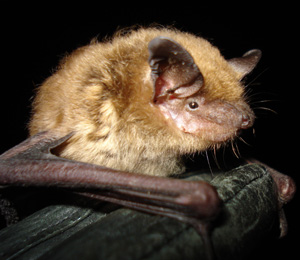
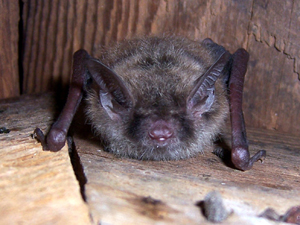
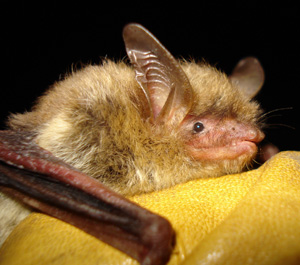
Pictured Left to Right: big brown bat, little brown bat, northern long-eared bat
Wisconsin is home to eight species of bats: Cave bats include the big brown bat, the little brown bat, the northern long-eared bat, and the tricolored bat. These bats spend winters hibernating in cave sites called hibernacula. Tree bats include the silver-haired bat, the eastern red bat, the hoary bat, and the evening bat. These bats spend their summers in Wisconsin, migrating south in the winter months (3).
The Ridges hosts bat programs and workshops to spread awareness of Wisconsin bat species and White Nose Syndrome. The acquisition of an acoustic monitor in 2023 allowed us to conduct bat surveys during the 2024 summer season. On the evening of June 18th, Ridges staff unexpectedly captured twelve recordings of the northern long-eared bat in the Sanctuary!
Unfortunately, the northern long-eared bat is rarely recorded in the state of Wisconsin and is federally endangered and listed as “threatened” in the state (4). Northern long-eared bat populations have been severely impacted by white-nose syndrome, a fungal disease that has spread across the eastern and central United States over the past 17 years. In some locations, hibernacula have lost up to 95% of their populations (5). In Door County, white-nose syndrome has killed over 90% of cave bats. Horseshoe Bay Cave bat populations dropped from 1,100 bats in 2015 to 24 bats in 2019. Luckily, some populations have survived (6).
While humans cannot catch white-nose syndrome, they can spread it. Thoroughly decontaminating clothing or material worn in a cave can help prevent disease from spreading between cave environments. In fact, decontamination is required for any person entering or exiting caves in Wisconsin to help prevent the spread of the disease.
There are additional ways to help Wisconsin’s bats. The Ridges holds several programs in October to bring awareness to Wisconsin bat species, including a Bat House Workshop. Bat houses can be important summer roost sites and provide shelter for bats in our area. During the workshop, Ridges staff provide materials and instructions to build a bat house. Participants also receive instructions for installing and maintaining their bat houses. If you can’t make the Bat House Workshop, the Wisconsin DNR has detailed instructions for building bat houses.
Protecting habitat is another critical component to helping to restore bat populations in Wisconsin. Bats rely on healthy wetlands and forests for food and shelter throughout the summer months. Ensuring that bats have access to these resources will help populations recover from white-nose syndrome (4). The 1,700 acres of the Sanctuary provides both wooded habitat for bat roosts and wetlands for hunting grounds. Other protected places in the county also provide critical habitat for bat populations.
Lastly, education about Wisconsin’s bat species is paramount to their recovery. We share information about bats on Night Hikes and in other programs to dispel prevalent misconceptions about them, and to teach people how important they are to ecosystems like the boreal forest. At the very least, we hope people smile rather than cringe when they see bats flying above them in the night sky!
Bat Facts 1. Bats can live a long time for their size. The oldest recorded bat in Wisconsin was at least 32 years old! 2, Bats are the only mammals that have adapted to true flight. 3. Insectivorous bats use clicks to echolocate. Their clicks are ultrasonic, meaning they are outside the range of human hearing. 4. A single little brown bat can eat 1,000 mosquito-sized insects in an hour. 5. Northern long-eared bats are especially good at hunting moths! Moths have a hard time hearing the high-frequency calls that northern long-eared bats produce.
Photo Credits: big brown bat, Dave Redell via eekwi.org; little brown bat, WDNR Staff via apps.dnr.wi.gov; northern long-eared bat, Dave Redell via eekwi.org.
Wisconsin Department of Natural Resources. “Echolocator.” Echolocator, May 2023. chrome-extension://efaidnbmnnnibpcajpcglclefindmkaj/https://wiatri.net/inventory/bats/news/pdf/2023MayEcholocator.pdf.
Ridges Bat Programs
Bat Chats Guided Night Hike
Friday, October 11th, 6:00 pm-8:00 pm
Let’s chat about Wisconsin bats! Join Ridges staff on a hike through the Sanctuary, stopping to learn about the unique adaptations and life cycle of bats. Stop along the way to capture bats on an acoustic monitor. Suitable for ages 14 & up.
Curious about Wisconsin’s bats? Want to know more about white-nose syndrome? Join us for a presentation all about Wisconsin bat species, white-nose syndrome, and current population data.
Build your own bat house to hang on your property! We’ll help you assemble your own bat house and give you instructions on hanging and maintenance so you can provide important shelter for native bat species.
Location: Ridges Workshop
Fee: Public $45 | Member $40
Nature Notes: Human-Wildlife Interactions
By Sam Hoffman, Land Manager
At some point or another we have all had a memorable experience with wildlife in the outdoors. Time spent viewing animals in the wild can help us develop a closer connection to nature and renew our curiosity for learning more about the natural world around us. But wildlife encounters can also be troublesome. Whether observing an animal in its natural setting or coming across a sick or injured creature on a hiking trail, it’s important to know how to act when coming close to wildlife to protect humans and other animals.
Consider the Effects
First, it’s important to consider the effects of human presence on the natural behaviors of wildlife in their habitat, and how that can impact us. Many animals have evolved exceptional senses to help them survive, including sight, sound, and smell. That means most animals can detect us before we detect them. When an animal senses human presence, it can have a wide range of negative effects. A heightened sense of anxiety is common in animals that believe they are being threatened, especially if they sense the threat of predation. Unusual smells or sounds can disturb animals from their natural cycles, causing them added stress. The stress of human presence can be enough to reduce the survivorship of certain species without our knowledge and without directly interacting with them. When hiking, it is usually fine to observe most animals from a distance by staying on the trail and being quiet can help mitigate these impacts to wildlife.
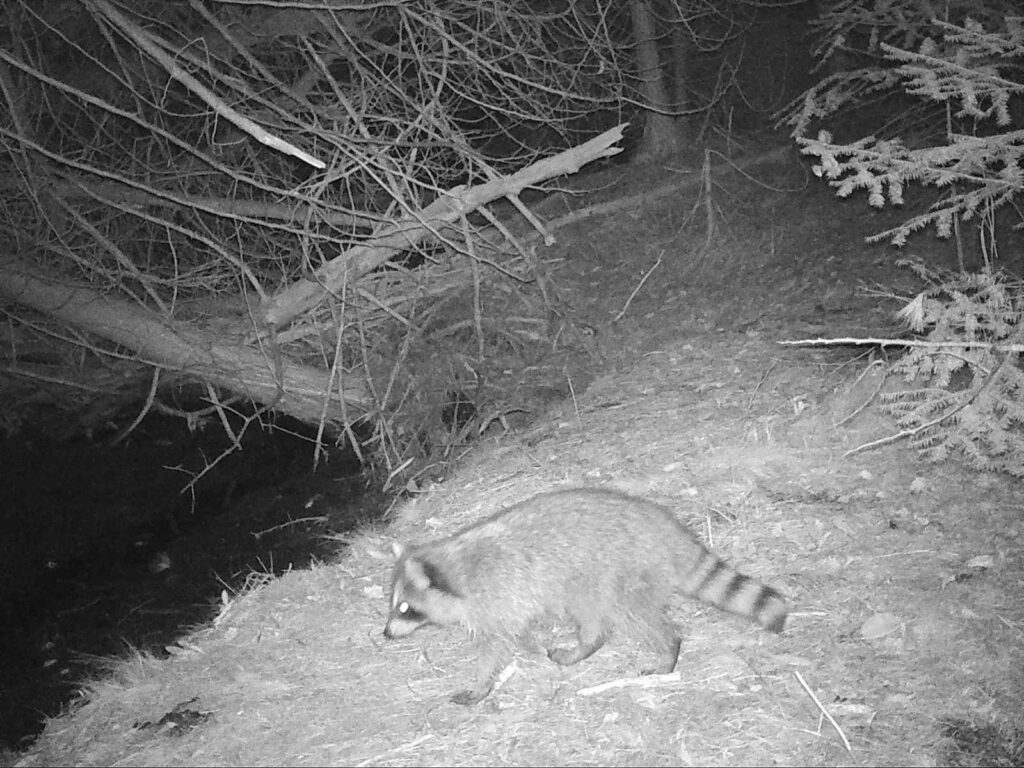
Some mammals like raccoons can carry diseases that are potentially harmful to humans. Use caution if approached by any animal.
Minimize your Impact
The Ridges has various policies for visitors to the preserve. Our trail etiquette prohibits hiking with dogs, riding bikes, smoking, picking plants, and littering. These restrictions are intended to maintain the natural properties of our preserve while allowing visitor access, and also to minimize disturbance to the wildlife that call the Sanctuary home. Prohibiting dogs, smoking, and littering in particular helps protect our local fauna the most. Keep these actions in mind when hiking elsewhere.
Even if we minimize our impact on wildlife populations and do our best to avoid conflict with them, it’s important to note that animal encounters can happen anytime and that wildlife can be unpredictable and potentially hazardous to humans. Each situation necessitates different analysis and solutions to the problem. Animal run-ins while hiking can cause conflict for a variety of reasons. Most commonly, certain wild animals may act in self-defense when humans get too close, especially if young are being protected.
Remove Yourself and Contact the Authorities
Some animals, like certain mammals and birds, can carry diseases that could be transmitted to humans. Signs that an animal is diseased can include exhibiting lethargic or confused behavior, or unusual movement such as excessive scratching or panting. Other unusual behaviors to look for include nocturnal animals being unusually active during the day and animals approaching very close to humans. If you believe you have observed an animal that seems sick or diseased, remove yourself from the immediate area of the animal and contact the proper authorities. The appropriate person to contact will depend on your location and the given situation. If you believe the animal to be a hazard to public human health, call your local police or sheriff’s office. If the animal does not pose an immediate threat to people, the local DNR warden should be contacted. Do not try to deal with the situation yourself.
The “Door County Leave No Trace” sigma we follow as ethical outdoor recreationists can also be applied to our behavior while out in nature, not just the physical impact we leave behind. When outdoors, be mindful of our impact on the habitats and species that we aim to protect, while also being aware of the potential hazards they pose.
Stewardship Workshop: Climate Change Resiliency
September 12, 9:00 am – 11:30 am
One of the most complicated global challenges of our time is climate change. In addition to its potential impacts on society, climate change is increasing the risk and harm to animals and plants already stressed by habitat loss, pollution, and non-native species. Join Ridges Land Manager Sam Hoffman for this stewardship workshop focused on climate change resiliency on our managed lands. We will review what we currently know about climate change and how it will impact natural areas, go into the field to look at examples of projects trying to inform management efforts, and go over what resources and tools private landowners can use to implement some of these practices on their own. Meets at the Cook-Albert Fuller Nature Center. Pre-registration required.
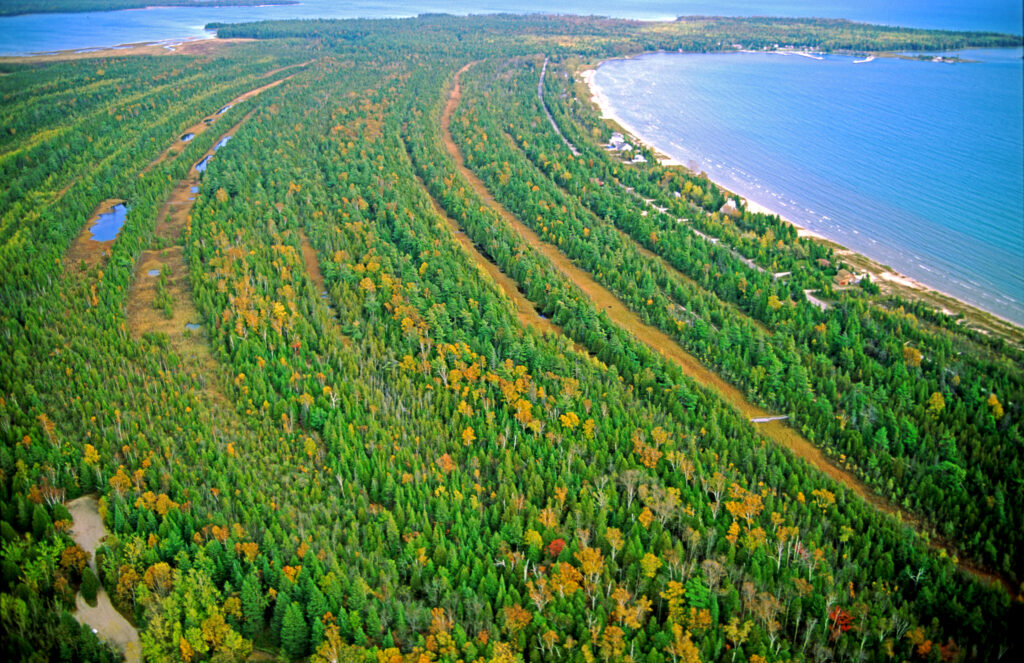
As you take a walk through The Ridges Sanctuary, you may notice areas that have no trees, even though they are bordered by trees. These low-lying areas are swales, part of the ridge and swale landscape that we are named for. Ridges are high areas – the historic shorelines of Lake Michigan. Swales are the low areas – the “hallways” between the ridges. Formation of this distinctive typography began over 1,400 years ago by receding glaciers. If you look at an aerial image of The Ridges Sanctuary, you’ll get an idea of those high dry areas with trees and shrubs, and the low areas with water and wetland plants. Today, The Ridges Sanctuary protects 30 ridges and swales of this unique landscape.
Photo by Douglas Sherman
This summer, shortly after I started as the Ridges Naturalist, I heard the distinct call of sandhill cranes. I went looking to see where they were. I looked over the edge of Sandy Swale to see two adult sandhill cranes and a flash of shorter brown, which let me know there was at least one colt with its parents. As I watched, keeping my distance so as not to alarm the adults, one of the adults snatched up a catfish from the swale!
Swales are home to so many different animals. However, that can change as the water level fluctuates. In the late spring and early summer when the water is high, there can be smaller fish swimming about, turtles basking on logs, and water bugs skating across the surface. You can hear frogs calling from all around as they get ready to find mates and lay eggs. As the levels of water drop, you will see animals starting to concentrate to deeper areas or head off to other bodies of water. Some might bury themselves in the mud to wait for it to become wet and full of water again. Next time you are walking The Ridges, stop and take a moment to look and listen. You might be surprised by what you find.
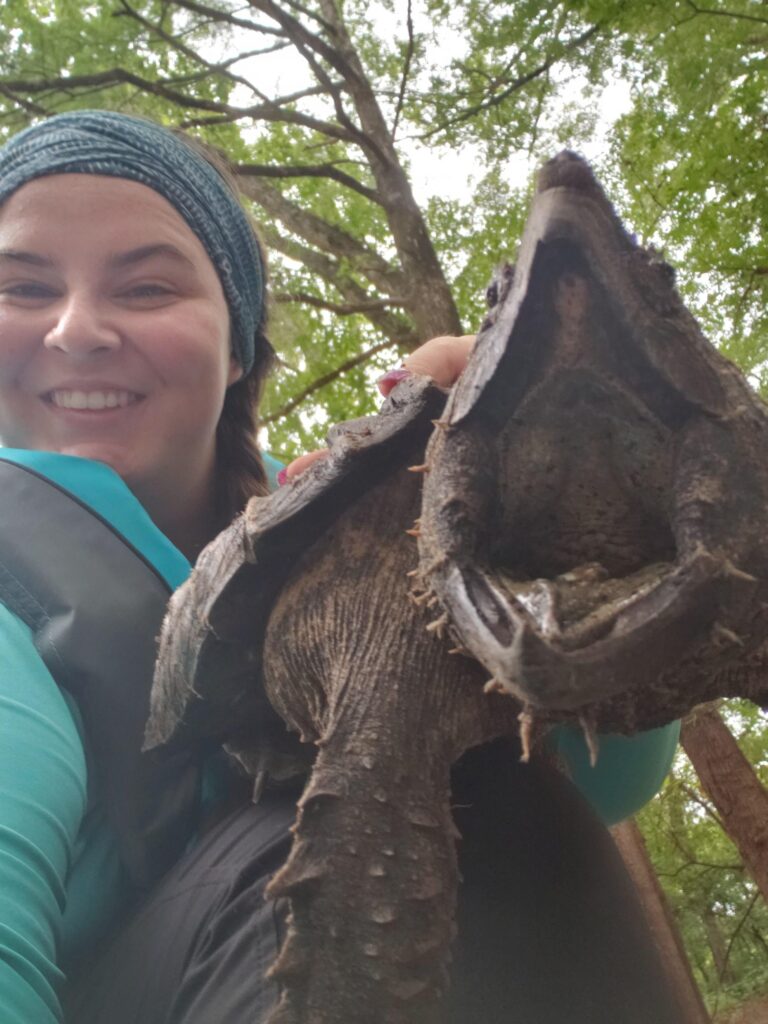
I find all of these things to be so magical, and I am excited to be working at a place that protects this important landscape. I am the new full-time naturalist at The Ridges. It has been quite a while since The Ridges has had a naturalist here all year, and I feel lucky to have been given this opportunity to move here and join the wonderful staff at The Ridges. I have a Master of Science in Biology and studied alligator snapping turtles in Louisiana. As a result, I absolutely love turtles and am happy to talk your ear off about them! I also have a background in Wisconsin, having lived in Stevens Point while growing up. I am so excited to be back in Wisconsin. I cannot wait to meet everyone!
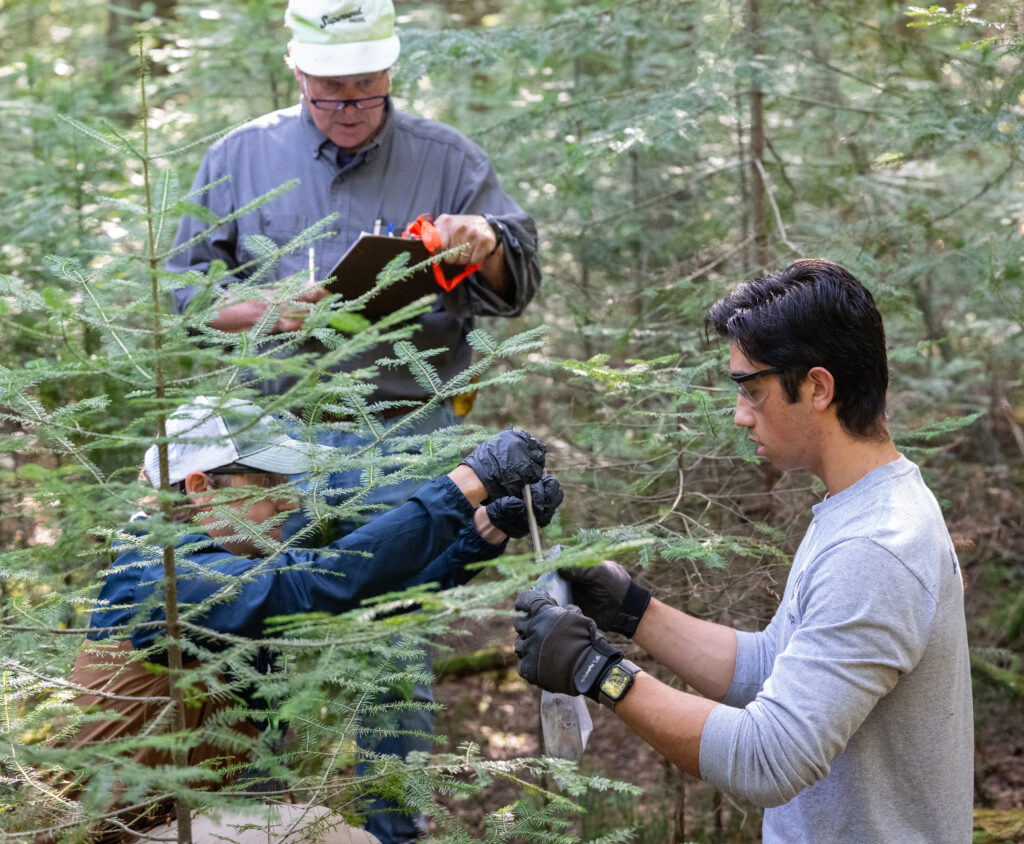
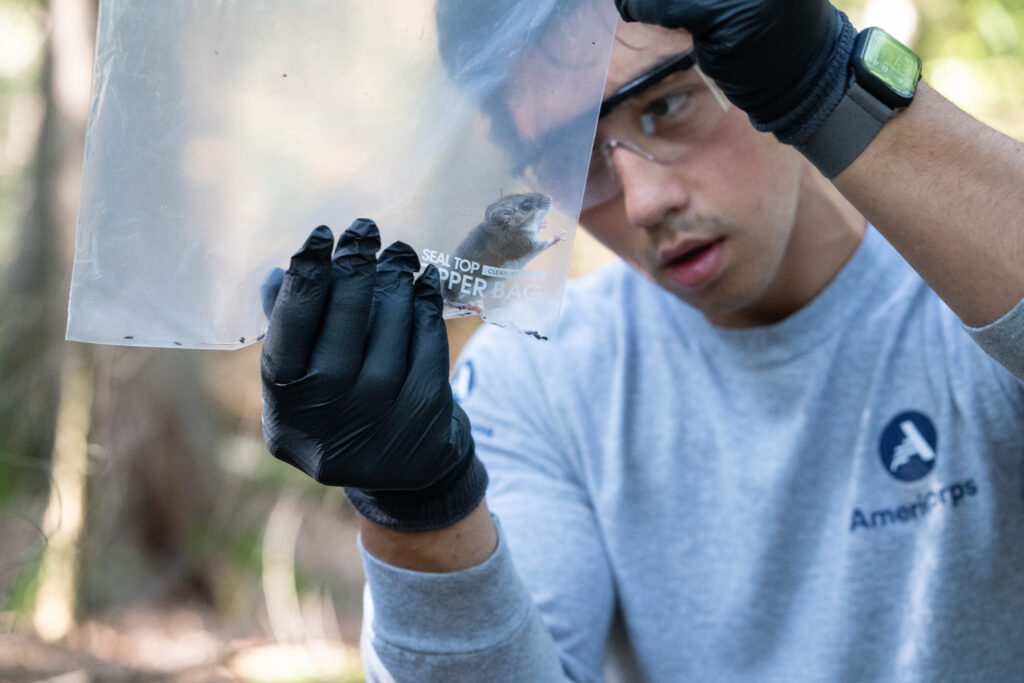
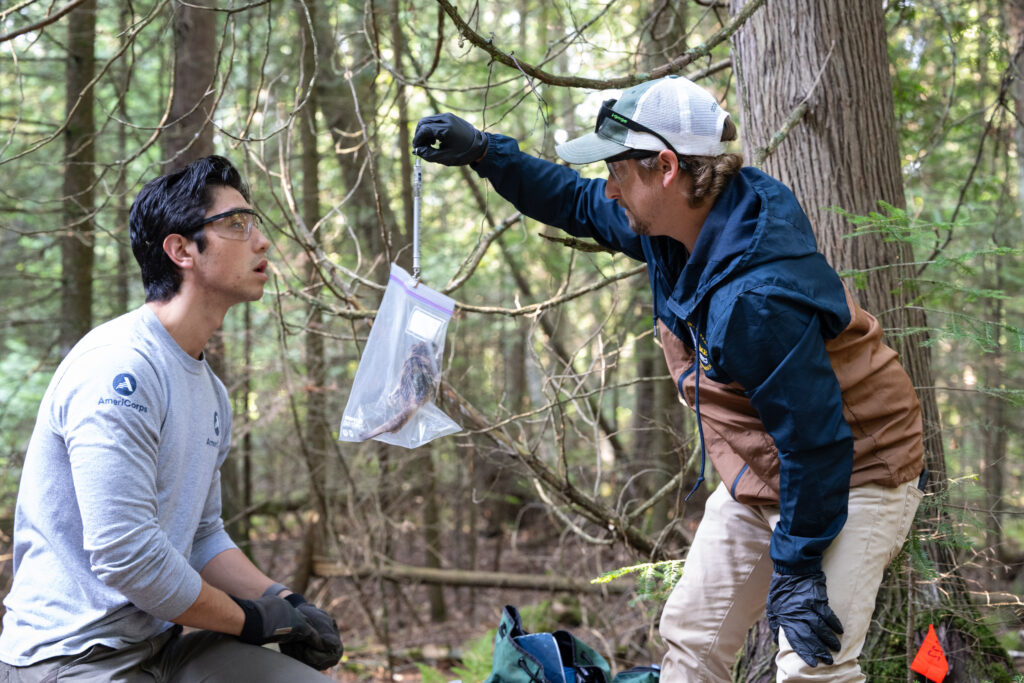
(From left) Sam Hoffman weighs a flying squirrel, research director Tony Kiszonas writes down its measurements and WisCorp conservationist Albert Kennedy holds it in a plastic bag. Photo by Larry Mohr.
Surrounded by foliage and hundreds of feet off the hiking trail at the Ridges Sanctuary, WisCorps conservationist Albert Kennedy strategically held a flying squirrel as he removed it from a Camberg trap and transferred it into a plastic bag for measurement.
This is a daily routine for Kennedy, with 25 animal traps that are positioned and checked twice a week. The routine is part of Kennedy’s summer project through a partnership between WisCorps and the Ridges.
The research aims to establish a presence/absence survey that documents the small mammal species residing at the Ridges. Sam Hoffman, land manager at the Ridges, said this research is a part of the Ridges’ initiative to gather baseline surveys for an extensive species list. He said the Ridges has plant inventories and insect surveys, yet they have a void in research when it comes to small mammals.
“[Kennedy] is looking at a comprehensive way of getting a principal list of mammals, not just small mammals, but any and all mammal species that could be documented at the Ridges,” Hoffman said. “That was a need for the Ridges.”
Kennedy graduated from Hocking College with an associates degree, and will pursue a bachelor’s degree for wildlife research and management at West Virginia University. He also said he studied abroad in Canada last year, assisting in a similar small mammal project, as well as working with a biologist studying Southern flying squirrels in Ohio.
Albert Kennedy observes a mouse that was retrieved from one of his traps. Photo by Larry Mohr.
With this research though, Kennedy is spearheading the project.
For three weeks, Kennedy has sampled a mesic conifer forest and completed five rounds of trap-checking. He will be sampling a grassland meadow for the same time period to represent a diverse population in his research.
Before beginning his research, Kennedy reviewed several studies on best practices to ensure no mammals are harmed.
For instance, shrews have high metabolic rates and must constantly eat to maintain their energy levels, so Kennedy placed enough mealworms in the pitfall traps for them to survive. He also installed bedding at the bottom of the traps so the shrews have a comfortable place to fall, as well as drainage holes in case of rain.
Hoffman said Kennedy used a combination of five different traps in a 5-by-5 grid array: a large Tomahawk trap with a single opening, a smaller Tomahawk trap that opens from both sides, a Camberg live trap, a Sherman trap and a pitfall trap.
Each round of trap-checking also required Kennedy to measure the mammals’ features, including the weight and the lengths of the mammal’s hind, limbs, tail and ears.
(From left) Albert Kennedy and Sam Hoffman weigh a mouse. Photo by Larry Mohr.
Kennedy has documented eight species from trapping, including red squirrels, Southern flying squirrels, Northern flying squirrels, house mice, masked shrews, white-footed mice, American deer mice and a pygmy shrew. He was particularly surprised when he caught a Southern flying squirrel.
“I’ve heard of Southern flying squirrels being documented more south of Door County, but nothing has been documented this far north, especially at the Ridges,” he said.
The species’ range is expanding due to climate change, according to the Department of Natural Resources’ (DNR) initiative Snapshot Wisconsin. That’s because warmer climates make for more oak trees, which is largely where the Southern flying squirrels nest themselves.
But for Northern flying squirrels, which require more northern tree species to survive, their habitat is being diminished along with their population numbers.
“It’s going to push [the Northern flying squirrel population] out of their range even further up north, breeding less habitat,” Kennedy said. “So it’s something that we are watching for.”
Kennedy also caught a pygmy shrew in one of the five pitfall traps. He said this trap was “memorable” because it’s the first pygmy shrew to be documented in Door County.
The survey also involves data from Snapshot Wisconsin, a network of volunteer-managed trail cameras.
Kennedy reviewed the photos from the cameras during a three-month period to identify small mammal species. He documented 17.
“It was really cool to be able to add really important data, look at what I’ve done, replicate it and reference it,” he said.
Door County may be known for its limestone bluffs, ice cream shoppes, and beautiful sunsets, but I think the most magical thing you can experience in the county is the arrival of White-tailed fawns in late May and early June. Glimpsing a white-tailed fawn on one of the first days of summer is truly magical.
This year, I’ve been lucky enough to see several white-tailed fawns. The earliest encounter I had was during the first week of June, just around the time of year when White-tailed does are giving birth to fawns. I was driving home from dinner when I saw a brand new fawn following her mother across a county road. At a few days old, the fawn’s legs seemed too long and lanky for its small body. It slowly and cautiously made its way across the road. Once on the safety of the meadow, the fawn went to nurse, unaware of my car as a threat, while the mother doe watched carefully to make sure I didn’t get any closer. The fawn laid down shortly after I stopped, listening to its mother’s cues to stay safe.
Photo by Dr. Leonard Lee Rue III, Virginia DWR
While I was lucky enough to encounter a fawn with its mother that night in early June, most of a young fawn’s life is spent laying down in solitude. Ridges staff have seen photos and videos throughout the years of fawn “rescues” throughout Door County- with some even in the Sanctuary itself. Unfortunately, these good intentions can be harmful to white-tailed deer fawn.
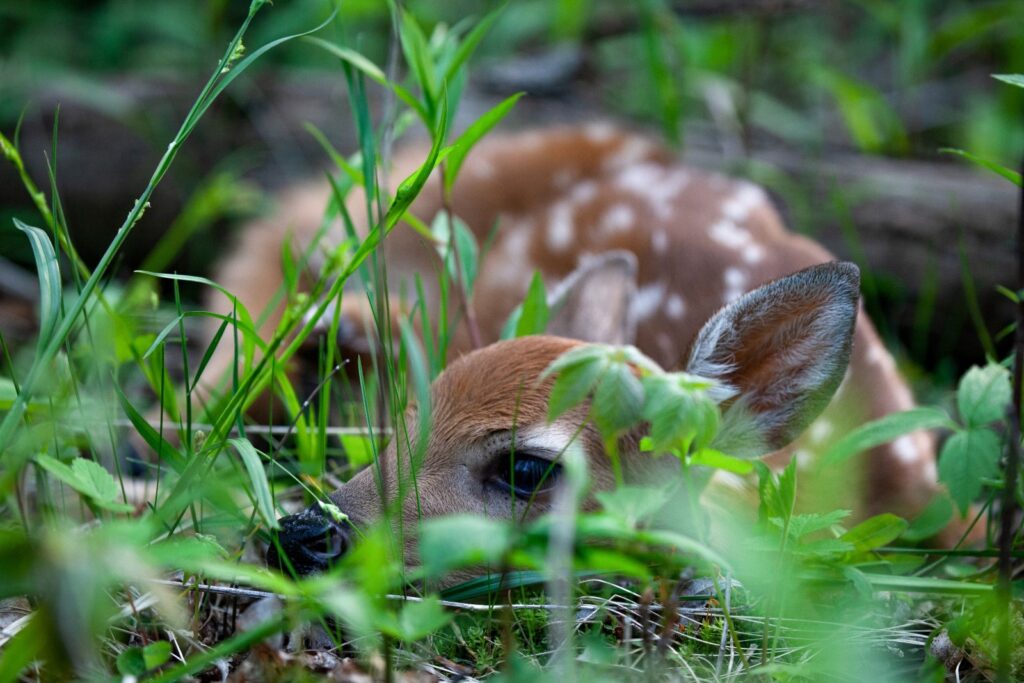
White-tailed deer fawns are born without a scent- something that saves them from predation in their earliest days when they are not yet strong enough to run away from danger. Fawns will stay bedded down for the first week of their life. A mother doe will return to its baby to nurse about 4-5 times a day, calling to the fawn in a low murmur. The fawn may return its mother’s calls with high pitched bleats.
A fawn knows not to get up from its bed until its mother calls. Contrary to many other mammals, fawns’ best weapons against predation are their instincts- not the protection of their mothers. If the fawn suspects a predator is nearby, it will drop to the ground, flatten its head and ears, and most impressively, suspend its breathing. Almost all living things give off a scent in the exhaling of breath. By suspending breathing, a fawn is less likely to be found by a predator. If a mother doe suspects a predator is near her baby, she won’t go near it. A mother does approach would only signal to a predator where to go. If a doe has multiple fawns, she’ll leave them a few hundred yards apart from each other. This ensures the safety of one fawn if the other is not so lucky.
After about two weeks, fawns will begin to follow their mother around for short periods of time, learning to browse plants like their mother does. They’ll also begin to wander around near the place where their mother leaves them to bed down.
At this point in the summer, white-tailed fawns are much more active. They are growing big and strong, following mom while she forages and exploring the world around them. Little fawns are born around 6-8 pounds and must gain 60-70 pounds before their first winter! They’ll slowly lose their white spots during their first molt around 3-4 months old, growing their winter coat. Fawns will continue to follow their mother for about a year, when mom will leave the herd to have new babies in the spring.
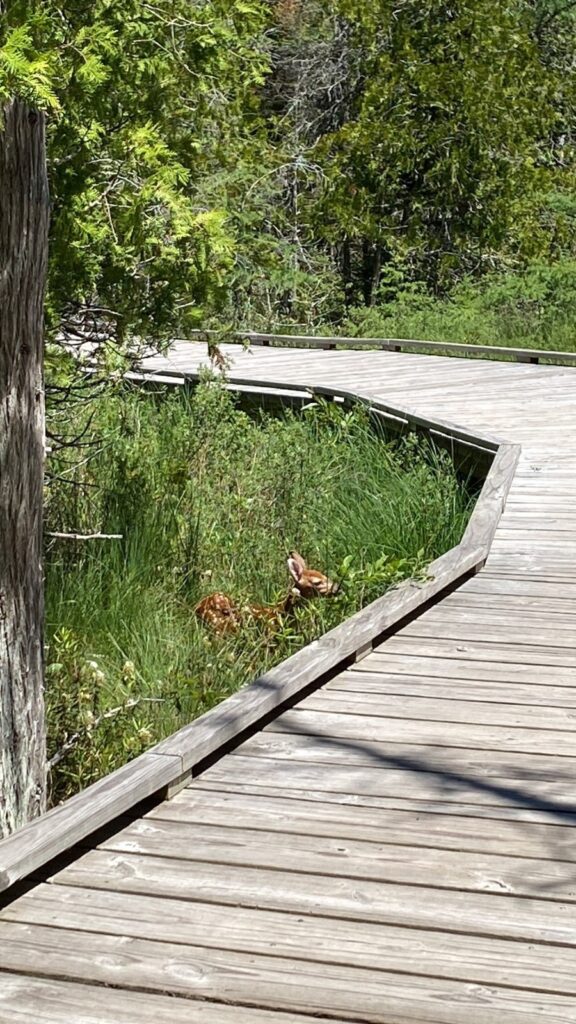
A curious fam explores Hidden Brook Boardwalk, Photo by Anna Foster
When people see a fawn bedded down alone or wandering without mom, and they don’t know any better, they think the fawn is in danger or needs help. In fact, the fawn is doing exactly as it’s supposed to! If a fawn is bedded down or suspects danger, it will likely stay very still. Its white spots and brown fur provide excellent camouflage among wildflower covered meadows and forest floors. While you may not see the mother doe, she is nearby, waiting until it’s safe to check on her baby. This is why it’s very important to give white-tailed fawns plenty of space. Do not approach fawns. If you suspect something is wrong, you can call The Ridges, nearby wildlife rehabilitation centers, or your local Game Warden or Wildlife Officer.
Remember, like any wild animal, the less interactions fawns have with humans, the better their chances of survival. We can enjoy them from afar and consider ourselves lucky when we come upon them!
Curious about white-tailed deer populations in Wisconsin? Read our blog on white-tailed deer populations, written in 2022, here.
Nature Notes: Pollinators – The Heroes of the Plant World
By Libby Humphries, Environmental Educator
This time of year, Door County is a-flower with golden Alexander, red columbine, and lupine (oh my!). Equally as prevalent during this time are the pollinators who depend on them to survive. This pollinator week (June 17-23), we’re celebrating the animals that are responsible for the reproduction of approximately 90% of flowering plant species across the globe.
Pollination is the process by which pollen grains are transferred from one flower to another flower of the same species to create seeds. Even though the two flowers may look the same, their genes tell a different story; the two plants couldn’t be more different. Pollination is nature’s way of ensuring that this trend continues. If all plants were clones, or even closely related, they would have similar weaknesses to damaging insects, fungi, and bacteria. Having a diverse genetic makeup ensures that if a pathogen comes around, there will be survivors that will pass down their immunity.
Conifers (pines, cedars, tamaracks) and broadleaved trees (aspens, birches, cottonwoods) carry out this process by releasing billions of pollen grains in hopes that the wind will carry its genetic material to another tree. Other plants—such as irises and apples—get by with a little help from their friends in the animal kingdom. When I say “friends” it’s not that these organisms are actively going out of their way to help each other; the relationship between flowering plants and animals developed over millions of years because it’s mutually beneficial. The animal receives resources from the flower, and the plant gets to reproduce.
Who are these pollinators, you might ask? Let’s get to know them.
Bees
Perhaps our most iconic pollinators, bees are the heroes of our agricultural industry. Bees visit flowers for two reasons: pollen and nectar. For most of the 4,000 native bee species in the United States, each of these resources serves a specific purpose. Nectar is the sugar-rich food that adult bees rely on to keep buzzing around. It is the first thing that egg-laying female bees consume when they emerge in the spring, and it’s vital to their ability to reproductive ability. Protein-rich pollen is generally reserved for larvae. Solitary female bees will create a sort of lunchbox for their offspring, packing pollen into a ball and laying a single egg on it. When the egg hatches, the larva will have a ready-to-eat meal.
Since bees actively seek out pollen, they end up with a lot of it all over their bodies. This makes them some of our most valuable pollinators—helping an estimated 80% of the world’s flowering plants.
Beetles
Believe it or not, beetles are suspected to be the first insect pollinators. These beetles consumed the pollen of flowering plants during the late Jurassic period, getting individual grains stuck to their bodies and transferring them to other plants as they went about their meal.
For some beetle species, not much has changed in the last 150 million years. When modern beetles consume the petals and/or pollen of a flower, the hairs on their legs and abdomens attract pollen grains. The pollen grains inevitably fall off of the beetle when it brushes up against the various surfaces it comes into contact with, and sometimes that surface happens to be the stigma (the pollen receptacle) of another flower.
Birds
While most birds are happy to snack exclusively on seeds, insects, or small mammals to get their energy, hummingbirds need a little extra boost. Depending on the species, these zippy birds can beat their wings anywhere from 720 to 5,400 times a minute (that’s 12 to 90 times a second!). To sustain this activity level, hummingbirds rely on nectar. Their long tongues can reach the nectaries at the bottom of tube-shaped flowers, completely out of reach to some insects. To reach those nectaries, hummingbirds have to stick their beak all the way into the flower. As the hummingbird laps up the nectar, its beak brushes up against the flower’s pollen-carrying anthers, depositing pollen on it.
Bats
These mammals may be associated with vampires, but a few bat species prefer to smell the flowers. Like other flying pollinators, bats require a large amount of energy to sustain flight. Some bats (like our own little brown bat) get the energy they need from insects like caddisflies and mosquitoes. Others rely on fruit and nectar. Nectar-drinking bats have a long tongue that lets them access the hard-to-reach substance, but they lack the slender beak of a hummingbird. The result? A sometimes less-than-graceful faceplant into a flower that leaves bats resembling yellow bumble bees more than flying mammals.
While most of the plants in Door County are insect or bird-pollinated, species such as mango, aaguaro, and agave depend on bats to create the next generation of plants.
Want to learn more about our pollinators: common and uncommon? Visit our Nature Center during this week for resources, information, and the opportunity to see the pollinators that make The Ridges possible. Pick up a free Ridges Pollinator Seed Mix while you are here!
You can also go to our pollinator page for more resources and regional plant guides.
Let’s Connect
Stay up to date on our four-season stories, sightings, events, and experiences.