
Registration for the 24th Annual Festival of Nature is now open! Click Here to learn more and register.

Nature Notes: Deer on the Run – Wisconsin White-tails

The Wisconsin Department of Natural Resources refers to the large population of white-tailed deer as an iconic and important part of the Wisconsin landscape and culture. And depending on your point of view, deer can be either a wonderful or troublesome part of living in Wisconsin.

Growing up in Portland, Oregon, I didn’t understand that the idea of hunting was also a form of conservation and rarely had encounters with wildlife. The only thing I had to worry about as a child was the coyotes, which were and continue to be regularly spotted across Portland, roaming the streets and threatening neighborhood house cat populations.

Since moving to Door County last year, I have learned how common it is to hit or be hit by deer while driving and the anxiety that comes with it. However, I have also learned that hunting week is something to consider in line with deer management practices. Deer management done by the DNR in consultation with each County Deer Advisory Council (CDAC) takes into account the hunting and recreational opportunities deer provide as well as their ecological and economic impacts.

A small scope of how this affects the Sanctuary itself is with higher populations of deer, we see a higher rate of deer browsing. White-tailed deer, with historically and unnaturally high population densities, are threatening the existence of such plants as the Showy Lady’s Slipper. When faced with the fact that orchids and other rare plants are browsed by deer, conservation helps keep the number of deer in a more appropriate balance with their habitat.

Fall seasonal shifts, such as the changing and big drop of leaves, also mark another  natural change within nature — the transformation that White-tailed deer undergo to shed their thin summer coat and prepare a new coat for winter. This process is known as molting, in which an animal sheds its old feathers, hair, or skin to make way for new growth. Twice a year, white-tailed deer molt their fur, once in the Spring and again in the Fall. This time of year, deer molt their summer coat and grow their winter ones. The process of molting occurs over a span of about 2-3 weeks.

In the meantime, deer may look a bit mangy or patchy. The summer coat is a light reddish-orange color that reflects the sun with shorter and thinner hairs to allow heat to escape. The winter coat is a more muted brown/grayish color made up of thick longer hairs to keep deer warm. The fur in the winter coat is hollow, which traps air and allows deer to retain body heat in an insulating layer.

The behavior of deer also changes in the fall as deer prepare for mating season (also called rutting season), which spans from October to December. During this time, it’s not uncommon to see tree bark shaved off in places from bucks rubbing their antlers and turned-up dirt where they mark their territory. These are commonly referred to as “buck rubs,” and convey the buck’s scent produced from its forehead glands and warn other bucks to stay away. After rutting season ends, bucks shed their antlers in conjunction with falling testosterone levels.

Although deer cross roads in every season — as any Door County resident knows — the highest numbers of deer-vehicle collisions in Wisconsin occur in November and December. This is due to deer being the most active during breeding season, with female does often chased by bucks looking for mates. While vehicle collisions are what we worry about most with whitetail deer, the overpopulation of the species in Wisconsin causes significant impacts to ecosystems, including the resources that deer rely on to survive. Along with vehicle collisions, habitat destruction due to over browsing, crop damage, and disease are all consequences of overpopulation. But what is the cause?

Last year, there were an estimated 1.5-1.6 million Whitetail deer in Wisconsin. This number has risen consistently over the past 15 years. Warm winters, fewer predators, and regulated hunting due to extremely low populations in the 1950s and 60s have led to high populations today. The Department of Natural Resources has an objective to decrease the deer population in Door County over the next three years. Management practices such as the 9-Day Gun Season can help control overpopulation in the state, leading to healthier deer populations and habitats for other organisms.

With responsible hunting practices, such as registration, following hunting regulations, and paying close attention to property guidelines, hunters can help the state effectively manage white-tailed deer.  

Ridges Sanctuary’s rustic trails will be closed from November 19 – November 27 for the 9-Day Gun Season.

Hidden Brook Boardwalk will remain open | Hike at your own risk | Blaze orange clothing is mandatory

Logan Creek Hunting Map
Baileys Harbor Hunting Map

To better manage The Ridges Sanctuary and to control the damage caused by white-tailed deer, portions of The Ridges Sanctuary are open to hunting during the gun deer hunting season.

While hunting is not allowed on established trails, all Ridges trails are closed during the gun hunting season to ensure the safety of our visitors. This trail closure applies to hiking trails in Baileys Harbor and at The Ridges’ Logan Creek Property near Jacksonport.

If you have any questions, feel free to call the Nature Center at 920-839-2802.

View Ridges Hunting Policies & 2022 Registration forms:

Sources: 

https://deerassociation.com/why-does-that-deer-look-so-raggedy

https://dnr.wisconsin.gov/topic/hunt/deer

https://dnr.wisconsin.gov/topic/WildlifeHabitat/deermanagement.html

https://dnr.wisconsin.gov/topic/WildlifeHabitat/harvest/deerharvest.html
https://dnr.wisconsin.gov/newsroom/release/51616

Nature Notes: The Golden Glory of Tamarack Trees

You may not think of The Ridges’ boreal forest as a destination for viewing fall color.  The sandy ridges are home to conifers like hemlock, spruce, balsam fir, and cedar.  These conifers are evergreen and don’t explode with color in the fall.  But there is one conifer that puts on a brilliant show at the end of every October – the tamarack tree!

Our tamarack tree (larix laricina), also known as Eastern Larch or Hackmatack, is the only deciduous conifer in Wisconsin.  It is native to our area and thrives in the harsh boreal forest where the soil is cold, acidic, and poorly drained.  The tamarack tree is a pioneer tree (first tree to grow) in bog-like areas, so look for them at the edge of swales.   Because tamarack needle clusters are spaced relatively far apart, the tree creates light shade, and supports a habitat of dense undergrowth that includes plants you see at The Ridges, like Labrador Tea, Sedges, and False Solomon Seal.   In Wisconsin, most of our tamarack population is second growth, because in the early 1900s there was a severe outbreak of the pest Larch Sawfly, which defoliated huge swaths of tamarack.

During fall, the swales are aglow with tamaracks.  These deciduous conifers are about to lose their needles all at once!  This is an unusual thing for a conifer to do.  Conifers produce needle-like leaves, and in a harsh environment like The Ridges, they must do so efficiently.  Most conifer needles stay on the tree for several years, so on any given year, only a small portion of needles turn yellow and fall.  Then in the spring, the conifer only has to replace some of its leaves.  The tamarack, on the other hand, loses all of its needles every fall.   Perhaps it can afford to produce an entirely new crop of leaves each spring because tamarack needles are short and widely spaced.

Tamaracks love our swales because of the cool, moist, acidic, soil. There the tamarack tree produces beautiful small clusters of needles, placed along branches in such a way that each cluster basks in sunlight. Each tamarack needle is a powerhouse of photosynthesis, providing the tree with energy for growth.

The best viewing of the spectacular tamarack may be on Range Light Boardwalk or on Sandy Swale. Come for a Sanctuary hike, cross the wide Sandy Swale, and celebrate the bright golden tamarack needles.  Search the forest floor for the soft golden needles and let them sift through your fingers. When the needles are all on the ground, the trees will look knobby and barren until spring when tiny clusters of neon green needles burst forth again, ready to work for the summer!

Nature Notes: Wisconsin’s Bats

As a child, I vividly remember spending summer evenings at Welcker’s Point in Peninsula State Park, waiting patiently for the sun to go down. Children would gather about ten feet from the large bat nursery, hung on the side of the old shelter, with parents gathered behind them. As the sun grew closer and closer to the horizon, we would begin to hear the squeaks of bats waking up from their daily slumber. Slowly, then in a rush, they would emerge, darting out faster than anyone could count. Sometimes they were so fast we couldn’t even see them. We would only feel the rush of wind as they flew inches above our heads and into the forest beyond us. Hundreds of bats would emerge in the span of twenty minutes, off to eat the swarms of mosquitoes at campsites throughout the park.  

Now, about 20 years later, most of the bats are gone. Crowds no longer gather at sunset to experience the magic of the bats emerging from their box. Instead, a sign hangs under the bat nursery that educates visitors on White Nose Syndrome, the devastating disease that has killed over 90% of Wisconsin’s bats.  

Bats are one of the most misunderstood yet ecologically beneficial creatures in the world. They help pollinate plants, control insect populations, and are an important indicator species for many ecosystems. They are known to eat fruit, pollen, insects, invertebrates, frogs, and in some species, blood. However, bats of Wisconsin primarily eat insects.  

There are four species of cave bats in Wisconsin, which live in caves and hibernate there throughout the cold winters: the Big brown bat, the Little brown bat, the Northern long-eared bat, and the Eastern pipistrelle. In addition, there are four species of tree bats, which migrate south to warmer weather in the winter: the Silver-haired bat, the Hoary bat, the Eastern red bat, and the Evening bat.  

Bats have very poor eyesight, relying instead on echolocation to navigate. Echolocation describes a process where an animal emits calls at a certain frequency and those calls bounce off of objects around them and back to the animal. Using the echoes of their call, they create a sound map to navigate the world around them and find prey. Bats’ echolocation is incredibly sophisticated and accurate. When echolocating, they can detect an object the size of a single human hair.  

They have many natural predators, including owls, snakes, hawks, raccoons, and even cats. However, in recent years, disease has been the primary cause of population decline. White Nose Syndrome (WNS) has caused the decline of cave bats in Door County by over 95%. In Horseshoe Bay cave, just south of Egg Harbor, the bat populations fell from over 1,000 in 2015 to 24 in 2019. WNS is a fungal disease that causes bats to wake up during their hibernation, causing the bat to use up its energy reserves. In some cave sights in North America, it has killed between 90 and 100% of the cave bat populations. 

Although WNS has decimated the cave bat populations in Door County, there is hope. In 2022, the population in Horseshoe Bay Cave was up to 44 bats. That’s almost double what it was in previous years. Some populations are showing a stabilization after years of rapid decline caused by the disease. Scientists are also studying vaccines to prevent the spread of WNS. This could take years to fully develop and implement, but there could be a light at the end of the tunnel for Wisconsin bats (pun intended).  

 Blog Sources: 

https://wiatri.net/inventory/bats/aboutBats/WIBats.cfm

https://www.whitenosesyndrome.org/static-page/what-is-white-nose-syndrome

https://www3.uwsp.edu/cnr-ap/UWEXLakes/Documents/programs/convention/2016/ThursdayConcurrent/Session3/JohnPWhite_BatsOfWisconsin.pdf

https://dnr.maryland.gov/wildlife/Pages/plants_wildlife/bats/batelocu.aspx#:~:text=Bats%20produce%20echolocation%20by%20emitting,of%20objects%20in%20its%20environment.

Nature Notes: The Importance of Monarch Butterflies

The Monarch butterfly (Danaus plexippus)  symbolizes summertime, appearing year after year in meadows, gardens, and front yards of houses. As of July 21st, this once abundant butterfly is now listed by the International Union for the Conservation of Nature as an endangered species. Populations across the United States have been in decline for some time. During the summer months, you’ll find a monarch enclosure in our Nature Center, where we rear monarch butterflies for educational and scientific purposes.  

Monarch butterflies are easily recognized by their orange and black painted wings, spreading between 7 and 10 centimeters wide. In their larval form, the monarch caterpillar can be identified by its bright black, yellow, and white stripes. You’ll find monarch caterpillars on milkweed, their sole source of food, and the only location where monarchs lay their eggs.   

The lifecycle of the Monarch begins with a female butterfly laying an egg on the underside of a milkweed leaf. The egg will hatch, and the caterpillar that emerges will begin to eat the milkweed on which it hatches. Monarch caterpillars will go through five instars, or stages, in their growth. Between each instar, they shed their skin to grow bigger and bigger. After 10-14 days, the caterpillar will hang in a “J” shape on the underside of a milkweed leaf or nearby structure, shedding a final time to create a chrysalis. Again, the Monarch will be in its chrysalis for 10-14 days, until the chrysalis becomes transparent, and the Monarch hatches as an adult butterfly.  

There can be up to four generations of Monarch butterflies in one summer, and only the last generation migrates each year. For the first four generations, their purpose is to mate with other Monarch butterflies and lay eggs on milkweed plants. The last generation, which migrates south, does not breed. 

Monarchs are a symbol for important pollinators in our ecosystem. Pollinators are responsible for ecosystem health, plant reproduction, and the pollination of many of the fruits and vegetables we eat! Come September, the last generation of Monarchs will begin their migration to Mexico, where they overwinter before returning north in the spring.  

Monarchs are also an important cultural symbol in Mexico. Every year, thousands of monarchs migrate down to the mountains in the country’s center. Masses of butterflies arrive on November 1st and 2nd, at El Día de Los Muertos. This magical migratory phenomenon marks a symbol for the returning spirits of those who have passed away.  

The three most significant threats to Monarch populations are deforestation in central Mexico, changes in weather patterns due to climate change, and loss of native plant habitat. However, parasites such as Ophryocystis elektroscirrha (OE) and the tachinid fly are also concerns. OE in particular has been increasing in occurrence in recent years. The parasite spreads through microscopic spores on adult butterflies. Once an infected adult lands on a milkweed plant or lays an egg, the spores spread to caterpillars. The parasite can cause deformity in hatched adult monarch butterflies and even cause death in the pupal stage.  

OE is a huge issue for monarch populations in the western and southern United States, where monarch populations can survive all year, perpetually spreading the virus among milkweed plants. In places like Door County, OE is less prevalent because our monarchs and milkweed plants are seasonal.

At The Ridges, we have trained naturalists that can closely monitor the monarchs in our Nature Center enclosure. We are able to control parasites such as OE and tachinid flies. We do not recommend that individuals rear Monarchs on their own without proper training and care. However, there are many things you can do to help Monarch populations without rearing butterflies! 

Planting native pollinator gardens creates essential habitat for pollinators, including Monarch butterflies. You can learn more about pollinator gardens in our last blog post (https://www.ridgessanctuary.org/nature-notes-pollination-and-conservation-in-a-fragile-sensitive-environment/). Planting native milkweed varieties will specifically benefit Monarch butterfly populations. In addition, joining efforts in your state to save grasslands, supporting wildlife corridors and pollinator projects, and protecting monarch habitat are other ways to help the Monarchs. Lastly, avoid using pesticides and insecticides in your garden or on your lawn. There are many natural ways to control pests, invasive plants, and weeds that won’t harm pollinators. You can learn more at www.pollinator.org.  

Want to learn more about Monarchs? Join us for Monarch Madness on August 27th at our Nature Center. Learn about Monarch butterflies, their migration, and tag a Monarch butterfly for $5 before it makes its migration south to Mexico! For more information, visit our website at www.ridgessanctuary.org or call us at (920)-839-2802.  

Sources 

https://wwf.ca/species/monarch-butterfly

https://www.monarchwatch.org

https://www.fws.gov/initiative/pollinators/monarchs

https://monarchwatch.org/biology/cycle1.htm

https://www.fs.fed.us/wildflowers/pollinators/Monarch_Butterfly/biology/index.shtml#:~:text=Monarchs%20have%20up%20to%20four,Rosario%20Sanctuary%2C%20Michoacan%2C%20Mexico.

Nature Notes: Pollination and Conservation in a Fragile, Sensitive Environment

The Ridges is celebrating National Pollinator Week 2022! Protecting pollinators is a necessary part of protecting The Ridges’ native habitat. In 2017, we planted pollinator gardens in front of our Nature Center. These gardens provide a food source and habitat for pollinator species in our ecosystem, including bees, butterflies, flies, ants, hummingbirds, bats, and insects.   

We have many opportunities to integrate pollinator habitats into agricultural and urban areas here in the state. According to the Wisconsin Pollinator Protection Plan, land managers, growers, lawn care professionals and gardeners can aid pollinators by modifying current management practices to improve existing habitat or create new habitats. It is crucial to continue improving public understanding of pollinator health issues and actions that affect pollinators. An excellent way for Wisconsin residents, businesses, and agencies to begin taking action is through brainstorming and minimizing risks to pollinator health issues.  

The creation of National Pollinator Week marked a necessary step toward addressing the urgent issue of declining pollinator populations. Pollinators are critical players in the agricultural industry, providing pollination of crops. It’s estimated that they earn the agricultural industry over 200 billion dollars annually (Gallai, Salles, Settele, Vaissiere 2009). They also help the populations of native plants that pollinate reproduce, positively impacting their ecosystem.  

The Ridges orchid research project is an integral part of a comprehensive land management plan to sustain the diversity of Sanctuary. As our orchid restoration project resumes this spring and summer (and as our highly anticipated first orchid blooms have begun to flower), I was curious about the key roles pollinators play in our orchid germination projects. 

The Ridges is just one of many land managers that house orchid species. However, the two features that make us unique are 1) the diversity of species represented within such a concentrated area, and 2) the orchid restoration effort in progress along our Hidden Brook boardwalk. 

“Orchids are one of the largest families of flowers in the world, accounting for roughly 10% of all flowering plants. Because their complex life history relies on specific conditions, including the presence of certain pollinators and fungi, orchids are among the first species to disappear when an ecosystem is dramatically altered or lost. This makes them a good indicator species – a botanical equivalent of the canary in the coal mine — providing valuable early warning for the declining health of an ecosystem and allowing conservation action to be taken before it’s too late.” (Special Issue Orchid Restoration Newsletter, Ridges Sanctuary 2015). 

The complex makeup of orchids and how they interrelate with pollinators, soil, and fungi to create the right conditions to germinate has created a whole new level of respect for our self-taught volunteers who manage this project. Their pioneering and continuation of this vital orchid research has been an excellent way to teach members and visitors about the importance of conservation in a fragile, sensitive environment. 

The Ridges’ outplanting effort is one of the most ambitious efforts in North America. Because its unique landscape supports 26 orchid species, the Sanctuary provides an excellent opportunity to develop best management techniques for repopulating key species. An example of how the Ridges has incorporated this at the Sanctuary is by utilizing microhabitats (small areas that offer high-quality food and shelter), which improve the health of local ecosystems by increasing the diversity of plants. Microhabitats, like the raised garden beds with native plants outside of our Nature Center, also provide a wildlife corridor for birds, insects, and other pollinators in urban areas. 

By reducing distances between habitats, native plants and pollinators are more likely to inhabit these areas and produce healthy populations. Whether it’s a parkway or a front yard, microhabitats help support populations in areas where development and habitat fragmentation have reduced pollinators. As this important work continues on our properties, I hope that those reading this are inspired to create management techniques that work best for their own surrounding ecosystems.

Planting a pollinator garden in your backyard can positively impact pollinator species in your area, whether you live in the city, suburbs, or in a rural area (Matteson, Ascher, Langelloto 2008, Baldock et al., 2019).

In celebration of Pollinator Week, we will have a table with resources in our exhibit at The Nature Center for helping pollinators thrive in your local habitat. We’ll also be highlighting items from our Nature Store that focus on pollinators! 

 For resources on why pollinators are important and how you can help, click the links below.   

Learn more about pollinators:  

https://www.pollinator.org/pollinators

https://www.xerces.org/pollinator-conservation

https://datcp.wi.gov/Pages/Programs_Services/PollinatorProtection.aspx

https://www.fragrancex.com/fragrance-information/creating-pollinator-gardens-flower-fragrances-to-attract-pollinators.html

https://dnr.wisconsin.gov/topic/endangeredresources/pollinators.html

Grow your own pollinator garden:  

https://www.pollinator.org/guides

https://www.xerces.org/publications/plant-lists

Sources for data: 

https://www.pollinator.org/pollinator.org/assets/generalFiles/2022-Official-Pollinator-Week-Toolkit-2.pdf

https://datcp.wi.gov/Documents/PPPComplete.pdf

http://www.ridgessanctuary.org/wp-content/uploads/RidgesFALL_Sanctuary2015.pdf 

Nature Notes: Fleeting Spring Blooms

The Sanctuary has looked a little different over the last few weeks than if you visited this past winter. A delightfully slow spring thaw is taking place, and we are seeing signs of it everywhere we turn. Hidden Brook is rushing, birds are returning and calling, frogs are croaking, and the garter snakes are sunning themselves in droves.

Just recently, sharp-lobed Hepatica, one of the first spring-blooming wildflowers, was spotted at Logan Creek by our sharp-eyed Jane Whitney! Its star-shaped flowers appear singly on upright hairy stems in early spring before the trees leaf out. Hepatica plants typically emerge in mid-April through mid-May and attract many pollinators as they bloom over the one month period.

The Ridges Sanctuary is internationally recognized for the incredible diversity of plant life found on our properties. Nearly 500 vascular plants find their home in this rich complex of boreal forest and wetlands.

I have been (not very) patiently waiting to see the first spring blooms of the season and for orchid restoration projects to start up again. And even more so for a particularly special group of wildflowers that play an important role in the northern deciduous forests, including our Logan Creek Preserve, and other places in Door County. That is the fascinating phenomenon of spring ephemerals and their time to shine is coming up.

Spring ephemeral refers to perennial plants that emerge quickly in the spring and die back to their underground parts after a short growth and reproduction phase. The word ephemeral means transitory or quickly fading (Williams, 2018).

Dave Charlton of the Tyler Arboretum takes the words right out of my mouth; the mechanisms that spring ephemerals employ to emerge, photosynthesize, flower, pollinate and reseed in the short spring season are absolutely astounding.

Most of the spring ephemerals are perennial. They have underground organs—bulbs, corymbs, etc.—that store nutrients to be used for producing leaves and flowers in the subsequent year (Steffen, 2018). They take advantage of the light conditions available from the deciduous overstory to quickly produce flowers and fruits and then die back into the ground until the following spring when the blooms play a crucial role for early spring pollinators.

I have recently read the book, 101 Wildflowers of the Ridges Sanctuary: A Field Guide for the Curious, by Frances M. Burton and Aurelia M. Stampp. I hope that I can memorize and identify what I’ll be seeing during this upcoming flowering season.

Some fascinating early spring blooms (late April, May and early June) of The Ridges Sanctuary and Logan Creek are: 

Trailing Arbutus (Mayflower) is often the first flower to bloom each spring. However, the ground-hugging evergreen can be difficult to find because it hides under leaves to protect itself from the elements. Flower: White tinged with pink, in clusters, fragrant.  

Bloodroot blooms early in the spring when night temperatures are cool. Like all plants in the poppy family, the flowers are short-lived, often lasting only a day or two (ephemeral). It is named after the vivid red-orange sap that oozes out when the plant stem or root is cut. Flower: Large, white with gold center, 8-12 petals. 

Marsh Marigolds are one of the few wildflowers that can grow in the middle of a stream, and at times they bloom so profusely the stream has a yellow glow. Habitat: swales, wet meadows, along streams. Grows in the Ridges Sanctuary and at Logan Creek. Flower: Yellow, shiny, petal-like sepals.  

Trailing Arbutus (Mayflower) is often the first flower to bloom each spring. However, the ground-hugging evergreen can be difficult to find because it hides under leaves to protect itself from the elements. Flower: White tinged with pink, in clusters, fragrant.  

Bloodroot blooms early in the spring when night temperatures are cool. Like all plants in the poppy family, the flowers are short-lived, often lasting only a day or two (ephemeral). It is named after the vivid red-orange sap that oozes out when the plant stem or root is cut. Flower: Large, white with gold center, 8-12 petals. 

Marsh Marigolds are one of the few wildflowers that can grow in the middle of a stream, and at times they bloom so profusely the stream has a yellow glow. Habitat: swales, wet meadows, along streams. Grows in the Ridges Sanctuary and at Logan Creek. Flower: Yellow, shiny, petal-like sepals. 

Canada Buffaloberry (Soapberry, Rabbitberry) a cool-climate shrub that grows in brush, open ridges and sandy soil at the Sanctuary. Flower: very small, yellowish. Fruit: Tiny red russet berries.  

Trout Lily (Fawn lily) ephemeral that grows in rich, moist woods at Logan Creek. Trout Lily takes seven years before the plant bears its first blossom. For the first six years, it puts out only one lead while it stores food in its bulb. Flower: Yellow, nodding.

Long-Spurred Violet is one of many species of violets that grow at Logan Creek and is borderline ephemeral, keeping its leaves for a while. Flower: Lavender/blue, 5 petals, lower petal forms ½” curved spur. Violets have five petals, two on top and one on each side with a larger one on the bottom. 

Spring Beauties (Fairy Spuds) carpet the forest floor at Logan Creek and are very delicate, each flower only lasting two or three days. They close at night or during cloudy weather. Flower: Small, pink with darker pink stripes.

Broad-Leaved (retains leaves for a bit) and Cut-Leaved Toothwort (Pepper Root, Wild Horseradish) patches grow along the trails at Logan Creek in the spring, but by mid-summer they have died, and all visible traces have disappeared. Flower: White or pale pink, 4 petals, in loose clusters. The difference between the two can be seen in the stem.  

Squirrel Corn is an ephemeral that grows in rich woods such as Logan creek. Flower: 4-8 hanging, greenish-white heart-shaped flowers.  

Wood Anemone (Wind Flower) blooms early in spring when few insects are present, using wind for pollination. With no need to attract insects, it has no nectar and little scent. Flower: White, 4-9 petal-like sepals. 

Big White Trillium like rich woods and grow in the Ridges Sanctuary, but they bloom most profusely at Logan Creek. It takes at least six years for a Trillium to progress from seed to flower. Flower: Large, white, 3 petals.  

Arctic Primrose is a Ridges ephemeral that likes to grow in shrubby swales, open ridges near the beach. Flower: Pink or lilac, yellow centers. 

Large-flowered Bellwort is a borderline ephemeral. Flower: Hanging yellow flower, 1-2″ long with 6 droopy, narrow petals (tepals) that are somewhat twisted.  

Dwarf Lake Iris grows near the northern shores of the Great Lakes. Although abundant at the Ridges, it is considered a rare plant because it requires just the right mix of light, humidity, soil, moisture, and temperature to survive. Flower: Bluish-purple, 3 petals with notched tips, 3 sepals with yellow crests.   

 Remember, many threatened and fragile flowers grow along Ridges trails and Logan Creek. Please remain on the designated trails and boardwalk at all times, even for photos. These beautiful flowers will only continue to exist so long as we protect them.   

To see the spring blooms, join Naturalists Jane Whitney and Julie Knox on a hike at Logan Creek. Spring wildflower hikes are scheduled for Saturday, May 14, and Friday, May 20, from 1:00-3:00pm.  $13 Public, $10 Member, $5 Under 18.    

Sources: 

http://www.authenticwisconsin.com/ephemerals.html 

https://www.chicagobotanic.org/blog/plant_science_conservation/secrets_spring_ephemerals_woods

https://www.schlitzaudubon.org/2019/05/10/spring-ephemerals

Nature Notes: Transitions

By Anna Foster

It may not feel like it outside this week, but last Sunday marked the Vernal Equinox, or the first official day of spring! Of course, spring has many faces in Door County. From snowstorms, like the dump of wet slush we had last week, to sunny, 45-degree days, watching the calendar isn’t exactly a reliable source for determining when to switch out your winter jacket for your spring fleece. If you’re anything like me, you get too eager during the first “false spring” that occurs, and you spend three weeks shivering while you wait for the next warm spell. 

Whatever the weather may be, the Vernal (Spring) Equinox marks a significant shift for the entire planet. On the Vernal Equinox, the sun is directly above the earth’s equator. This marks the change from shorter days and longer nights to longer days and shorter nights. Why? Because the earth is at the point in its orbit where the northern hemisphere tilts towards the sun. The days will continue to grow longer until the Summer Solstice in late June. Although it might not seem like it here in northeast Wisconsin, we’re on our way to warmer weather, and there are signs of spring all around us.  

In the sanctuary, the first signs of spring appear in the swales. If you live by water, you’ve likely heard the chirps of Red-winged blackbirds coming from nearby trees or the tops of cattails. Their unmistakable “conk-la-ree” call is one of the first bird songs to return to the boreal forest. Another early arrival is the sandhill crane, whose strange trumpet-like calls can be heard starting in mid-March. Among other early spring migrators, Red-winged blackbirds and Sandhill cranes return to Door County to breed. In the sanctuary, Red-winged blackbirds nestle their nests between cattails and other sedges of the swales, while Sandhill cranes build their nests on the ground, using aquatic vegetation to make a mound for their nest.  

Another sign of spring appears in the swales in late March, and if you’re walking the trails towards dusk, you won’t be able to miss it. Earlier this month, I was sitting quietly in a grove of trees with a sixth-grade class I was leading at Gibraltar. As we listened to the snow melt, we were startled by a croaking noise coming from the swamp next to us. I gathered all the students a few moments later and had them listen to a recording on my phone of a Wood frog. We all agreed that the sound we observed must have been two wood frogs calling in the nearby swamp. The first week in March is very early for a Wood frog, and unfortunately, the frogs we heard were unlikely to survive the following freezes. However, a few weeks of weather can transform a landscape.   

At the end of March when the snow melts and the forests begin to thaw, Wood frogs start to emerge from their frozen state in forest leaf litter. As soon as it’s warm enough for their bodies to thaw, they make their way to vernal pools to feed and mate. The distinct duck-like croaks of a pond full of male wood frogs, who croak to attract their mate, can be deafening. Wood frogs are the first frogs to emerge from winter hibernation. Following the wood frog, Spring peepers, then Leopard frogs, and American toads. Tree frogs and Green frogs don’t come along until later in the spring.  

Salamanders aren’t far behind Wood frogs, either. On the first rainy day above 40 degrees, some species of salamanders, like the Blue-spotted salamander, will emerge from hibernation and migrate to vernal pools, like Wood frogs. They’ll congregate in these temporary pools, mate, and then return to their solitary life in the forest. Unlike frogs, however, salamanders are mostly silent. If you’re driving home this spring after dark on a warm, wet evening, look out for salamanders crossing the road! 

My favorite sign of spring usually returns right around the end of March, when Green Bay finally melts, and we start to get some 40–50-degree days.  I’ve been scanning the sky for the last two weeks, wondering if I’ll catch a glimpse of a flock of White Pelicans gliding above me. Pelicans usually return at the end of March or early April, when there’s enough open water for them to populate small islands around the Door County Peninsula.  

Pelicans started appearing on the peninsula in the 1970s. There are some records of them in Wisconsin before the mid-1800s, but they were not considered a species of breeding birds in the state until they established breeding grounds here about 20 years ago. There are currently around 4,000 breeding pairs in the Green Bay area.  

Photo by Paul Hueber from Macaulay Library from All About Birds https://www.allaboutbirds.org/guide/American_White_Pelican/id

White pelicans are unmistakable once you learn to spot them in the sky. They often flock together and ride heat thermals, or columns of rising hot air in the sky. The effect is like a dance; the flock will glide for minutes, back and forth, before drifting out of sight. White pelicans are mostly white, but they have a black strip on each wing that is only visible when they’re in flight. They’re very large in size, boasting an 8-foot wingspan and a large yellow bill. Look for them flying in flocks near the shoreline or out in the bay on a warm spring day.  

Whether it’s sunny and 60 degrees, snowing, or raining, there are changes happening all around us this month. It may not feel like it, but we’re turning the corner to spring!  

Sources 

https://www.allaboutbirds.org/guide/Red-winged_Blackbird/id

https://www.allaboutbirds.org/guide/Sandhill_Crane/lifehistory#nesting

https://www.eekwi.org/animals/birds/american-white-pelican

https://www.wearegreenbay.com/news/local-news/american-white-pelicans-return-to-bay-of-green-bay/#:~:text=A%20plentiful%20food%20source%20that,DNR%20Wildlife%20Biologist%20Josh%20Martinez.

https://www.allaboutbirds.org/guide/American_White_Pelican/id

https://www.htrnews.com/story/life/2020/04/25/salamanders-wisconsin-what-know-secretive-amphibians/3010872001

Nature Notes: Owls and the Subnivean Layer

For the last few weeks, I have been serenaded to sleep by the hoots of a Great Horned owl sitting on a branch by my window. It’s nesting season here for the owls, and they are hooting with a whole new set of calls that I love to try and figure out when I am listening late at night. Mating season for owls in Door County occurs in late February to early March, and this Great Horned outside my house is marking its territory while looking for a mate.

This winter is my first winter here in Door County, as I moved to Ephraim early last spring. My first winter comes with a plethora of new information that I have never had the opportunity to learn about and see with my own eyes. One of the winter wonders that has fascinated me most is the subnivean zone that forms for creatures to survive the winter, especially from strong nighttime predators such as the owls. We often look out at snowy white fields and think about how serene and peaceful it looks. But underneath the snow, a whole other winter world is filled with animal activity that we can’t hear or even really see if you aren’t paying attention.

Think about how humans prepare for seasonal changes and what we do to stay warm in the winter months. We stock up for food, we turn up the heat in our living spaces, or we layer up to stay cozy. But what about the small creatures such as mice and voles that face harsh winter conditions and predators? How do they make it through to spring?

That is where the subnivean zone comes into play. It is a layer created by snowpack that is beneath (“sub,” Latin for under) the snow (“nix” or “nivis”). Snow of six inches or more creates a warm climate underneath that acts as a buffer from freezing weather and wind, and its temperature roughly stays around 32 degrees. The heat from the ground melts the snow which condenses against the snowpack, forming a thin ceiling of ice.  It also acts as a layer of protection for food stock and from predators. Normally, small critters lack winter camouflage against the white backdrop of snow. These tunnel systems allow them to duck down in their winter homes where larger predators cannot fit.

However, the subnivean layer does not cancel out predation for these critters. Predation in the subnivean zone can come from within, with predators able to follow the tunnels to their prey, such as a weasel or fisher. It can also come from outside of the layer, above the snow. Owls are one of the most fascinating predators in relation to the subnivean zone and one of the factors that make this winter formation so complex.

There are five species of owl (snowy owl sightings rare and only seen in January and February) found in Door County: Snowy Owl, the Great Horned Owl, the Barred Owl, the Eastern Screech Owl, and the Saw-whet. These owls make for very strong predators, especially in relation to the subnivean layer, and here is why:

Vision: Owls have far-sighted, tubular eyes. Instead of spherical eyeballs, owls have “eye tubes” that go far back into their skulls. The size of their eyes helps them see in the dark, and their far-sighted vision allows them to spot prey from yards away. Some owls (Great Horned, Saw-whet) are crepuscular, which means they are active at dawn and dusk, and have yellow eyes. Nocturnal owls, like the Barred owl, have dark eyes.

Hearing: Owls have super-powered hearing. They are capable of hearing prey under leaves, plants, dirt, and snow. Some owls have sets of ears at different heights on their heads, which lets them locate prey based on tiny differences in sound waves. This makes hearing movement under the snowpack much easier and helps them locate their prey.

Talons: Owls have extremely strong and sharp talons and are strong enough to pick up larger prey and crush them. They can quickly break through snow or a layer of ice to retrieve their meal.

Feathers: Owl flight is silent. Unlike most birds, owls make virtually no noise when they fly. They have special serrated feathers that break turbulence into smaller currents, which reduces sound. Soft, velvety down further muffles noise, making prey vulnerable to silent owl attacks.

These captivating birds of prey are known for their distinct calls, nocturnal habits, and silent flight. Combined, these characteristics make predation of the subnivean zone an easy feat for them in the winter months.

The next time you are stepping or skiing through snow, think about the subnivean zone and watch for tracks/holes leading into their tunnel systems. Keep those little creatures’ homes in mind when shoveling and plowing.

Join us for the 6th annual Owl-O-Rama at The Ridges, on March 4th and 5th! On Friday, start with our Owl Prowl: a presentation on owl species in Door County, followed by a hike on our Logan Creek Property to hear them calling to one another. On Saturday, head to our Workshop to build an Eastern Screech Owl nest box, and then stop by the Owl Meet & Greet with Open Door Bird Sanctuary at our Nature Center!

For more information on Owl-O-Rama events, including program times, locations, and fees, visit www.ridgessanctuary.org or call (920)-839-2802.

Sources:

Hooghuis, Sarah. “Birding at Home: Who’s Hooting?” Audubon Vermont, 10 Feb. 2021, https://vt.audubon.org/news/birding-home-whos-hooting.

Lukes, Charlotte. “Door to Nature: Barred Owls and Barn Owls.” Door County Pulse, 7 Jan. 2020, https://doorcountypulse.com/door-to-nature-barred-owls-and-barn-owls/

Lukes, Charlotte. “Door to Nature: Christmas Bird Counts.” Door County Pulse, 19 Nov. 2021, https://doorcountypulse.com/door-to-nature-christmas-bird-counts-2/

Mattson, Craig. “Beneath the Snow: The Subnivean Zone.” Schlitz Audubon, 20 Jan. 2020, https://www.schlitzaudubon.org/2019/12/20/beneath-the-snow-the-subnivean-zone/

Nature Notes: The Impact of Ice

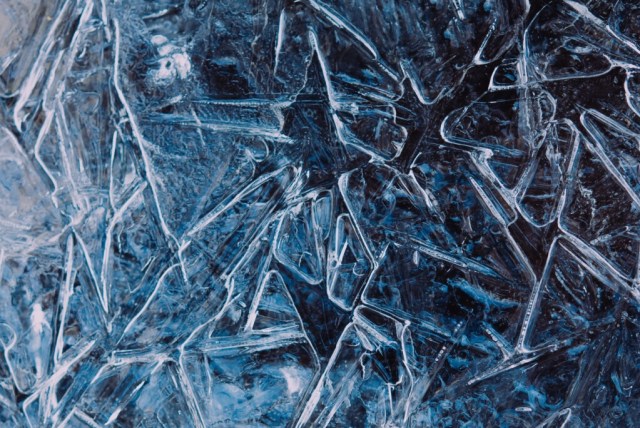
Hyper zoomed in photo of ice crystals.

For Door County, the new year signals a return to ice in Green Bay and the cold days of January and February (and March, although we don’t want to admit it to ourselves just yet). The frozen landscape that the ice creates brings ice fishing, skating, cross country skiing, and snowmobiling to the forefront of outdoor activities. However, to the people who live here, the ice also indicates what the next summer season will bring.

Ice cover on the great lakes has varied greatly over the past 50 years. In 2021, the maximum ice cover was 33.3%, occurring during a polar front in mid-February. Variations in ice coverage can have both positive and negative consequences for residents of the great lakes and the ecosystems in which they live. For example, a polar vortex occurring in 2014 caused less water to evaporate over the winter and more significant snowmelt, which consequently led to water levels rising. In the summer of 2020, Lake Michigan’s shoreline reached a record  high water level at 582 feet, 3 feet higher than its yearly average of 579 feet.

When the maximum ice coverage is low during the winter, more lake water evaporation occurs, decreasing the water level. Many factors contribute to changing  ice cover and lake levels, and science suggests that these variations have become more severe over time. While the range of water levels remains the same in the hundred years over which they’ve been recorded, the cycling of water between high and low levels has become much more rapid over time. Scientists believe this trend of extremes will continue, although it seems that one thing is certain: Lake Michigan’s water levels are unpredictable.

How does ice affect The Ridges?

The swales of The Ridges are fed by groundwater and precipitation. While colder temperatures cause the swales to freeze for longer periods of time, Lake Michigan’s freeze percentage is not directly related to the swales. Perhaps the most impact that freezing water has is at the shoreline of The Ridges; the place where the landscape forms.

Ice is a key agent of erosion. The most obvious example of this is the effect that glaciers have had on Wisconsin’s landscape. Glaciers have the power to transport materials, as well as carve the landscape beneath them. The freezing of Lake Michigan’s surface also erodes the landscape, albeit at a smaller scale.

As water levels in Lake Michigan increased to record breaking numbers in 2020, newly formed ridges along the shoreline washed away. Along with the ridges themselves, newly growing plant species were also lost. The dynamic nature of the ridges and swales is vulnerable to severe weather events and high and low lake levels.

Ridges that have taken a hundred years to form can be washed away in a single summer of storms. These events serve as a reminder that this fragile landscape is ever-changing. With Lake Michigan’s water cycles becoming more severe in recent years, it’s hard to say what new ridges and swales will look like, and how water levels will impact the boreal forest ecosystem.

Animal Adaptations on the Ice

The inland swales of The Ridges freeze over in the winter, usually once the temperature drops below freezing for two or more consecutive days. Frozen swales force the sanctuary animals to adapt their behavior to survive in the cold weather.

Some hibernating animals, like turtles, remain underground or under the ice. The Painted turtle can survive in hypoxic (low oxygen) environments for months at a time. They survive by lowering their body temperature and metabolic activity. To survive in the hypoxic environment of an ice-covered swale, turtles process a chemical called glycogen. This allows them to survive but creates lactic acid as a byproduct. Painted turtles change their body chemistry to counteract the lactic acid and survive until they can absorb oxygen again.

The Wood frog doesn’t burrow in ponds like some other frog species. Instead, they chose to bury themselves in leaf litter and allow their bodies to freeze. They do this by producing a chemical similar to antifreeze in their cells, then push water out of their cells to survive. While the water freezes, their cells do not expand and burst, and they are able to thaw and hop away to vernal pools in the spring.

Muskrats, one of which we frequently see off our swale overlook by the entrance to Hidden Brook Boardwalk, will stay in their dens and venture underneath the ice until the surface of the swale thaws. In contrast, the river otter family that lives near our Hidden Brook Bridge frequently comes out of their den and explores the snowy ridges.

Frozen swales also provide highways of travel for mammals of the sanctuary. Fresh snowfall is the perfect canvas for animal tracks. We frequently see snowshoe hare, deer, coyote, and otter tracks scampering across the ice in the sanctuary.

The best way to view wildlife on the frozen swales is via the snowshoe trail that leaves from our Cook-Fuller Nature Center. After a lovely hike along Sandy Swale, you can explore the quiet, rustic trails of the sanctuary. Snowshoes are available for rent from our nature center for $5 Wednesday through Sunday. To get an in-depth experience, join one of our winter guided hikes on Fridays at 1:30pm and Saturdays at 10:30am and 1:30pm this winter.

Sources:

Great Lakes Integrated Sciences and Assessments. “Lake Levels.” GLISA: A NOAA RISA Team. NOAA, University of Michigan, Michigan State University, n.d. https://glisa.umich.edu/resources-tools/climate-impacts/lake-levels/.

Kelly, Mary Louise.  “Water Levels In The Great Lakes Approach A Record High.” NPR, June 16, 2020, sec. National. https://www.npr.org/2020/06/16/878852945/water-levels-in-the-great-lakes-approach-a-record-high.

US Department of Commerce, NOAA. “Ice Cover.” Accessed January 3, 2022. https://www.glerl.noaa.gov/data/ice/#historical.

“Water Level Data.” Accessed January 3, 2022. https://www.lre.usace.army.mil/Missions/Great-Lakes-Information/Great-Lakes-Information-2/Water-Level-Data/.