
Nature Notes: To Rear or Not to Rear?
By Anna Foster, Director of Operations
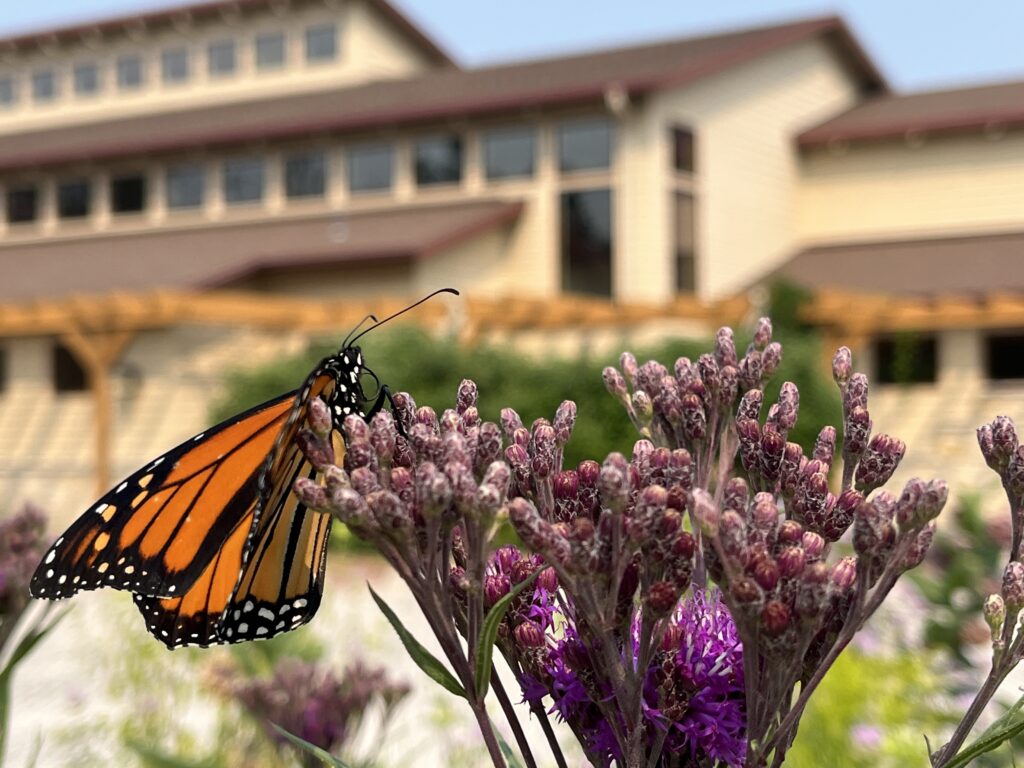
Many children experience the wonder of watching a monarch caterpillar grow and change into a beautiful butterfly. Whether it was in an elementary classroom, from a package of caterpillars that came in the mail, or in my case, at my grandmother’s house each summer, these memories stay with us. Raising monarch butterflies can be a valuable educational tool for teaching children about lifecycles and metamorphosis. It can even inspire a love and appreciation of butterfly species. However, the practice of rearing monarchs at home may be more harmful than helpful to monarch conservation.
Why not rear monarchs?
While the intention behind rearing monarch caterpillars and releasing adult butterflies is admirable, scientists have learned over time that, in practice, it can harm monarch butterfly populations. Rearing monarchs in captivity increases the incidence of disease and the presence of parasites/parasitoids over time. These are all deadly to monarch caterpillars. This is especially problematic when caterpillars are reared in large quantities, resulting in the lack of capacity to track individual caterpillars.
Parasites like OE (Ophryocystis elektroscirrha) spread through tiny spores on a caterpillar’s body. It can cause malformed wings, lower fitness, and ultimately lead to death. The disease can be transferred among wild populations and to a female monarch’s offspring through the eggs she lays. Let’s say you raise 15 caterpillars in one season. If just one of those 15 caterpillars has OE, the adult butterfly could spread the spores to the other 14 caterpillars. If those caterpillars successfully live to emerge as butterflies, upon their release they could spread OE spores to their offspring and to wild populations. OE can also occur in wild populations. However, captivity can increase the occurrence of the parasite and the speed at which it spreads.
In addition to the increase in disease and parasite presence in recent years, monarchs reared in captivity can lead to decreased fitness in the wild monarch populations in your area. According to Monarch Watch, which is the organization that leads monarch population research, the migration success of reared monarchs is about 50% that of wild monarchs. This varies based on the number of monarchs reared and the stage of life at which caterpillars are captured. This percentage is significantly lower in captive-bred populations.
Why do we rear monarchs?
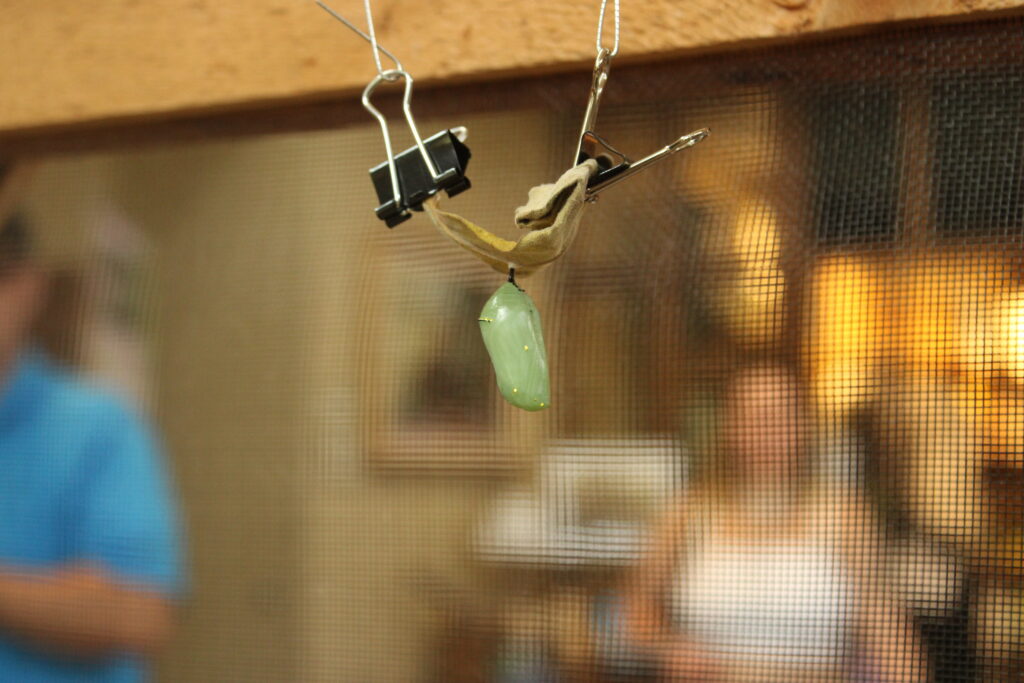
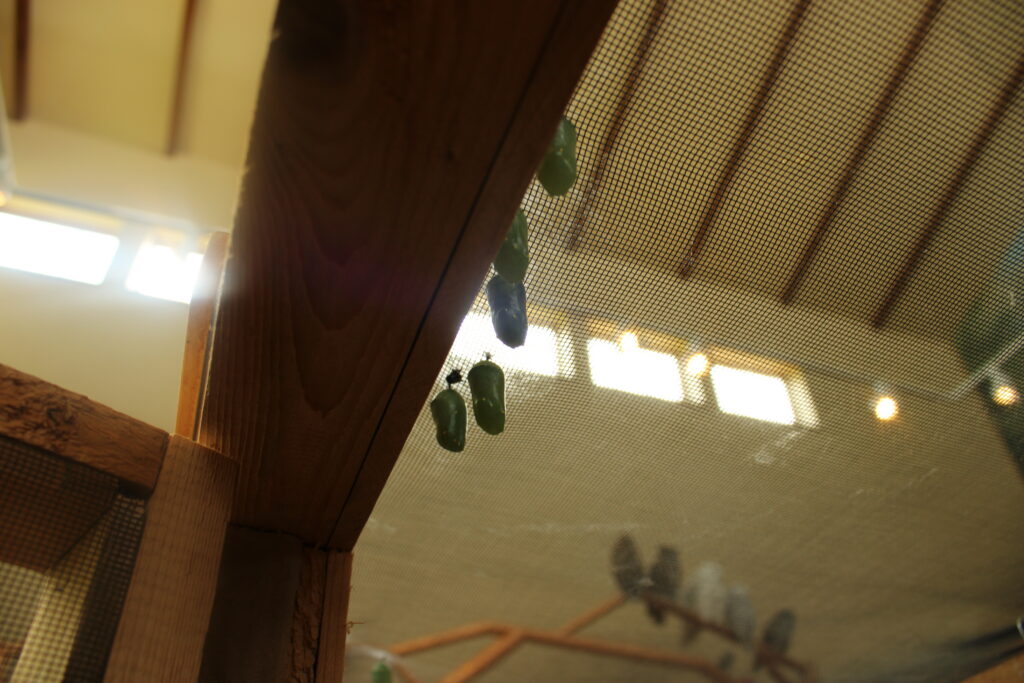
We rear very small numbers of monarchs at the Cook-Albert Fuller Nature Center for two reasons. The first is for public education. As a Nature Center, we can educate large numbers of people about monarch populations and migration. For many people visiting the Nature Center, seeing the monarch enclosure is the first time that they can see different life stages of a monarch up close. This interaction creates a connection and raises awareness for monarchs. We can also promote safe and effective practices to protect monarchs and other pollinator species through our interactions with visitors.
The second reason we rear monarchs is to tag the migrating generation of butterflies before their release. This nationwide research project monitors migrating monarch populations and migration patterns over time. Once the migrating season starts, we place a small tag sticker on each monarch’s wing before releasing it outside. This tag is very small and lightweight enough that it does not affect the monarch’s flight. If the monarch dies and the tag is recovered, it will be recorded in the Monarch Watch database. The data collected from monarch tagging over decades have informed scientists about migration rates, patterns, mortality during migration, geographic distribution, and general population trends.

How do we rear monarchs?
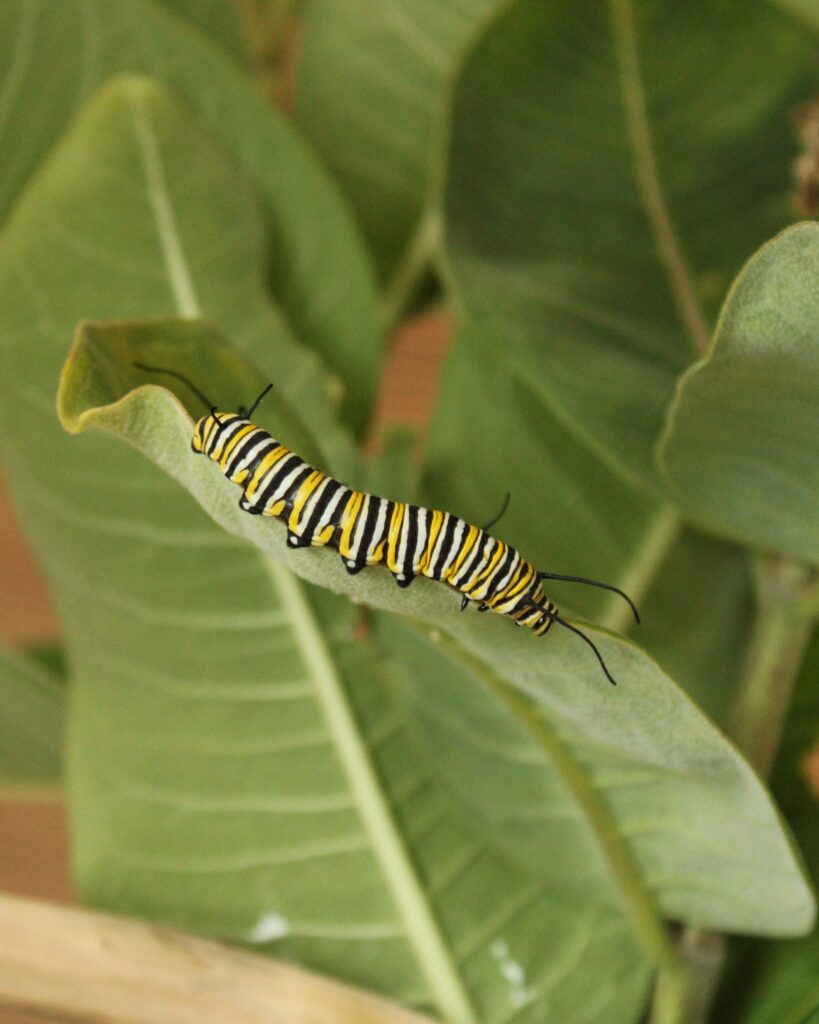
We take abundant precautions with the monarchs we rear in the Nature Center. Staff only allow a small number of caterpillars in our enclosure at a time. In addition, we only rear monarchs found on or around our property that are in their 3rd-5th instars. This means they have already survived the egg stage and the first two sheds of their caterpillar phase. We check the enclosure several times a day to monitor their behavior, check for signs of disease or parasites, and make sure they have plenty of fresh milkweed to eat. Our staff is trained to recognize abnormal behavior, signs of disease, and the presence of parasites.
If disease is suspected, caterpillars are removed from the enclosure immediately, and the enclosure is properly cleaned. If caterpillars are exposed to disease, those caterpillars are isolated and monitored. (This has not happened in our reared enclosure, but it has in enclosures brought in to us.) All equipment is sanitized or is disposed of accordingly.
How you can help
The best way to protect monarchs is to protect and expand monarch habitat. Monarch populations are decreasing largely due to habitat destruction. Monarchs rely on milkweed as a host plant at every stage in their life cycle. Without healthy milkweed populations, monarch populations disappear. They require native milkweed in their summer and migratory ranges to survive. Planting native gardens and native plant meadows can support milkweed populations, and in turn, monarchs. In addition, many native flowers provide nectar for adult monarch butterflies.
Providing native habitat not only helps monarchs, but countless other pollinator species. They are critical to the health of both entire ecosystems and agricultural systems. Whether you have a few square feet or a few acres, you can provide native plant habitat for pollinators.
While rearing monarchs is fun and rewarding, providing habitat that supports wild populations is a much more effective conservation strategy. Finding wild caterpillars on milkweed that you’ve planted is the most rewarding experience of all!
Monarch Madness returns this August at The Ridges!

Join us at The Ridges from August 17-22 for Monarch Madness to celebrate these amazing butterflies! Learn more about their life cycle, population, and conservation efforts.
Daily Tag Talks run during Monarch Madness from 1:30 – 2 pm. During Tag Talks, Ridges staff will be available in the Nature Center to answer questions. Visitors can learn about monarch butterflies and see them being tagged and released (if conditions allow).
Interested in helping support monarch populations on your property? Join us for the Planting for Pollinators workshop on Thursday, August 20 from 1:30 – 3:00 pm. Participants will review the essential elements for pollinator garden success, including garden design, soil management, plant selection, plant nutrition, and general plot maintenance. Participants will also tour the Cook-Albert Fuller Nature Center front gardens and receive pollinator plant seeds collected from the property to start a home pollinator garden. Learn more and register online here.
Lastly, during Monarch Madness, you can sponsor a monarch butterfly with a $5 donation. Be a part of its journey as it migrates across North America from Wisconsin down to Mexico! The monarch you sponsor will be tagged and released before it migrates to central Mexico. Monarch tagging is a decades-long research project aimed at protecting monarch butterfly populations across North America.
Sponsorship includes a pin and a tag number. You can access these online to see if the monarch you sponsored made it to Mexico.
Visit the websites below to learn more about how to protect monarch butterflies and other native pollinators:
https://www.fws.gov/initiative/pollinators/save-monarch
https://www.monarchwatch.org/waystations
https://monarchjointventure.org/get-involved/create-habitat-for-monarchs