
Nature Notes: What Makes an Orchid an Orchid?
By Tony Kiszonas, Director of Research
“What makes an orchid an orchid?” is a question we hear often at The Ridges Sanctuary. There are several ways to answer it, depending on whether you approach the question through history, biology, or the emotional response these plants seem to inspire.
History
Historically, orchids have fascinated people for thousands of years. The name orchid comes from the Greek word orchis, referring to the shape of the underground tubers found on some Mediterranean orchids. Moreover, Confucius is often associated with admiration for fragrant orchids. Vanilla, derived from the orchid Vanilla planifolia, was used in Mesoamerica long before it became a familiar flavor worldwide. Of course, not all orchids have tubers, not all are fragrant, and only a very small number are used as food or flavoring. So, in more modern terms, orchids are usually described as members of Orchidaceae, one of the largest families of flowering plants, with roughly 28,000 known species worldwide. [1, 2]
Habitat
Orchids are also remarkably widespread. They occur on every continent except Antarctica and grow in many different forms. For example, terrestrial orchids root in the ground, and epiphytic orchids grow on other plants. Many visitors are surprised to learn that orchids grow here in Door County. In fact, The Ridges Sanctuary has documented 29 species of native orchids on Sanctuary lands, which is more than the number of orchid species native to Hawaii. [3, 4]
One of the most important things to understand about orchids is that their lives are closely tied to the habitats around them. Orchid seeds are often described as “dust-like” because they are incredibly small and lack the stored food reserves many other seeds carry. For many orchids, successful germination depends on a relationship with specific mycorrhizal fungi, which helps support the young plant as it begins to grow. Therefore, this relationship is one reason orchids can be difficult to restore, transplant, or cultivate outside of their natural conditions. [5]
Structure
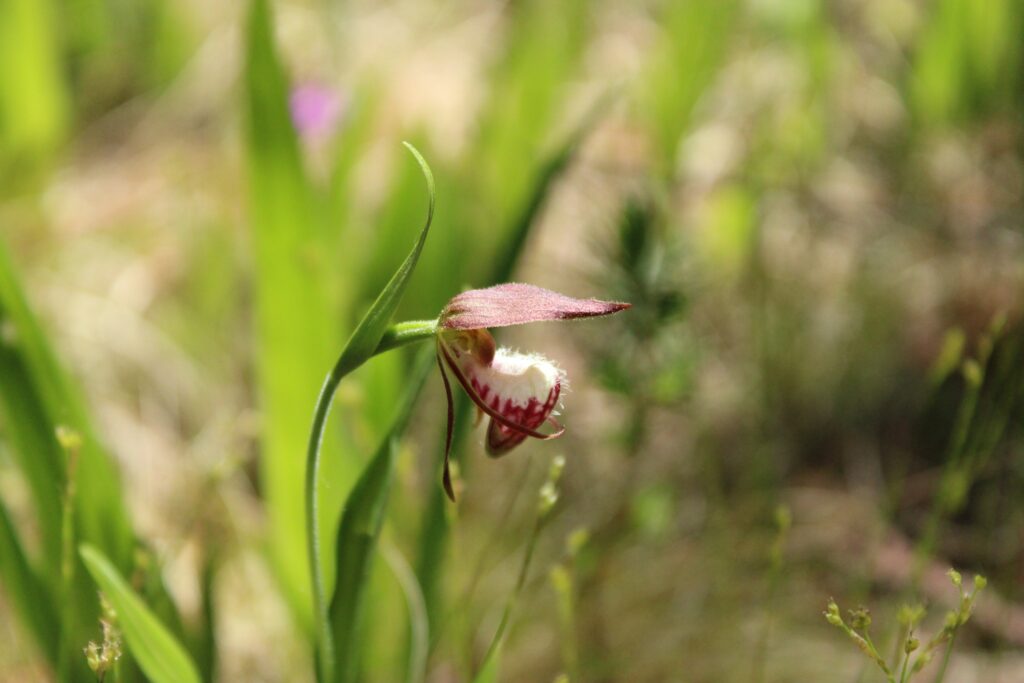
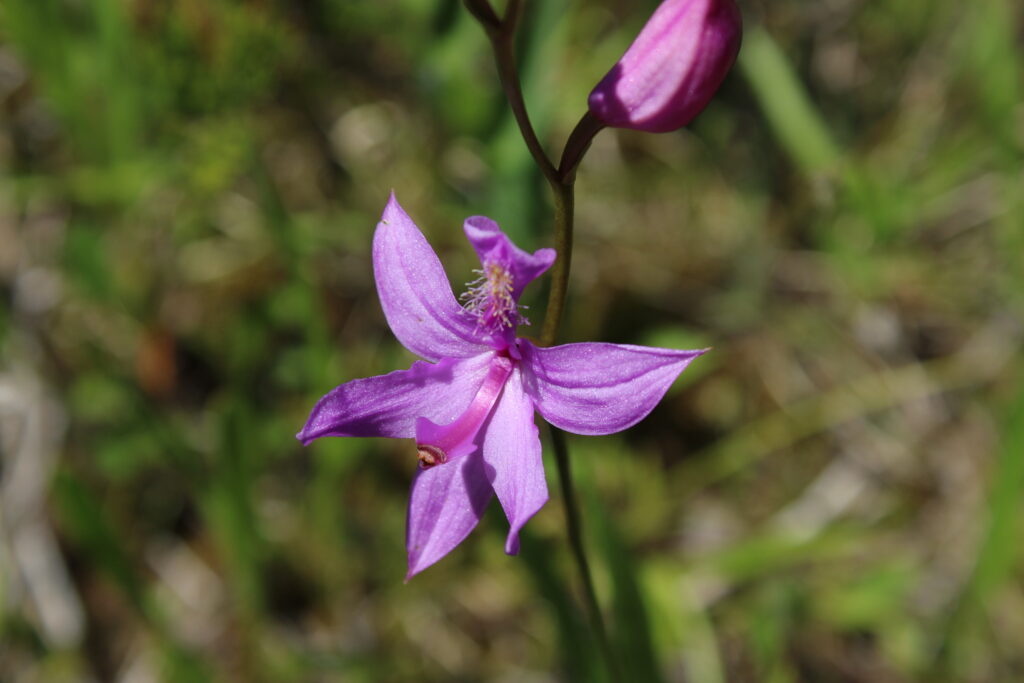
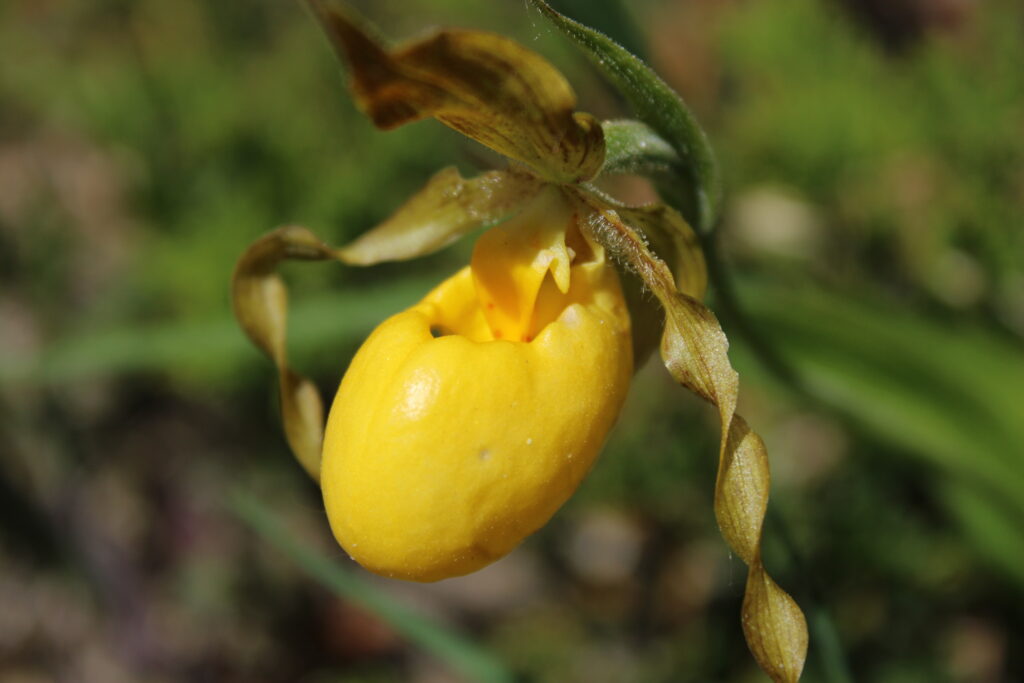
Orchid flowers also have distinctive structures. Most have a modified petal called a lip, or labellum, which can help guide pollinators. In lady’s slippers, this lip forms the familiar pouch or slipper shape. Orchid pollen is often held in masses called pollinia, and many species have highly specialized flower shapes, markings, spurs, or landing platforms that interact with particular pollinators. Some orchids can spend much of their lives underground, relying on fungal partners, while others have flowers that may self-pollinate without fully opening. The details can get complex quickly, but they all point to the same idea: orchids are not just beautiful, they are highly specialized plants shaped by long relationships with fungi, pollinators, and place. [2, 5]
Still, the question “What makes an orchid an orchid?” is a scientific one. For many people, orchids create an emotional response that few other plants can match. From the orchid mania of Victorian Europe to the dedication of modern orchid enthusiasts, these plants have inspired fascination, patience, and sometimes even obsession. At The Ridges, guests may travel for hours for the chance to see one bloom. The look on someone’s face when they see a ram’s head lady’s slipper for the first time is often unforgettable. Information matters, but it is often the emotional experience that creates a lifelong connection to this family of plants. [6]
Threats
That connection also comes with responsibility. In the eagerness to photograph or admire an orchid’s bloom, it is easy to overlook the fragile plants growing nearby. Kneeling beside a trail, stepping off the boardwalk, or moving vegetation for a better photo can damage young orchids and other sensitive species. What seems like a small disturbance at the moment may affect a plant population for years.
More serious still is the threat of plant poaching. The illegal collection of rare plants, including orchids, can cause lasting harm to small or vulnerable populations. For this reason, exact orchid locations at The Ridges Sanctuary are not shared. Our mission is rooted in preservation, protection, and education, and those priorities must come before the perfect photograph.
The best way to experience orchids at The Ridges is with care. Stay on designated trails and boardwalks, do not pick or disturb plants, and photograph blooms from a respectful distance. These small choices help ensure that future visitors can experience the same sense of wonder when they encounter an orchid in bloom.
References
[1] Sheehan, Thomas J., in association with the Smithsonian Institution and the American Orchid Society. The Ultimate Orchid. DK Publishing, 2001.
[2] Encyclopedia Britannica. “Orchid.”
[3] The Ridges Sanctuary. “Research.”
[4] Hawaiʻi native orchid references documenting the three native orchid species: Anoectochilus sandvicensis, Liparis hawaiensis, and Platanthera holochila.
[5] Royal Botanic Gardens, Kew. “Orchid Seeds: Nature’s Tiny Treasures.”
[6] Royal Botanic Gardens, Kew. “Kew’s Dried Flower Collection Reveals a Victorian Infatuation.”
[7] The Ridges Sanctuary. “Hours and Policies.”
[8] U.S. Fish and Wildlife Service. “Ghost Orchid Proposed for Endangered Species Act Protection.”