
Nature Notes: Spring Flower Walk
By Natalie Schnackenberg, WisCorps Environmental Educator
More than a walk in the woods
Walking in the woods is one of my favorite ways to slow down my mind and be present in the moment. With longer daylight hours and signs of new life, May is a wonderful time to go on an afternoon walk. Unique colors are always the first thing to catch my eye. In the winter it may be lichen, in the fall I notice mushrooms, and in the spring it’s the new flowers!
Though we find peace in fields of May flowers, it’s a matter of life and death for many plants. They must use valuable resources to produce flowers to attract pollinators and ensure reproduction and the continuation of the species.
The dwarf lake iris
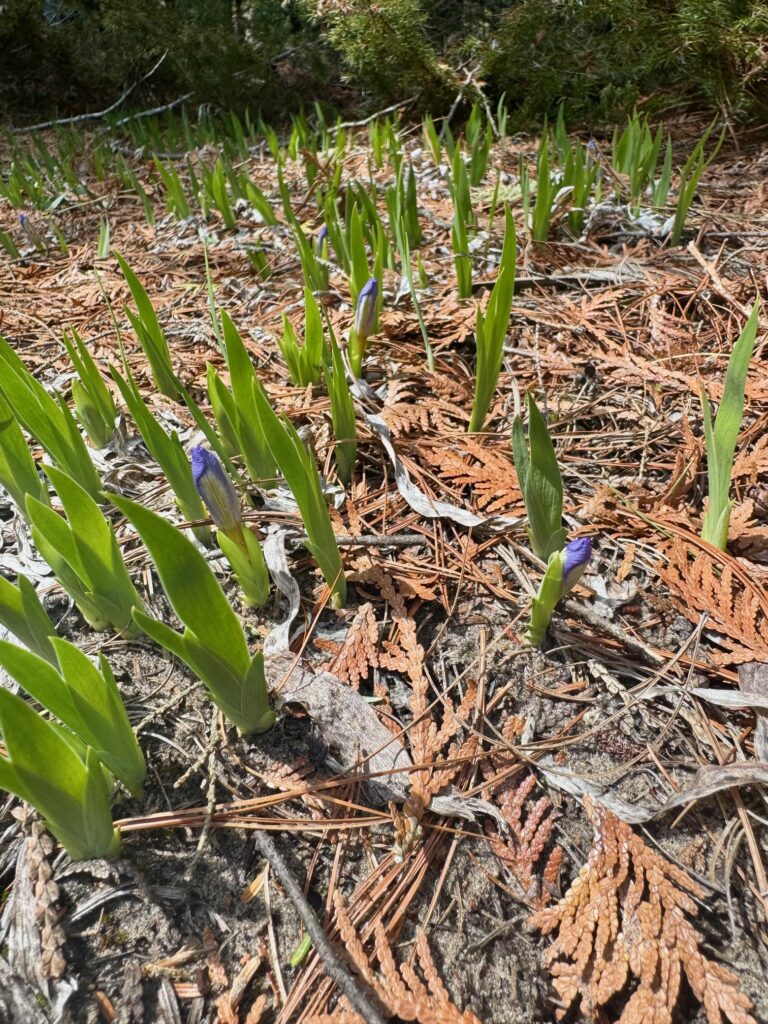
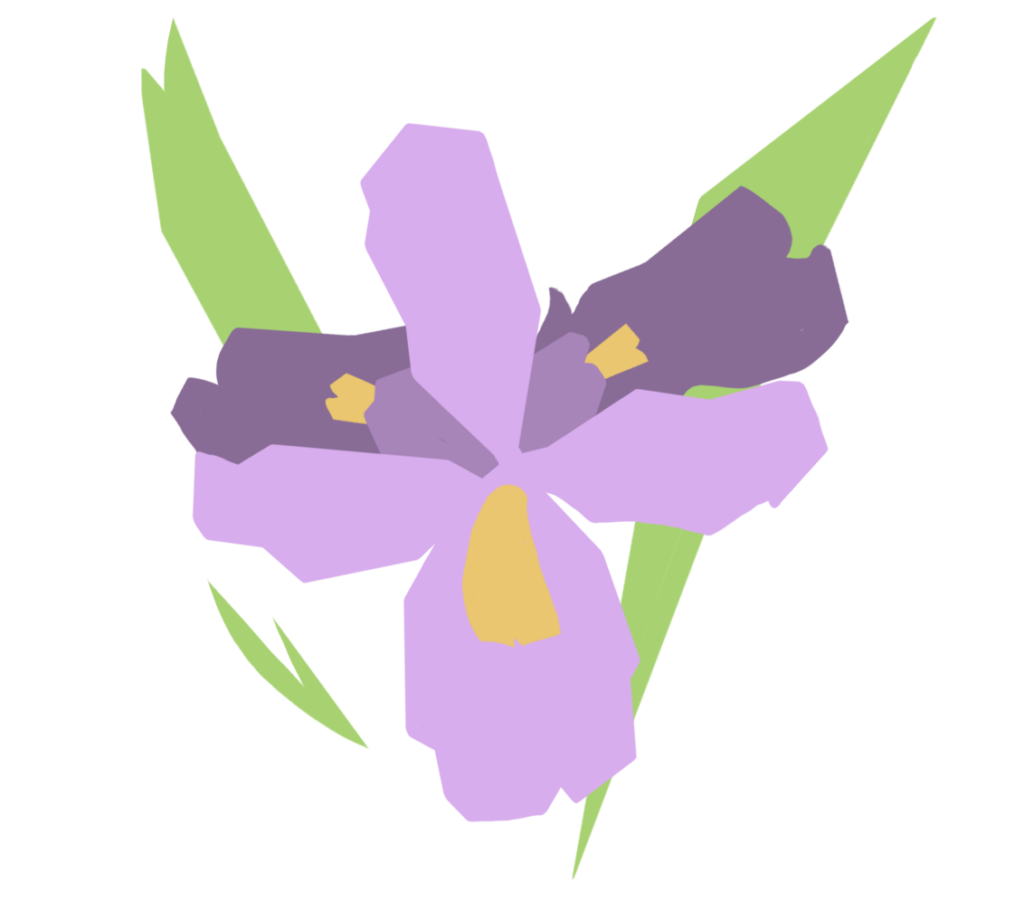
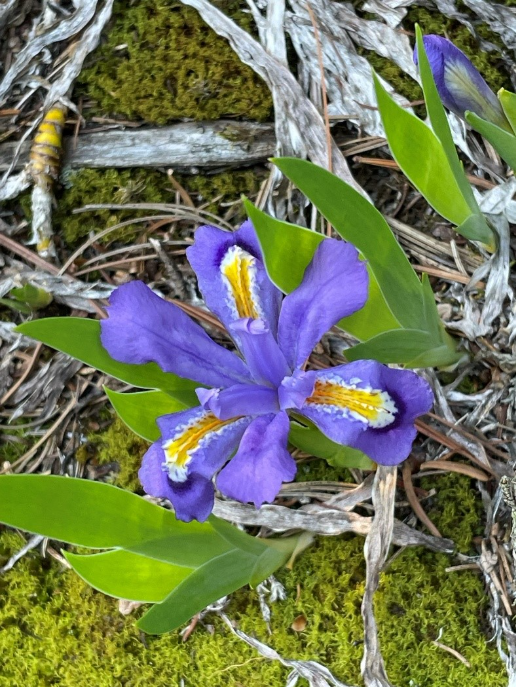
As the icon of The Ridges research initiative, the dwarf lake iris is one of Door County’s most recognizable spring ephemerals. However, to find it you will need to take a slow stroll and keep your eyes on the ground. Unlike our other native iris, the dwarf lake iris is rather small and grows only to be about four inches tall. If you are fortunate enough to see it, you will notice a small purple flower with a white and yellow “runway” which leads to the anther and stamen. This “runway” is called the nectar guide because it helps to guide pollinators to the anther and stamen.
If you sit beside the flower long enough, you may see it visited by a pollinator. If so, take a picture! Every piece of data is important. At The Ridges, we conduct research on dwarf lake iris to learn more about it, like preferred light conditions and who is visiting to pollinate it. The dwarf lake iris is pollinated by several local species including mining bees, bumble bees, and metallic green sweat bees!
The marsh marigold
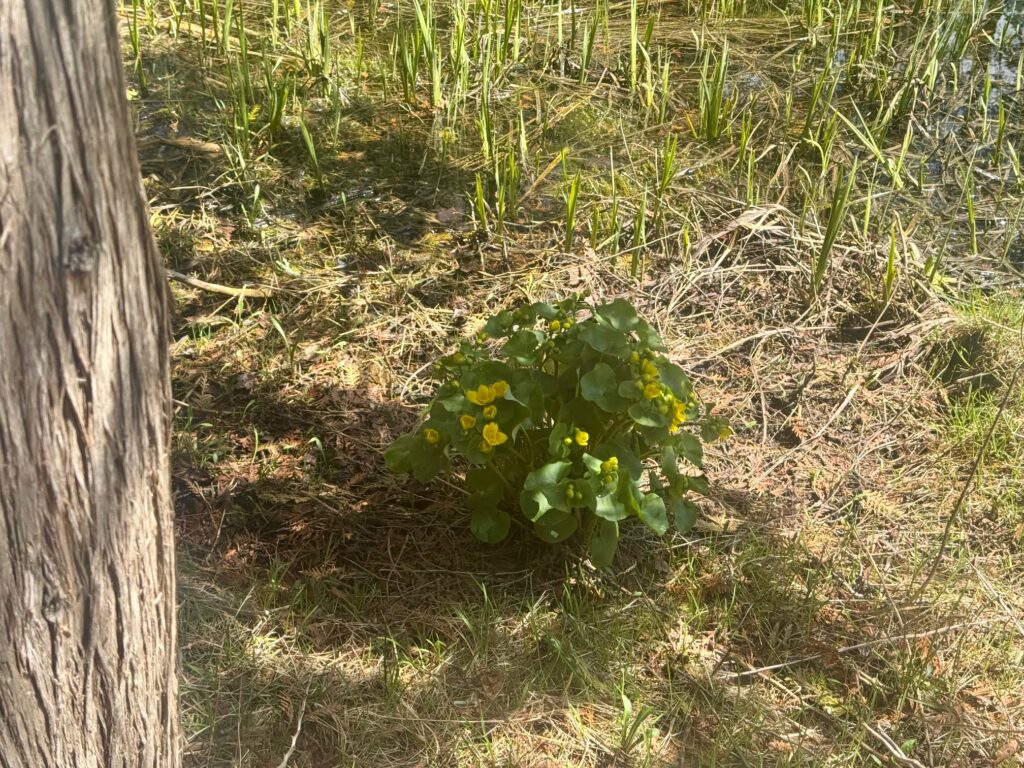
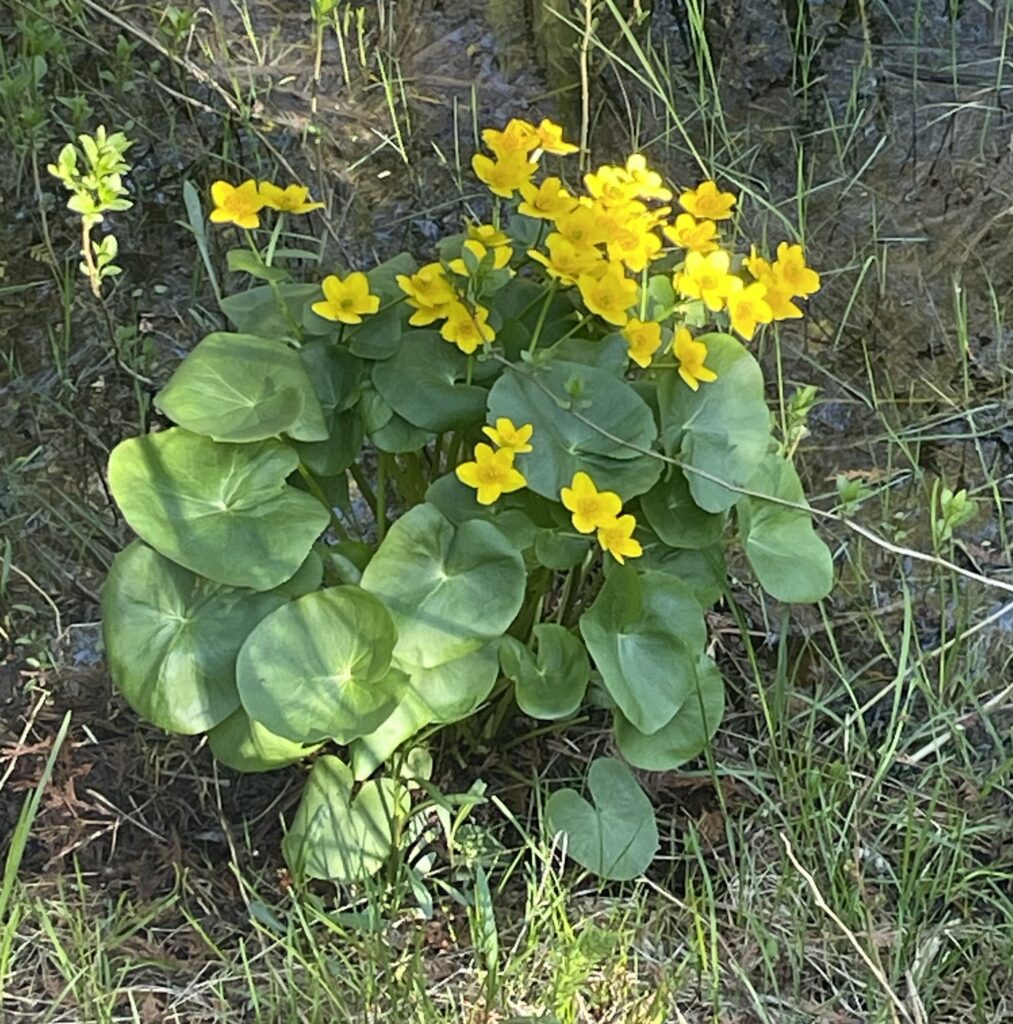
Another of my favorite spring flowers is the marsh marigold. It grows in wetland habitats and even directly from stream beds. I’ve even seen it growing out of a log that had fallen into the flow of water. It is a common species in the Midwest, so you are likely to encounter it if you are taking a walk through any wetland space. It has numerous bright yellow flowers, and grows one to two feet in height, so it is easy to spot during its blooming season. However, the marsh marigold has a special feature that is invisible to the human eye! Like the nectar guide on the dwarf lake iris, the marsh marigold has ultra-violet coloring on the edges of its petals that guide insects to the pollen.
The trillium
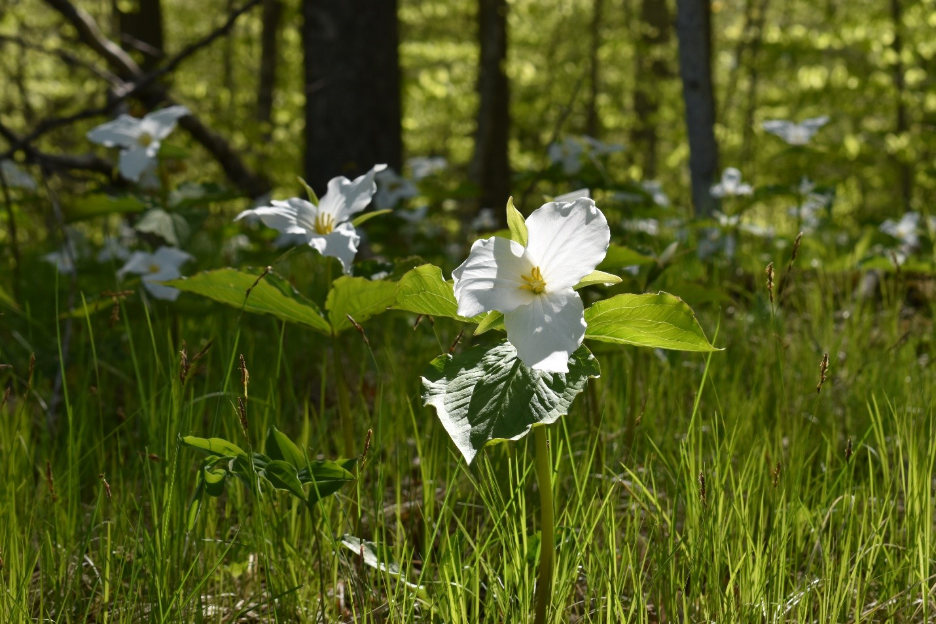
As you walk uphill from the soggy stream into the forested upland, like at our Logan Creek property south of Jacksonport, you may encounter another spring flower: trillium. Think “tri” as in three, and identifying trillium becomes easy. It is a palm-sized white flower with only three petals, three sepals, and three leaves. There are two types of trilliums common to our area: the great white trillium and the nodding trillium. Both are well-named. The great white trillium has a large upward facing flower, and the nodding trillium has a slightly smaller flower that droops to face the ground. The great white trillium is a common Midwest wildflower and is the state wildflower of our across-the-lake neighbors in Michigan.
While trillium is plentiful in its habitat, it is still a fragile plant. With only the three leaves to photosynthesize, it will be unable to reproduce if the leaves are plucked. Sometimes that will even cause the root to die back, and that individual will be lost. As one of the first flowers to appear in the spring woods, trillium runs the risk of flowering before the pollinators are ready. The species has adapted to reduce that risk by keeping its flowers open for up to three weeks!
There are so many more wildflowers to look for while out on your spring walk! Some are low creeping flowers like trailing arbutus and others are tall meadow species like the Canada buffaloberry. Keep an eye on the ground and a guidebook in your pocket!