
Nature Notes: Season of Change – How Nature Prepares for Winter
By Amy Shook, Naturalist
As we start the transition between fall and winter, we think of everything that we must do. Put away the summer clothes, get outdoor furniture inside, find our snow brushes and shovels, find the heavy boots and mittens. We all have a process and routine for how to go about the transition in seasons. Animals and plants also go through a process to prepare for the transition of fall into winter; their process just looks a little different. Let’s start with some animals we find commonly here at The Ridges, and maybe in your backyard too!
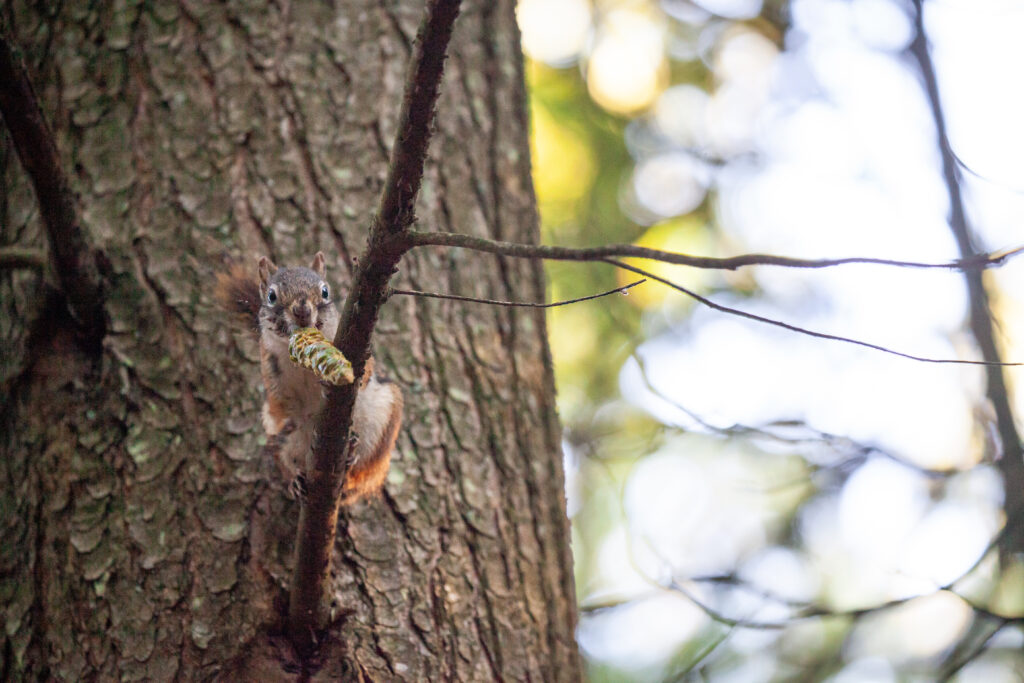
Red squirrels are a common sight – and sound – at The Ridges. In the Sanctuary, a red squirrel is all you are likely to see as red squirrels live in coniferous forests, and we have a boreal forest right here in Baileys Harbor. A boreal forest is dominated by cold loving plants, like red pines, white pines, labrador tea, and wintergreen. Red squirrels are a relatively small species of squirrel that have a reddish tint to their fur and are not quite as bushy tailed as gray squirrels. They primarily eat seeds, with a favorite being seeds from cones, like white pinecones and red pinecones.
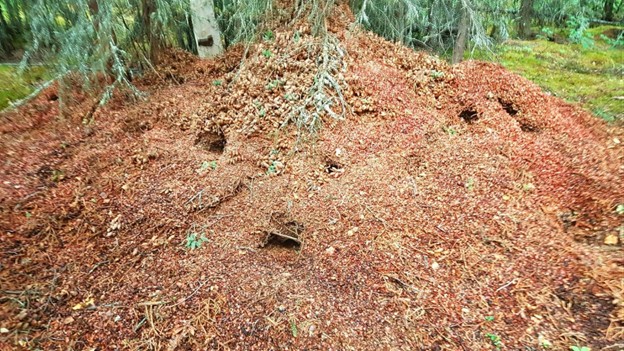
If you see an area that looks like a pinecone exploded, it is likely that a red squirrel had a snack there. In addition to smaller explosions of pinecones, red squirrels are also responsible for large piles of pinecone scales and cores. Red squirrels make these piles to help them have food throughout the winter, they are called “middens.” They create these middens by eating the pinecones from a perch in a tree over the area they have chosen for their midden. As they eat the seeds, scales drop down to the bottom and over time form large piles. The piles are used to store unopened pinecones for red squirrels throughout the winter. Red squirrels are active all winter long, so you may see them — or find their paw prints in the snow!
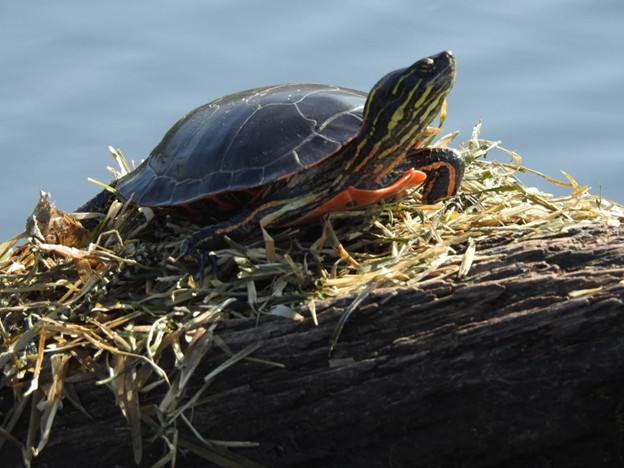
An animal you may not think of in winter, but may wonder about is the painted turtle! Painted turtles are a common sight basking in the sun and swimming in the swales all summer long, but come late fall and winter, they disappear. All turtles are ectotherms, meaning they do not generate their own body heat and do not maintain a stable internal temperature. They rely on the sun and external sources for body temperature, so as the weather gets colder, so do painted turtles. As it gets cooler, the turtles will swim toward deeper waters and head to the mud. They don’t hibernate —they brumate!
Brumation is a period of inactivity in reptiles during the winter months, and this is how they survive. Brumation requires painted turtles to go through some very big changes to make it so that they are able to survive in these cold conditions. The metabolic rate of painted turtles drops by about 90%, so that they do not need food or oxygen (Jackson DC 2002). This slows the turtles down, and you may even see them moving sluggishly under clear ice! While it may seem frightening to hold your breath and not eat all winter long, turtles have evolved to survive our cold conditions. Once the ice has thawed, the turtles will become more active, metabolism will increase, and you’ll see them basking on sunny, warm spring days.
I’ve talked about a couple animals we have here in the Sanctuary that survive our winters, but what about the plants? With our boreal forest, we have many conifers and evergreens. I use both terms because they are not necessarily the same type of plant. Conifers reproduce through using cones —think white pine (white pinecones), tamarack (tamarack cones), and red pine (red pinecones). Evergreens are plants that retain their needles (leaves) all winter long, like white pine, wintergreen, labrador tea and northern white-cedar. Conifers can be evergreen, but not all are.
Tamaracks are conifers that are not evergreens. Tamarack are deciduous conifers, meaning they produce cones (conifer) but lose their needles every fall. If you visit The Ridges in late October, you might just see our tamarack turning from green to a brilliant gold color as they prepare to drop all their needles. Tamarack do this as a strategy to survive our harsh winters.
Having needles or leaves all winter can open trees up to frost and ice damage of the tissues within the tree, which can harm the overall health of the tree. Leaves and needles are exposed and have no serious protection from the cold, which is why deciduous trees lose them in the fall. Tamarack have evolved that the most energy efficient way for them to survive winter is losing and regrowing new needles each year. This reduces the damage done to the tree in the winter and allows them to grow fresh new needles. New needles can photosynthesize quickly and allow the tree to recuperate any energy spent growing new needles.
In contrast, white pine trees, which are conifers AND evergreens, retain their green needles all year. While tamarack have evolved to lose their needles and regrow each spring, white pine have evolved so that keeping their needles all year is more energy efficient than losing them. White pine have a thick, waxy substance called a cuticle that covers their needles to protect them from the damage of ice and freezing. In addition, retaining their green needles all year means that they can continue to photosynthesize and create energy, even in the cold months. This cuticle layer and the shape and flexibility of white pine branches helps with shedding snow to prevent it from accumulating and breaking branches as well.
Winter is a time where many think about hunkering down, but it’s one of my favorite times of year. I love to see all the changes that happen around me as the world seems to slow down. Take some time to enjoy the winter months outdoors and maybe you’ll have a new appreciation for the adaptations that so many animals and plants make to survive our winters.