
Nature Notes: In Pursuit of Understanding—Collaborative Research at The Ridges Sanctuary
By Tony Kiszonas, Director of Research
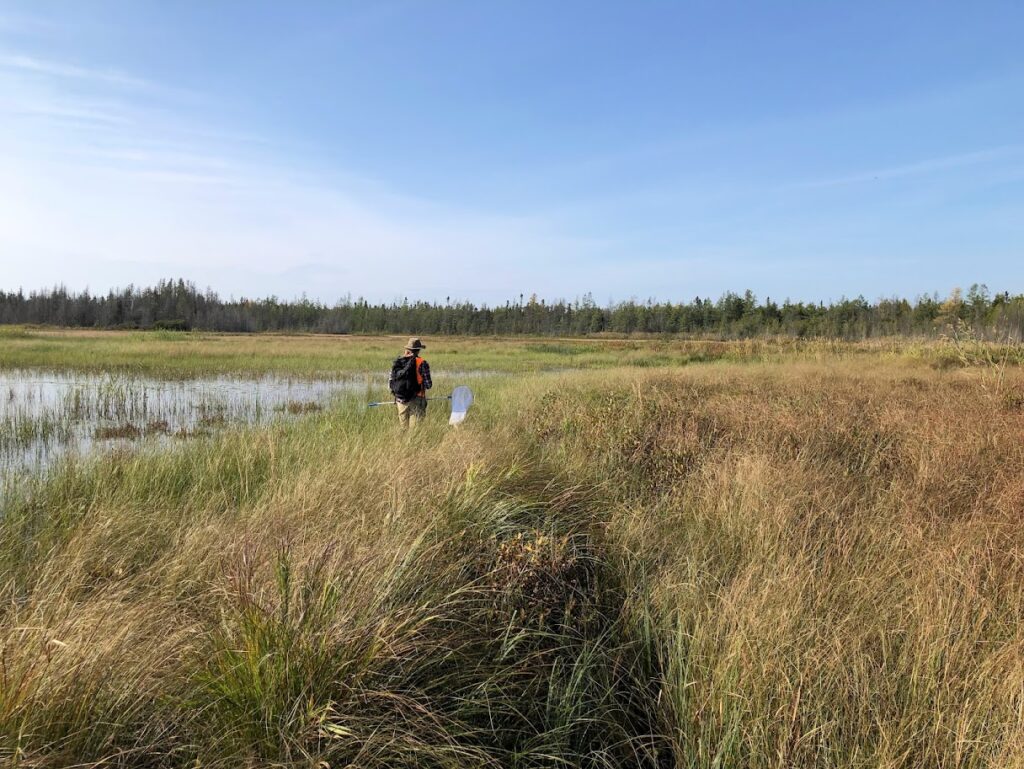
“The ever-changing plant and animal populations of The Ridges make it mandatory for us to learn more about what exists within The Ridges, what factors cause changes in numbers of rare species, and
how to maintain desirable vegetation and animal numbers in all Ridges habitats.”
—Roy Lukes, 1988.
These words spoken over 35 years ago by legendary naturalist Roy Lukes are as significant now as they were then. At The Ridges Sanctuary, we are fortunate to have several organizations and individuals who value our incredible biodiversity and assist in continuing to learn more about the organisms that comprise our varied communities through inventory and research projects. Because of this incredible diversity, we provide the environment for outside researchers to conduct projects that enhance their academic and organizational information while providing tremendous benefits for The Ridges.
Following a research permit application process, those projects receiving approval add to the knowledge base of the entire scientific community, including us. Whether these studies are directed at gathering baseline inventory data, focused on the symbiosis of species, or trying to understand the intricate relationships between groundwater and Lake Michigan, each adds to the overall picture of our environment for us and future generations.
There are several on-going inventory and research projects that are providing invaluable information regarding the communities that comprise the old “Baileys Harbor Bog” and beyond. Dr. Keir Wefferling, Assistant Professor of Biology at the UW-Green Bay, is working with undergraduate and graduate students to identify and inventory the mosses and liverworts of boreal rich fens, while another student is conducting ridge-by-ridge plant chronological surveys. Another UW-Green Bay project will examine carbon sequestration in sphagnum communities as a function of biodiversity and colony density.
Ridge and Swale Echohydrology Connections

Dr. Steve Loheide, a professor at UW-Madison, along with PhD student Eric Kastelic and a team of undergraduates, have commenced a project on effects of Great Lake water level fluctuations on groundwater and forests in ridges and swale ecosystems. The goal of this research is to quantify the impact of changing Great Lakes water levels on coastal groundwater systems and tree growth patterns. With purposely placed monitoring wells, swale water-level gauges, and tree ring analysis, correlations may be established between lake, groundwater levels, and tree physiological responses. This study will synergistically enhance other projects taking place.
The Ant Study
Postdoctoral Researcher Grant Doering from Arizona State University can be found crawling around on all fours, seeking ant colonies for his work on emergent evolution in ants. While collecting ants for his evolutionary behavioral study, Grant identified two ant species, typically only found in Canada. This suggests that The Ridges and surrounding habitat may function as a southern refugia for these two species.
Moths, Dragonflies and Damselflies
In addition to university-based researchers, The Ridges is fortunate to have individuals assisting in insect biodiversity survey projects. Kyle Johnson is focused on conducting a moth survey with JD Arnston, concentrating on dragonflies and damselflies. Both surveys are yielding extensive species lists with numerous Door County first sightings recorded. As with our plant inventory work, animal researchers are also providing evidence of extensive biodiversity at The Ridges Sanctuary.
Predator Absence and Disease Research

As noted, several projects at The Ridges involve the incredible biodiversity that is all around us. However, one researcher selected this area because we lack a certain apex predator. Michael Menon, a University of Wisconsin-Madison PhD student, is conducting research here because we do not have documented wolf packs howling around. Michael’s work involves trying to determine the impact that wolves have on the health of the state’s deer population, particularly as the deer population’s health involves chronic wasting disease. His hypothesis includes the idea that wolf predation on diseased deer will improve the overall health of the herd. Mr. Menon selected The Ridges to document the behaviors of other carcass scavengers in the absence of wolves and absence of chronic wasting disease. Michael is careful to place his deer “carcs” and trail cameras well off trail and has posted signage explaining his project for wayward hikers.
Building Knowledge for the Future
The forementioned endeavors describe only some of the collaborative environmental research that is taking place at The Ridges. As succinctly stated by Roy Lukes in 1988 and reinforced through the adoption of the 20-year Master Plan, we must strive to learn as much as we can about this natural world of ours through purposeful research. This knowledge gained is a critical support of our organization’s mission while helping us build on previous work and provide documented information for the present and especially the future.
Images by Tony Kiszonas
To explore these studies in greater detail, see Tony Kiszonas’ article, “Advancing Environmental Knowledge,” featured in the Spring 2025 issue of our Sanctuary Newsletter.