
The Hine’s Emerald Dragonfly: A Federally Endangered Resident of The Ridges Could Become Wisconsin’s State Insect
by Tony Kiszonas, Director of Research, and Victoria Holderer, Applied Research Ecologist
(This was originally published as a press release through EIN Presswire, which can be found here.)
One of the few remaining U.S. populations of the Hine’s emerald dragonfly persists at The Ridges Sanctuary, where conservation and research support its future.
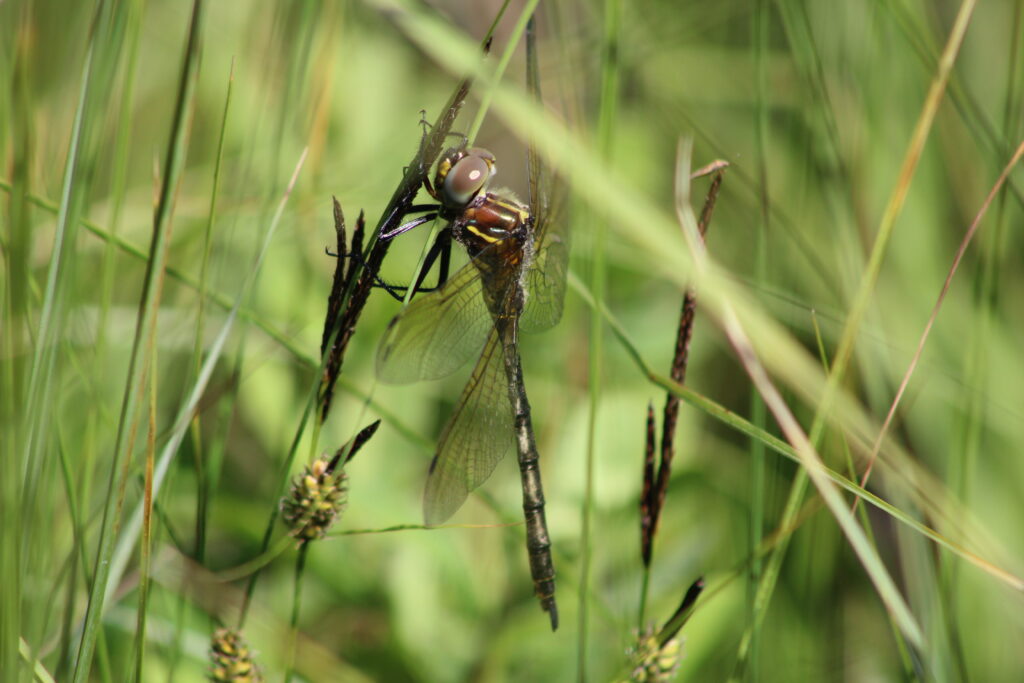
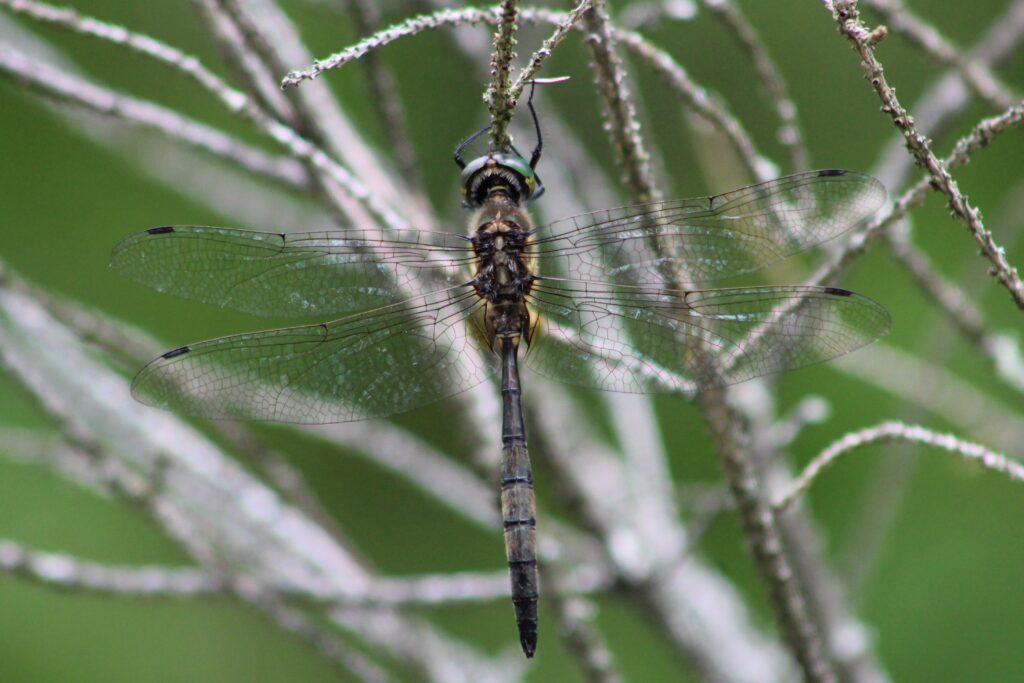
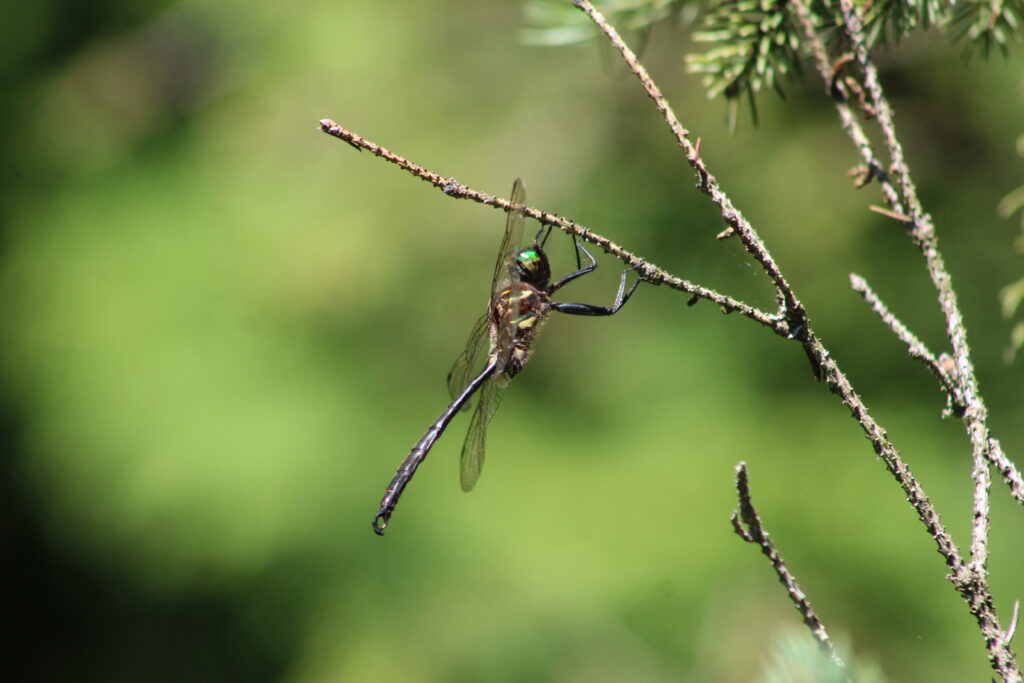
The Ridges Sanctuary has recorded 71 species of dragonflies and damselflies, thanks to the help of researchers and volunteers. JD Arnston started in 2023. University of Wisconsin-Green Bay undergraduate student Benjamin Whitaker joined him in cataloguing more species in 2025. Included in this list is the federally endangered Hine’s emerald dragonfly Somatochlora hineana. Visitors come from all over the country to catch a fleeting glance at this elusive dragonfly from late June to August, when they make their appearance over our swales. Just recently, this iconic insect has been nominated to become Wisconsin’s new state insect. Wisconsin residents can vote to support this native species in the Wisconsin Conservation Congress’ Spring Hearing Questionnaire. It opens April 13-15 and features this query in question #24. Visit the DNR’s website to cast your vote.
Hine’s History
This enigmatic dragonfly was first discovered in 1929 and was named in 1931. Thought to be extinct by the 1950’s (Peninsula Pulse), specimens were rediscovered in 1987 in Door County, Wisconsin. Since that time, additional populations have also been documented in Michigan, Illinois, and Missouri, as well as Ontario. Due to population and habitat loss, Hine’s emerald dragonfly was placed on the federally endangered list in 1995. It remains on this list today. As an elusive federally endangered species, researchers continue to study all aspects of this green-eyed beauty. We hope this research will inform environmental decisions for governmental agencies, landowners, conservation groups, and the public.
Hine’s Habitat
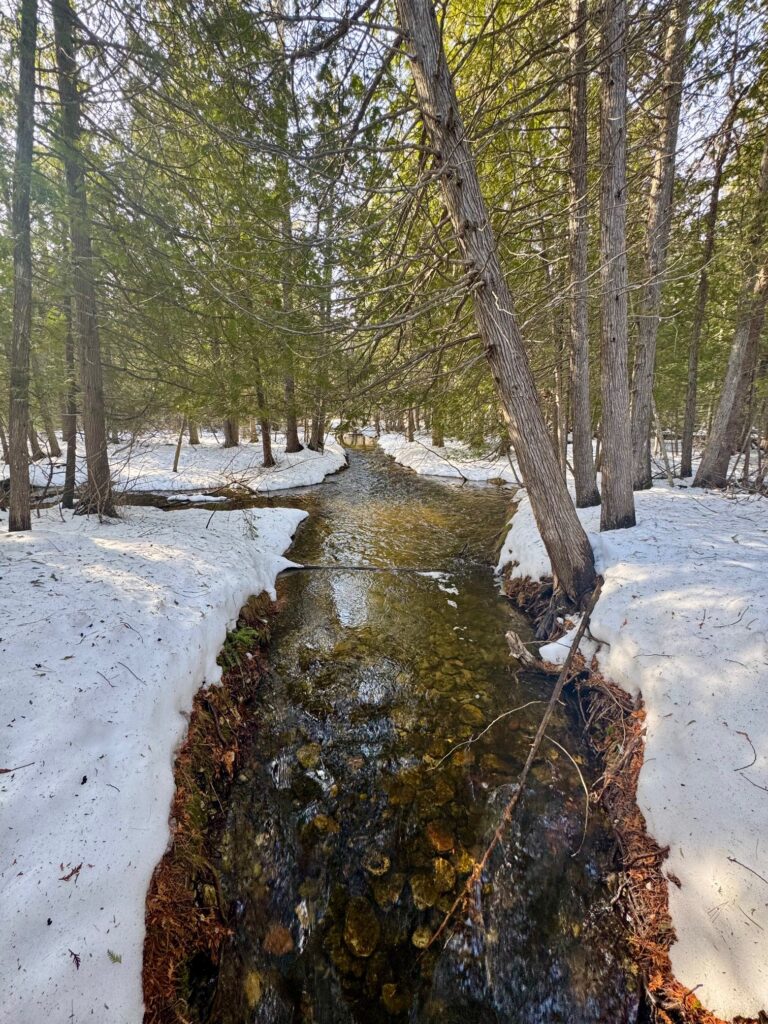
Part of what makes Hines’ emerald dragonfly populations vulnerable is their sensitivity to habitat disturbance. Breeding habitats for the Hine’s emerald dragonfly are primarily calcareous (or chalky), groundwater-fed wetlands with dolomite bedrock formations. Their need for high-quality wetlands makes the Hine’s emerald dragonfly an important environmental indicator for habitat health. Dr. Dan Soluk from the University of South Dakota is a longtime Hine’s emerald dragonfly researcher. According to him, the Hine’s emerald acts as a “canary in a coal mine” by providing evidence of an area’s groundwater quality. Negative changes in a breeding population may reflect a degradation of a watershed’s quality. Dr. Soluk is concerned that climate change may become an increasingly limiting factor for the success of this endangered species.
The Hine’s emerald dragonfly larvae spend four to five years developing before emerging as an adult. As such, a localized water quality issue, such as a pollutant, may destroy several larval generations. They live through low water temperatures during the summer and colder temperatures during the winter. To survive this fluctuation, the larvae seek shelter in crayfish burrows. Once an adult emerges, it will have only a few weeks to complete its biological journey. This includes eating many insects, including mosquitoes and deerflies, dancing the dragonfly rhumba, and breeding. During this intense phase, adult dragonflies are subject to predation and the bumpers and windshields of cars. Every life-cycle phase has its perils for this fascinating animal.
Pictured to the left is Hidden Brook in The Ridges Sanctuary.
Our Research
These concerns reinforce the need for further research efforts on this endangered insect. In addition to the University of South Dakota’s ongoing work, we are currently working collaboratively with Door County conservation groups on further research. We hope to gather data on water quality, the impact of invasive species, and automobile mortality counts on the Hine’s. Some projects in the planning phases include partnerships with other university teams and governmental agencies to track populations of the adult and larval forms of Hine’s emerald dragonfly. Methods utilized include burrow pumping and studies with environmental DNA. Through continued efforts, we hope that ongoing research can gather as much knowledge as possible to guide future decision-making processes. Ultimately, that will help ensure the survival of the Hines emerald dragonfly.
Wisconsinites can support changing the state insect to the native Hine’s emerald dragonfly, as well as provide input on a wide array of natural resources issues. Vote on question #24 on the 2026 Spring Hearing Questionnaire online at the DNR’s website from 6 p.m. on April 13 through April 15. To learn more about The Ridges’ research with the Hines emerald dragonfly or other volunteer research opportunities, please visit our Research webpage.