
Nature Notes: The Wondrous World of Butterflies & Dragonflies
By Natalie Schnackenberg, WisCorps Environmental Educator Placement
Butterflies and dragonflies are certainly the most colorful summertime insects here at The Ridges. Many a poem has been composed in honor of these amazing aviators. However, these poems rarely touch on the science behind their life cycle and diet.
Butterfly Life Cycle
The life cycle of a butterfly is generally well known. In fact, books are available on the topic in the children’s section of any library. Butterflies undergo complete metamorphosis, which has four stages. It starts life as an egg, develops into a larva, goes into its chrysalis (the pupa stage), and emerges as an adult. And though everybody knows this, I still don’t think most people realize how astounding it truly is! After the caterpillar (larva) forms a chrysalis, its cells break down into goo to provide energy for new adult cells to divide and multiply. Imagine that humans dissolved down to just a few essential cells every time we had a growth spurt!
Butterfly Diet
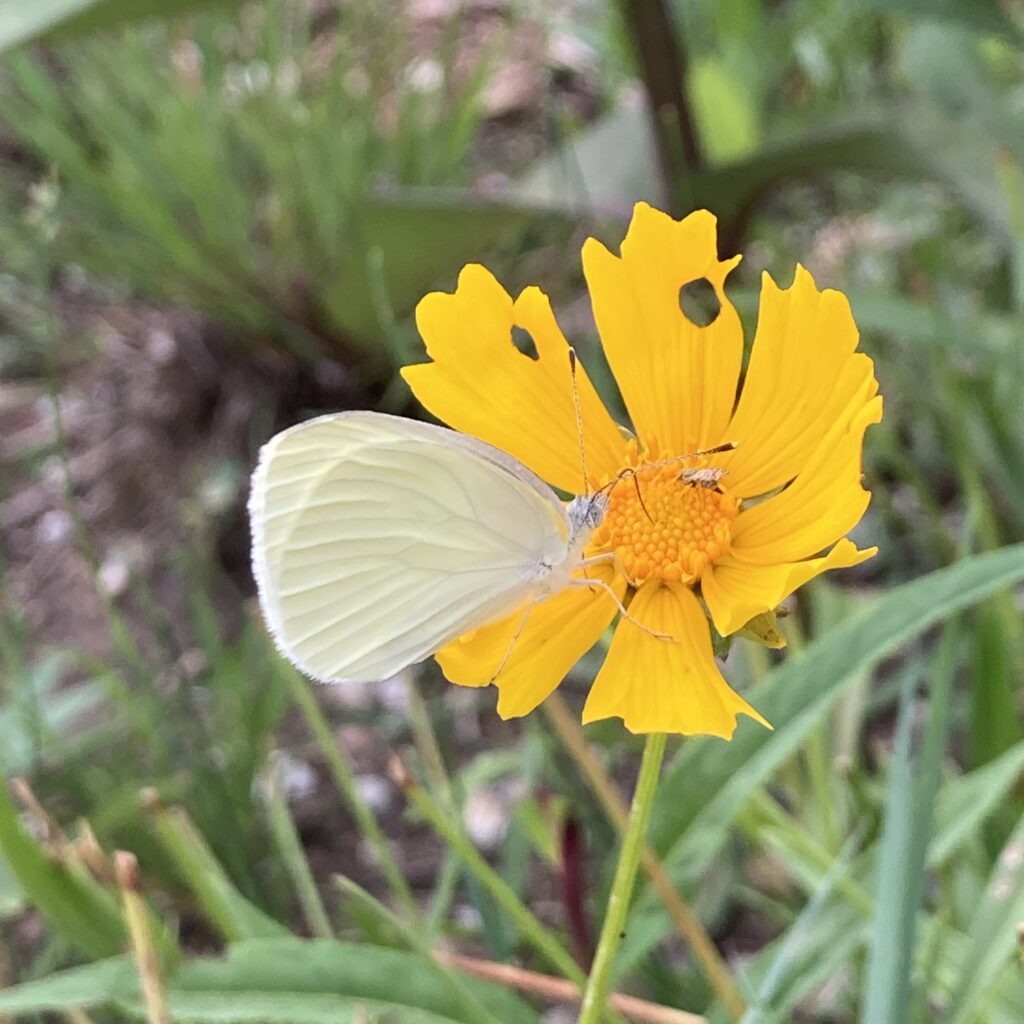
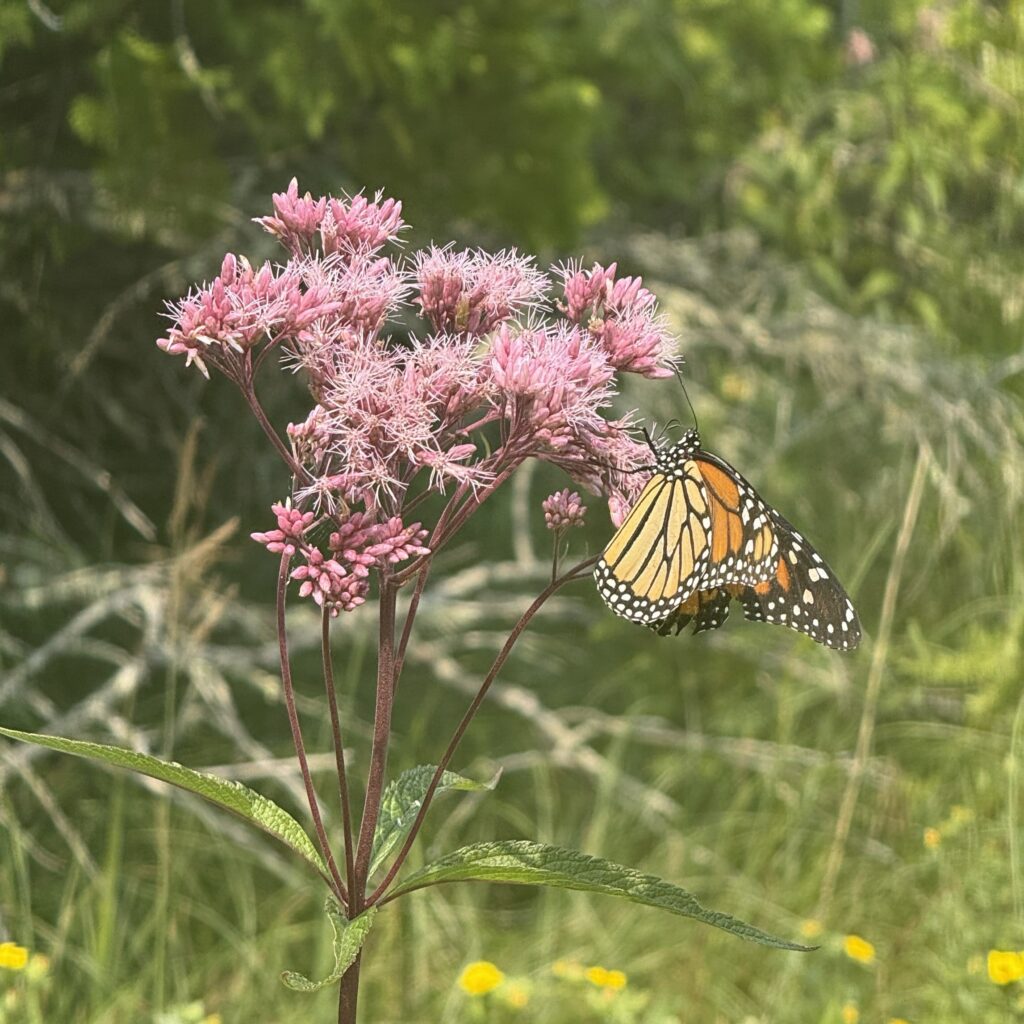
Butterflies are also known to be pollinators. However, they are not the most efficient when compared to their fuzzy coworkers in the order Hymenoptera (which includes all the bees). That does not mean they are less important; they serve a different role. Butterflies visit brightly colored flowers to collect nectar with their long proboscis. They fill a different niche than bees, who have evolved round bodies and the inability to see red. Butterflies prefer flowers that have convenient landing platforms where they can rest while consuming sugar to fly. In our area, you may see butterflies landing on native flowers. These include sweet joe pye weed, milkweed, bee balm, and butterfly weed, as well as many nonnative species.
The proboscis is the butterfly’s long, straw-like mouthpiece for reaching deep into flowers to collect nectar.
Butterfly ID
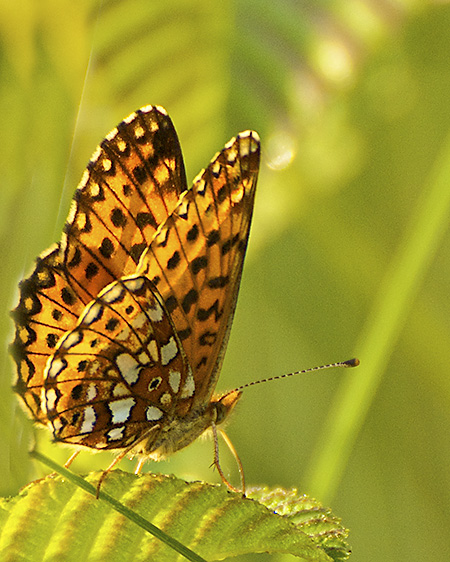
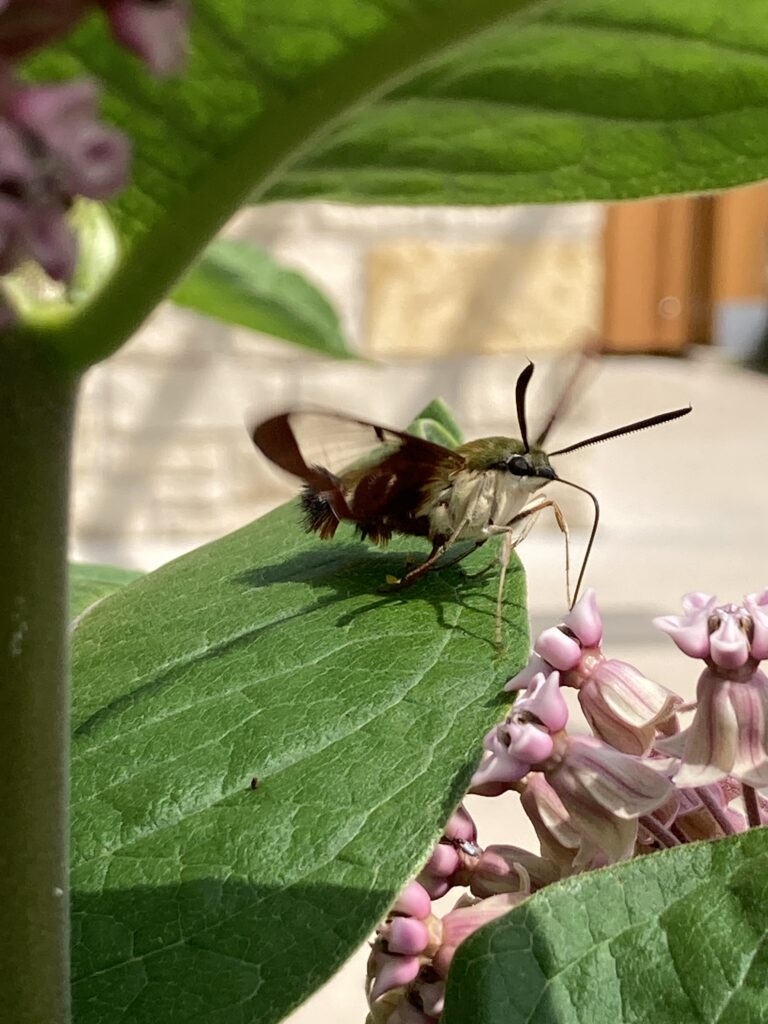
A distinguishing feature between moths and butterflies can be spotted when they stop to sip nectar. Butterflies fold their wings together over their backs, while moths hold their wings flat. However, like all rules, exceptions exist. A better identifying feature is the antenna. Moths have thicker, fuzzier antennae than butterflies.
Dragonfly Life Cycle
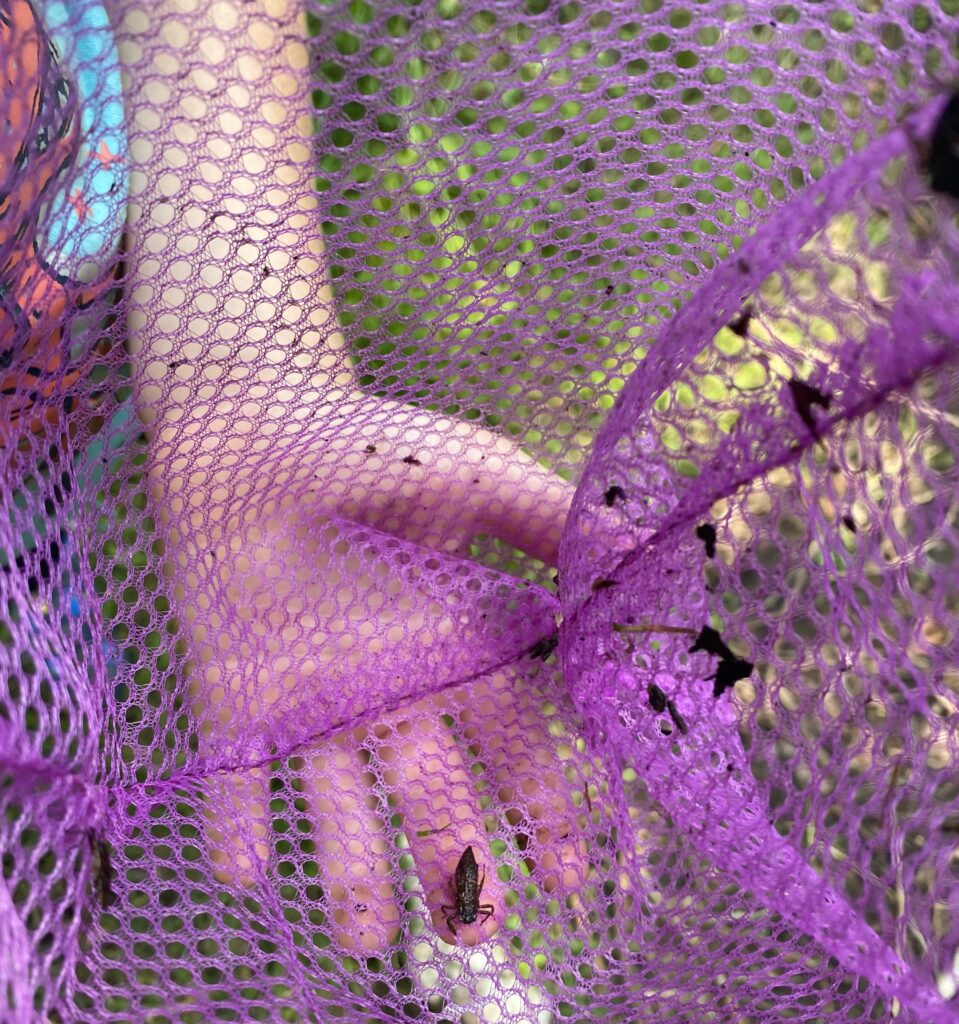
Like all other insects, dragonflies have a metamorphic life cycle. Unlike the more famous metamorphic life cycle of the butterfly, dragonflies have a three-stage life cycle. Plus, they begin life in the water. One of my favorite activities as a naturalist is searching for these underwater nymphs (pictured on the left)! Like the adult dragonfly, the dragonfly nymph is a voracious predator of the macroinvertebrate world. They will even eat small fish.
Macroinvertebrate refers to invertebrates (which have an exoskeleton) that are visible to the naked eye.
Dragonflies can spend years in their larval stage before they finally crawl out of the water, shed their exoskeleton, and become adults. The adult dragonfly has all the usual characteristics of an insect: three body segments, four wings, and six legs.
Adult dragonflies are carnivores, so they do not fill the role of pollinator. Alas, they still have a very important job… Dragonflies are found in the same wetland habitats as mosquitoes, which act as an important food source in both the larval and adult forms!
Dragonfly ID
As of 1998, 110 species of dragonflies had been recorded in Wisconsin. In 2026, we are up to an impressive 167 species. These species can be categorized into six Families. To further complicate matters, while most dragonflies are resident, some, like the Common Green Darner, are migratory.
All dragonflies have excellent eyesight and can see anywhere but directly behind themselves due to their large compound eyes. The darner family is recognized by eyes that touch directly on top of their head; clubtail eyes are on opposite sides of the face and do not touch. Differing wing patterns can identify cruisers, emeralds, and skimmers.
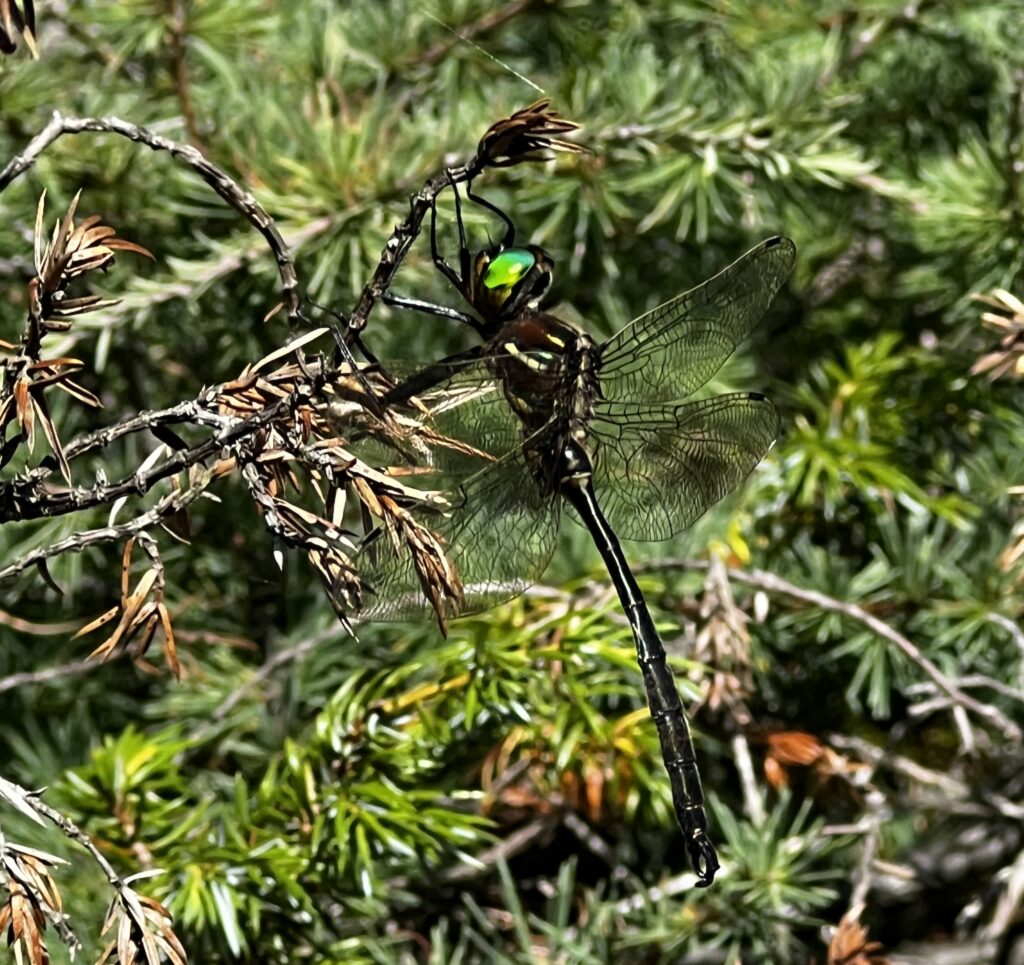
However, just like butterflies and moths, sometimes identifying features can be misleading. Most Emeralds have emerald-green eyes, but not all members of the family do. Luckily for those of us who struggle with identification, an icon of The Ridges, the Hines emerald dragonfly (pictured on the right by Karen Schudson), does have obvious green eyes.
As interesting and beautiful as I find dragonflies to be, and as important a role I know that they play, when it comes to individual species, I know very little. As a naturalist, I am always looking to learn more about my surrounding environment; fortunately, I have access to books, magazines, the internet, and the great outdoors. Have a wonderfully buggy summer!